Grab Iron Posts

August 2020 Eastside Virtual Get Together Clinic

Announcing the Eastside Virtual Get Together Clinic to be held on THURSDAY, August 20, 2020 at 7:00 PM Pacific Daylight Time

Hello, everyone!  I’m happy to announce our next Eastside Clinic will be held virtually on ZOOM next Thursday, 08/20, starting at 7:00 PM (We have switched back to Thursdays by popular demand!).  Since our clinics are virtual these days, I would like to extend an invitation to the entire 4th Division and encourage you to join our Clinic next Thursday.  You’ll meet some of the other modelers here in the Puget Sound area and see some of the outstanding model work that is being done.  The log in info for the clinic is below.  So be sure and save the date for the August Eastside Clinic next Thursday, 08/20 at 7 PM!

Topic: August Eastside Clinic Zoom Meeting

Time: Aug 20, 2020 07:00 PM Pacific Time (US and Canada)

Join Zoom Meeting

https://us02web.zoom.us/j/86859299442?pwd=YVJ3SU8xV2h2MUtwZ0NzNU53WjJLdz09

Meeting ID: 868 5929 9442
Passcode: 909838

One tap mobile
+12532158782,,86859299442#,,,,,,0#,,909838# US (Tacoma)
+13462487799,,86859299442#,,,,,,0#,,909838# US (Houston)

Dial by your location
        +1 253 215 8782 US (Tacoma)
        +1 346 248 7799 US (Houston)
        +1 669 900 6833 US (San Jose)
        +1 301 715 8592 US (Germantown)
        +1 312 626 6799 US (Chicago)
        +1 929 205 6099 US (New York)

Meeting ID: 868 5929 9442
Passcode: 909838

Find your local number: https://us02web.zoom.us/u/kdkPF48Ufd

Our virtual Clinic this month is titled Scenery- Making It Work for You and Your Layout and will be presented by David Yadock.  David is a very talented local MMR modeler.  The clinic will examine scenery planning and execution specifically on David’s Dry Gulch & Western Railroad.  It will look at scenery base materials and some various techniques used to create realistic scenes that can be applied to your layout.  There will be information for the novice to the expert model railroader.

After the Clinic, we will have some time for other folks to show off their latest model work in our “Show and Brag” segment.  The Clinic will wrap up with some administrative comments.

Alex Brikoff, 08/14/2020    
Rolling Stock For Sale

By Syd Schofield

G-scale/Fn3 rolling stock for sale.
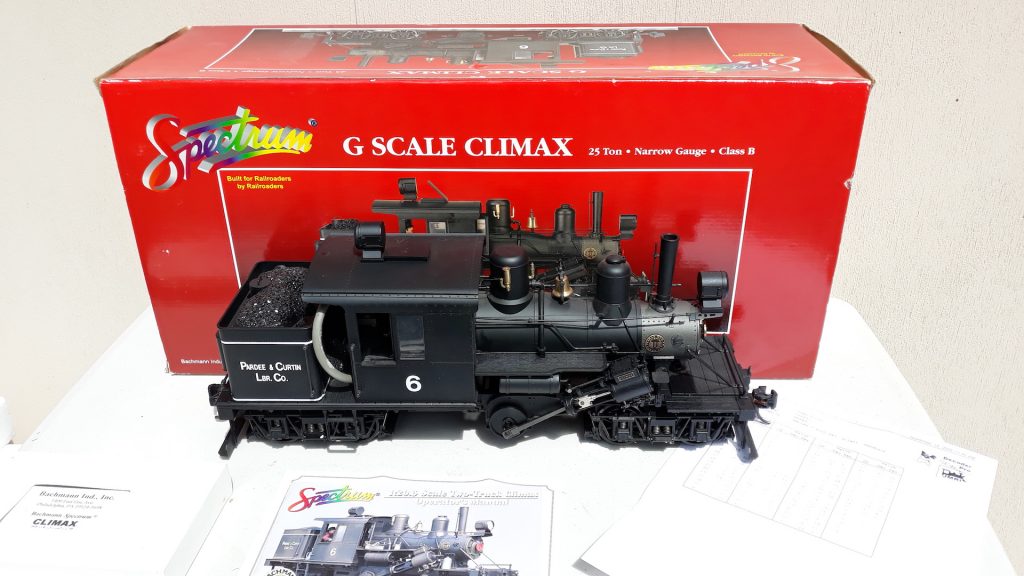
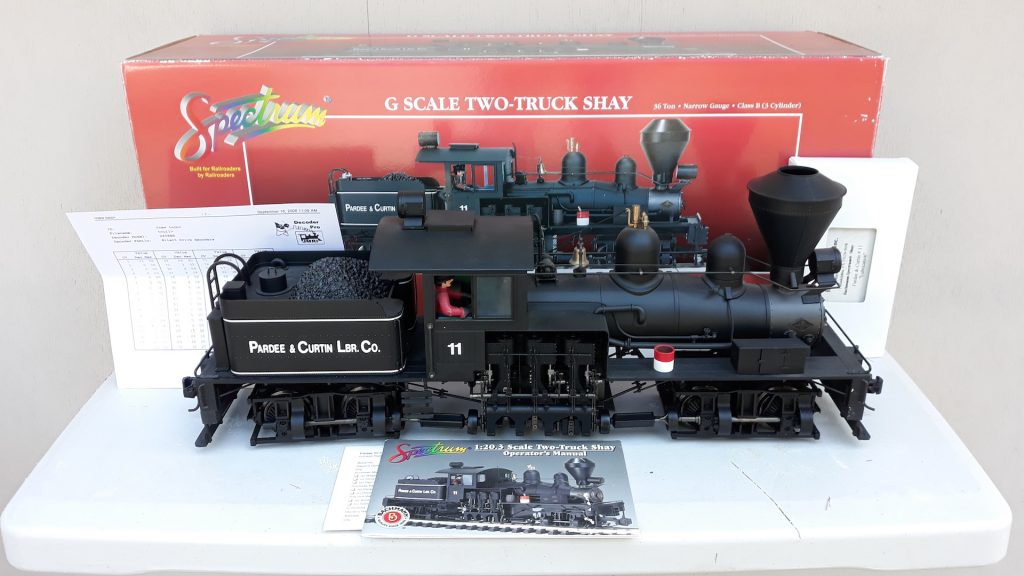
All are in original boxes except for the three truck Climax (made from two locomotives). It has its own custom box. 
All pieces have had little or no use, and have no damage.

Locomotives

  • Bachmann Spectrum (all have DigiTrax Decoders. I can convert back to straight DC if necessary.)
  •  2 truck Shay
  •  2 truck Climax
  •  3 truck Climax
Bachmann G scale Climax locomotive. It has a DigiTrax decoder. About an hour of operating time only for the decoder programming. Perfect condition. Asking $400.
Bachmann Fn3 Shay

Rolling stock

AMS

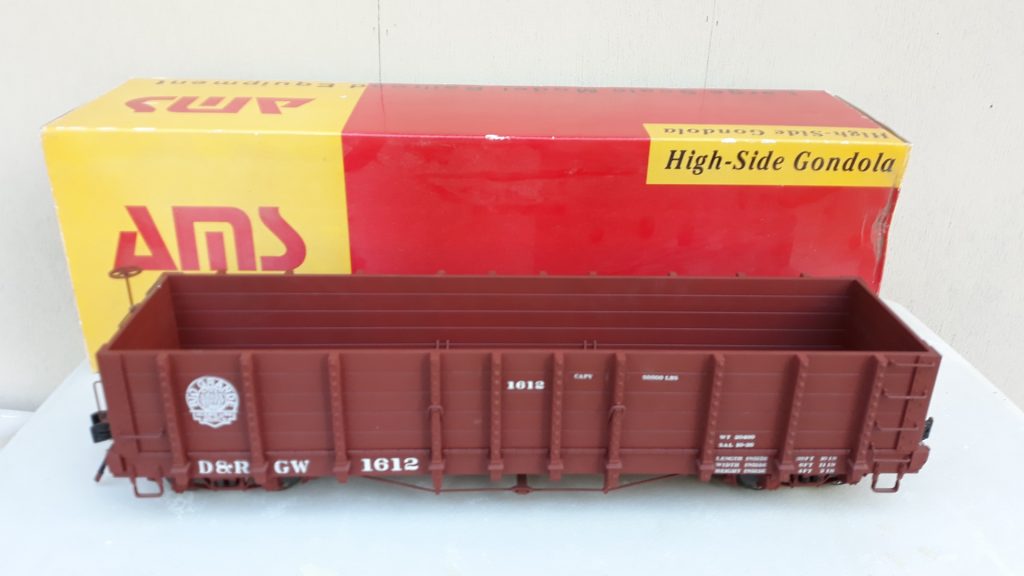
  • high side gondola – $100

USA Trains

  • (2) box cars (Climax show support)

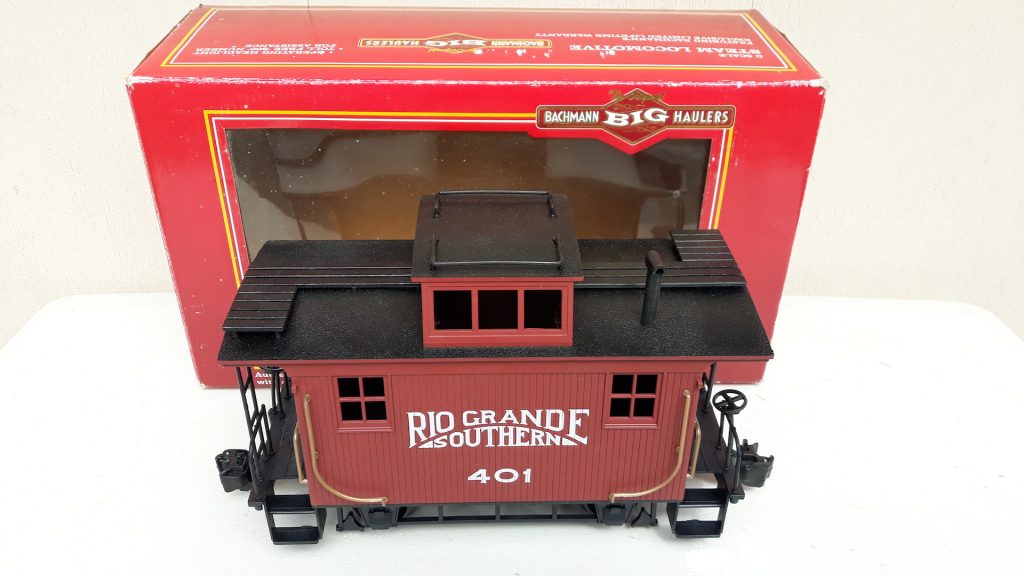
Bachmann

  • 2 truck caboose – $45
  • 4 wheel “bobber” caboose – $35
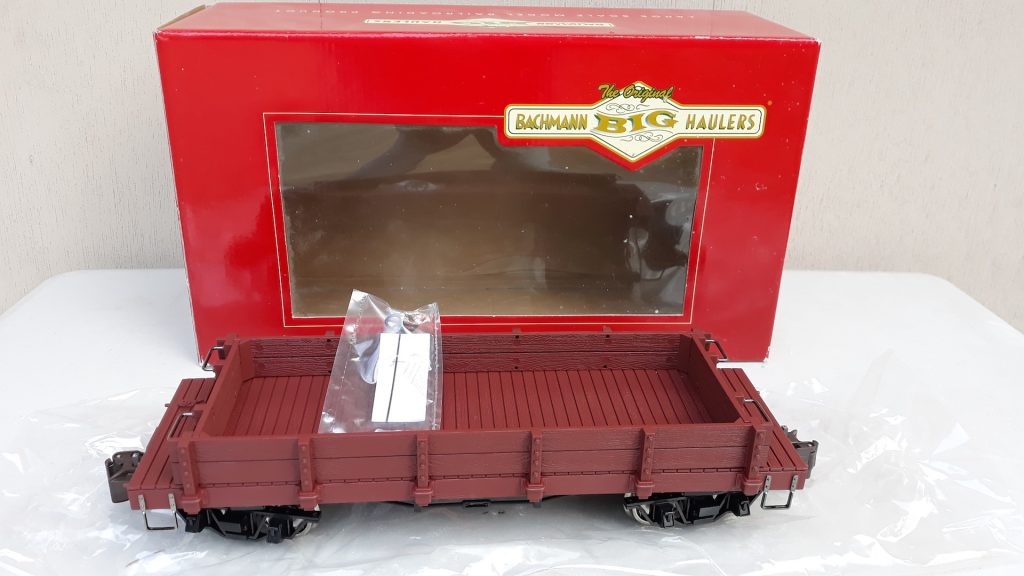
  • low side gondola – $25
  • water car (looks like a supplemental tender for the UP steam excursons)
  • (2) four wheel side dump cars like the one at Snoqualmie

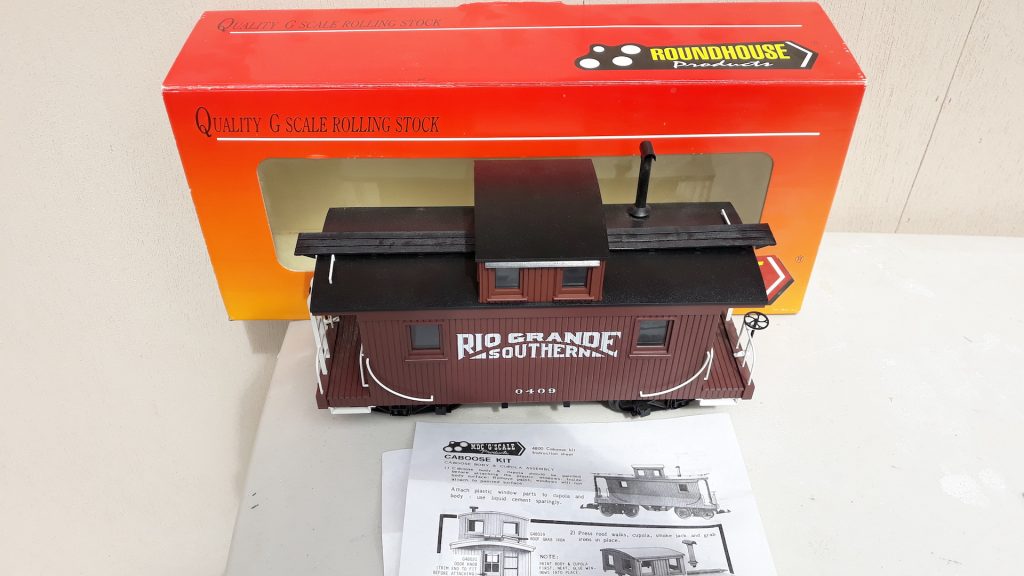
MDC/Roundhouse

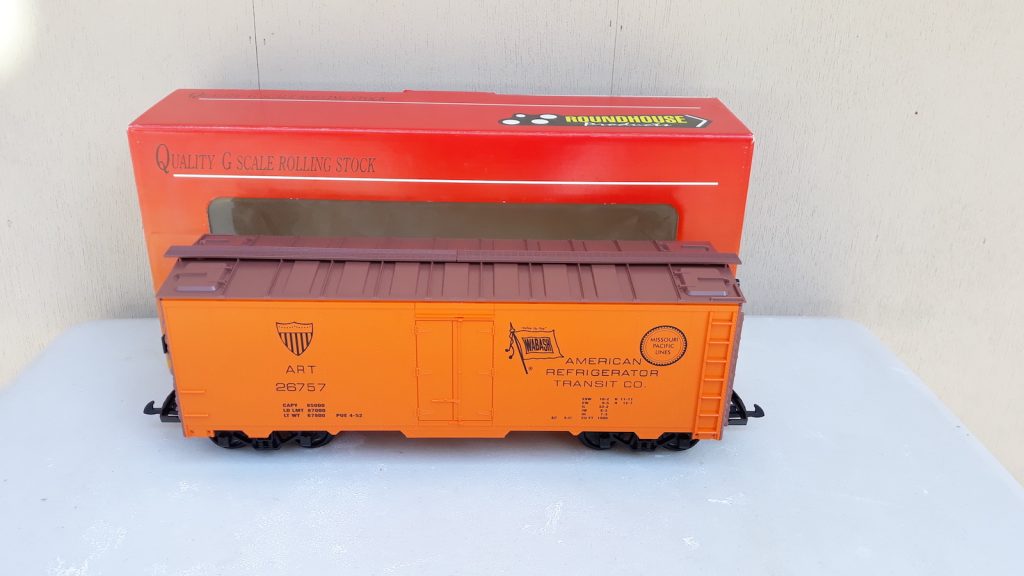
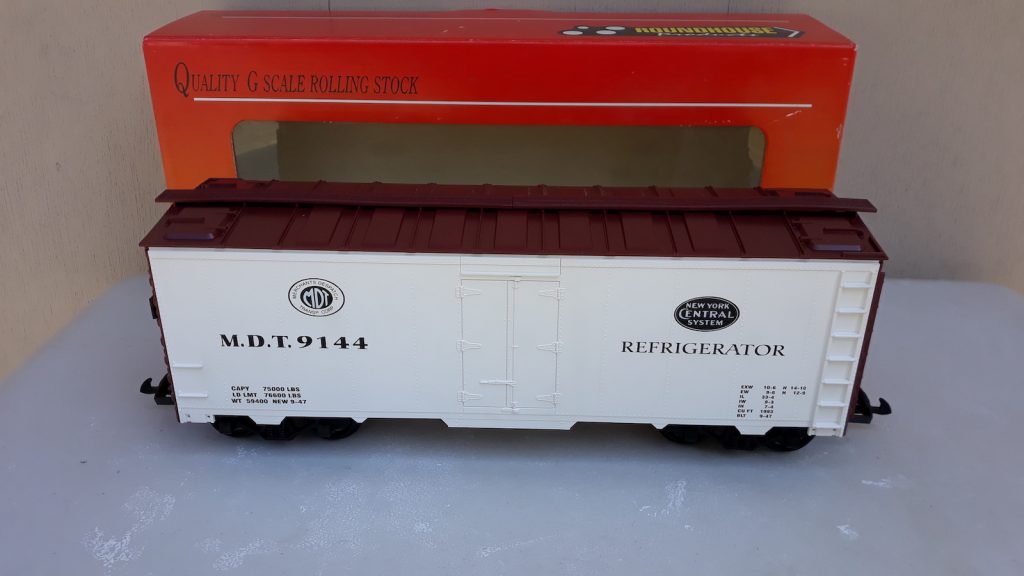
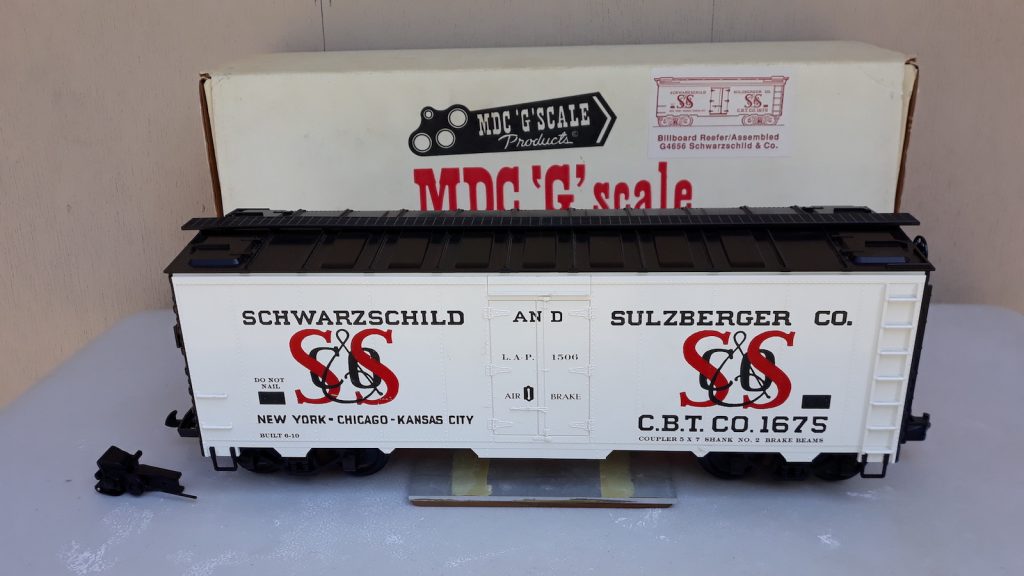
  • (3) reefers (differing graphics) – $45 each

For more information, photographs or pricing, contact Syd Schofield at sydrs@yahoo.com

North End Clinic Virtual Meeting this Thursday, 8/6

The Seattle North End Clinic is again hosting a virtual clinic this month. We will not be meeting in person.

This month’s presentation will be Building Wood Structure Kits by HO modeller Greg Price.

One of the advantages of having virtual meetings is that we can have 4th division members who can’t conveniently get to our North Seattle location participate (and present!). We look forward to seeing new faces each month.

Below is the information for the Zoom meeting. The lobby will open at 7:15pm and the meeting will start promptly at 7:30pm.

Thursday, August 6 at 7:30pm (lobby opens at 7:15pm) — all times PDT

https://zoom.us/j/96056774153?pwd=ZjdnaUlvc3R0YUwwTTg1TG0rV0VtZz09

Meeting ID: 960 5677 4153
Passcode: 621667

Be there or be square!
Lisa Murray, clinic chair
communications@4dpnr.com

Saturday’s Zoom Board Mtg. and Layout Tour

by Burr Stewart

The next 4DPNR Virtual Layout Tour will be shown immediately following the bi-monthly board meeting this coming Saturday morning, August 8.
The Board meeting will start at 10:00am, and the layout tour will follow it, at approximately 11am.
All members are welcome to observe the board meeting.
This week’s layout tour will be Greg Price’s HO Matheson & Western RR. His freelanced railroad is based in the Northwest. It’s 1953 and Greg will take you on a ride on the morning freight thru the cities and towns he has created. You’ll travel along the waterfront in Port Farley, then thru Stephenson, a small farming community. Then the big climb begins into the mountains. Great vistas with many bridges will highlight the climb to Cloverdale. Home to many businesses, including Diamond Brewing. Continuing the climb you’ll pass thru the mining town of Doyle before entering the city of Matheson.
It’ll be a great trip! 

To join this meeting, here is the Zoom info:
Topic: 4D PNR Board mtg & Greg Price layout tour

Time: Aug 8, 2020 10:00 AM Pacific Time (US and Canada)

Join Zoom Meeting
https://us02web.zoom.us/j/83009972278?pwd=NnMzUWlQSGgyUXJnRnNkUWRwVlp4Zz09

Meeting ID: 830 0997 2278
Passcode: 486837

David Yadock’s Dry Gulch & Western Railroad – Part 5

By David Yadock

Dry Gulch & Western, A Photo Series Part 5

I’ll explain a little more information about my layout.  As mentioned in the last installment I used a lot of plaster for the mountains.  I also used a lot of paint.  The mountains were painted almost all at once over a two-day period using cheap “rattle can” spray paint (about 40 cans).  I draped plastic over most areas of the layout that would not receive paint.  Track was taped over to protect the rails.  I made a plastic tunnel that vented out to the garage.  Air was driven out of the train room by two large fans and the garage was kept open till there was no longer any paint smell.  Yes, I have a very good chemical respirator mask!  This method of painting was effective to quickly eliminate the great white plaster mountain range.  Doing this also allowed me the ability to look at shading and the actual shapes of the mountains.  When they were white everything just blended in, once painted the mountains gained some contour that was hidden.  I used 4-6 different colors of paint.  This quick paint was just the start of scenery and was my initiation into learning how to “do” scenery.  Yes, I am still learning how to do scenery and I find it fun to use new techniques.  Now let’s see more of the layout.

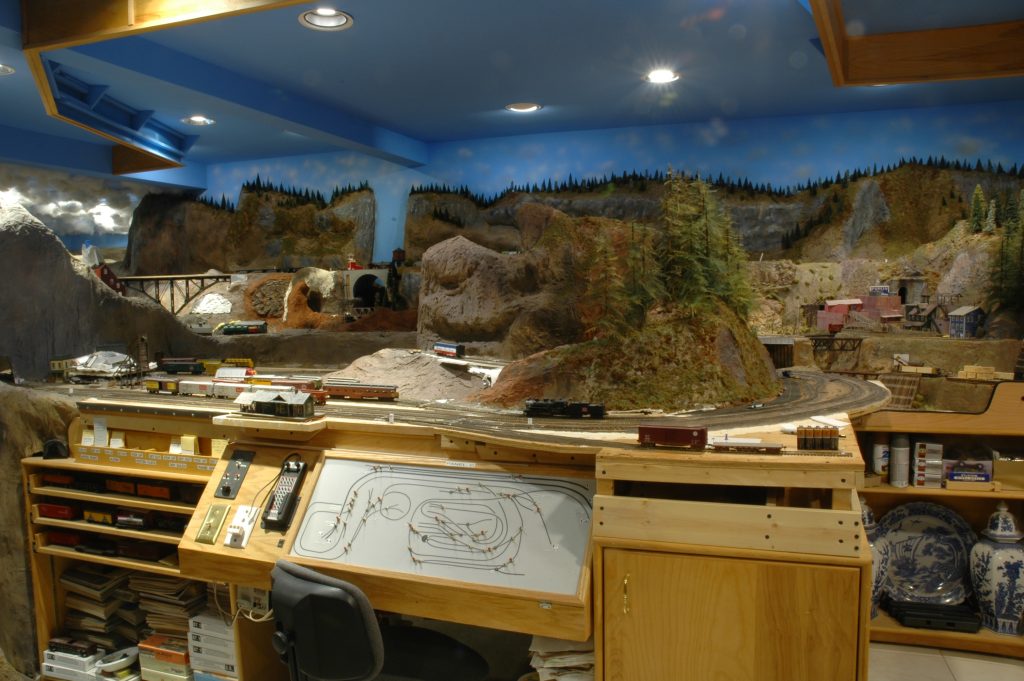
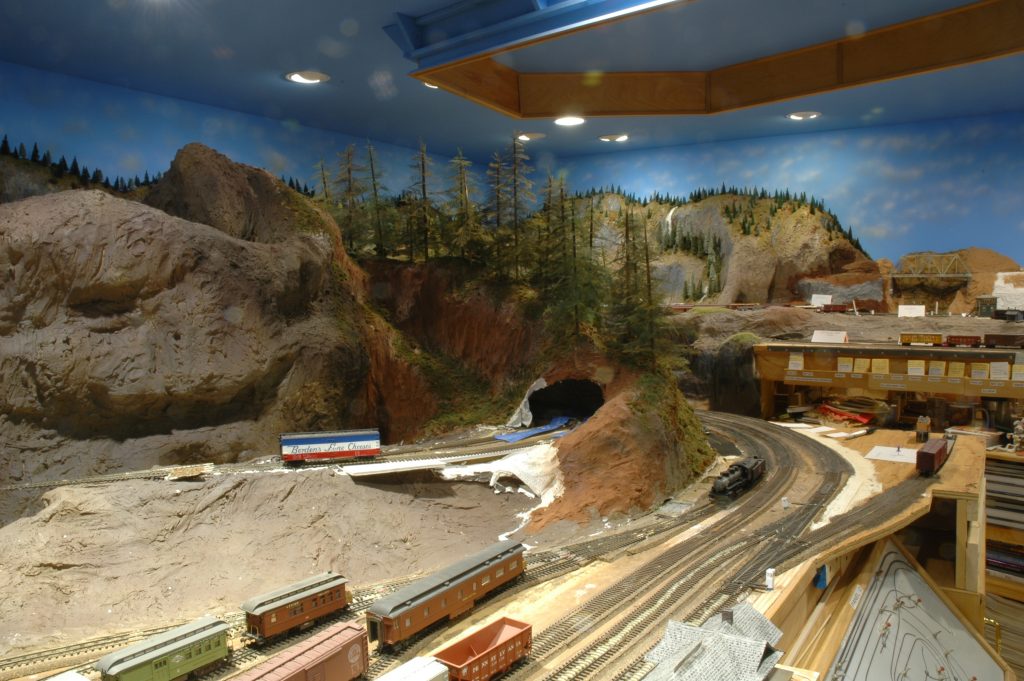
Photo 21 shows a view of Dry Gulch.  The station is above the control panel, another Campbell kit.  At Dry Gulch there will be a scratch-built two stall engine house.  A small Diamond Scale Models turntable is already in place.  Dry Gulch is the interchange area for the narrow gauge and standard gauge.  It is also the beginning of the layouts mining district.  There will be several mines located on the layout.  One mine, just barely visible in the photo is on the gray mountainside to the left.  The town of Alpine is to the right of the stone arch bridge that is against the wall.  Close to the stone arch is one of my other large bridges.

Photo 21

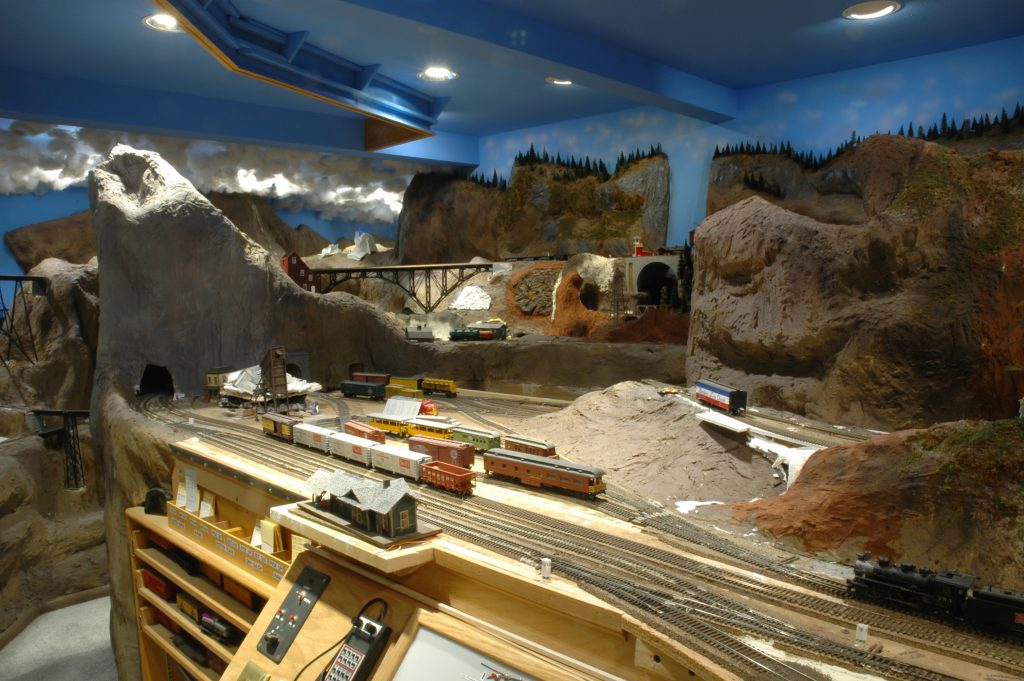
Photo 22 shows more of the bridge in the previous picture.  That bridge is over 5 actual feet long.  It is based on the Santa Fe’s Canyon Diablo Bridge.  Can you spot the mirror in the photo?  It should be easy since it is 2 feet by 6 feet in size.

Photo 22

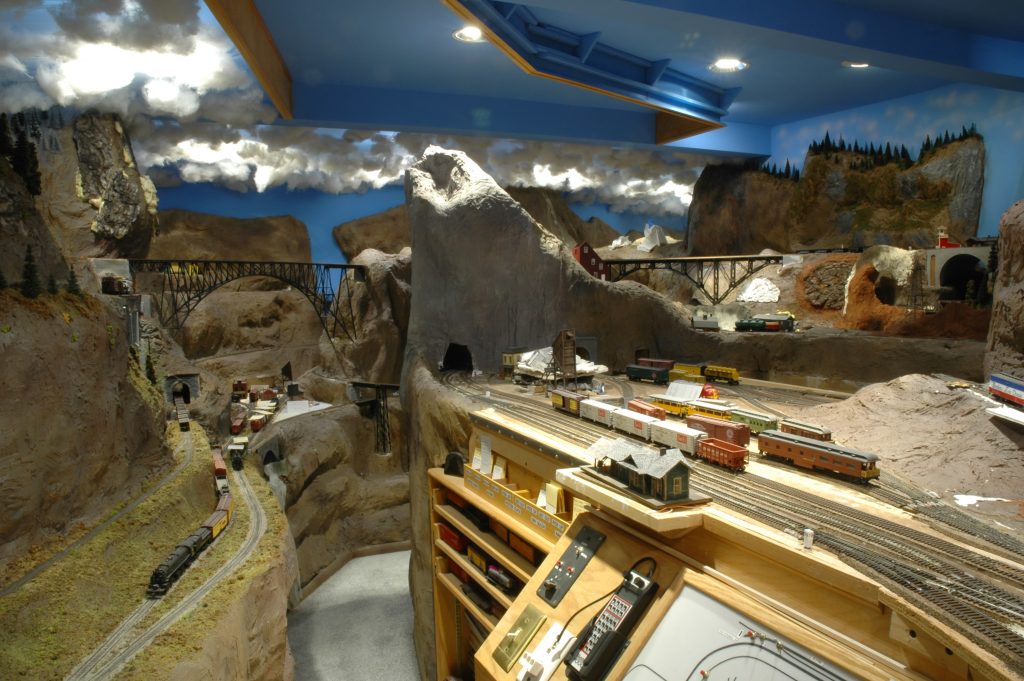
Photo 23 gives a view of my other large arch bridge.  That one is based on the Vance Creek Bridge located in Shelton WA.  This photo also shows how my aisle becomes a deep canyon.  In this area scenery stretches from the floor to the ceiling.  I admit this area of the layout is my favorite, walking down this aisle you literally become part of the layout.  This photo also shows how much the trains need to climb in elevation.  Hayes River is the town at the center left of the photo, it is at 29 inches above the floor.  The track on the arch bridge that leaps over that town is at 61 inches above the floor.

Photo 23

Photo 24 shows a view if you started walking down the aisle and looked back at Ellison.  This photo gives you an idea of how my view blocks work and why they are needed.  In the distance, against the wall, you can see a waterfall cascading down the mountainside.  Yes, groups of those tall timber trees really make a nice view block.  The tunnel that is by the Borden’s reefer is part of the branch line from Dry Gulch.  That branch line services the small hamlet of Raade Springs.

Photo 24

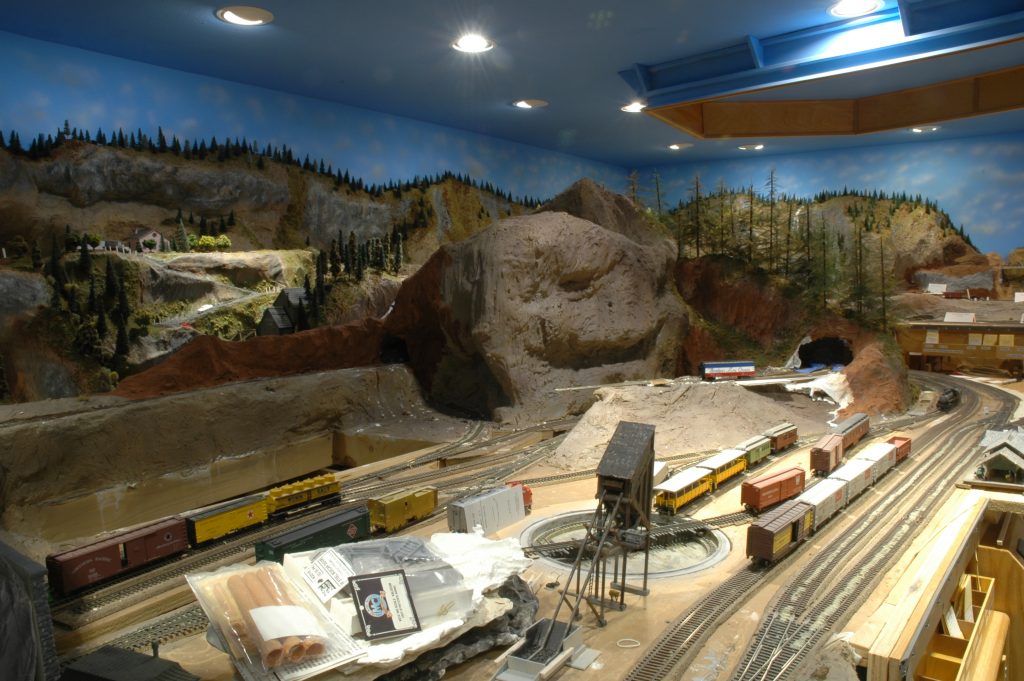
Photo 25 shows the turntable and the small interchange yard at Dry Gulch.  This area still needs a lot of work, but it will eventually get done.  At the extreme upper left of this photo is town of Alpine.  Raade Springs is just out of the picture on the left.  There is another mine perched by the small stand of conifer trees at the middle left.  The open area in the photo will be an access hatch. It will be a vertical lift type.  The town buildings of Dry Gulch will cover the hatch, hopefully making it invisible to the layout visitor.

Photo 25

That is all for this week, next week we will see even more bridges and perhaps the town of Potter Flats.  Actually, Potter Flats has been in most of this week’s photos, but carefully placed view blocks have prevented the town from being seen!

David

ZOOM online Primer

Now that we are doing so much of 4D activity online, I want to encourage many more of our members to use Zoom. Here is a Primer prepared for an upcoming National Narrow Gauge Convention online.

Russ Segner

A ZOOM Primer

You have been invited to join a Zoom meeting. What do you do next?


Joining Zoom
• Click on the link which appears in the email.
• Join the meeting using your computer audio.
• You may see a message that indicated the Host is not ready for you to be granted permission to enter the meeting. Just be patient. Most of the time you will join right in the meeting.
• You will see your image on the screen with others.
• In most cases your microphone will automatically muted.
• The host may unmute you to interact with you.
• You can unmute yourself and speak by depressing the space bar and talk while holding it down.
• Try not to talk over someone already speaking, just wait your turn.

Presenting
• Get ready first
• Have your presentation open and ready to start with a single click.
• Share screen is the button at the bottom of the page near the middle.
• If you want to share additional mages, open the new image file and then press New Share
• When finished, press the Close Share button.

Noise on line
• It is essential that your environment is silent. No barking dogs, radios, lawn mowers or noisy grand-kids.
• If you are using a laptop or desktop computer with a built-in microphone, background noise will be a much larger problem; we recommend using a noise cancelling headset such as the Sennheiser PC-8 USB.
• If there is noise on the line, and it is not originating with your computer or background, you might need to ask the moderator to mute that person, or to remind everyone to be muted while you are presenting.

Chat Box
• The Chat Box allows participants to ask questions. The moderator will keep an eye on the Chat Box on your behalf, and help with the review of questions at the end of your presentation.
• If you need to type a response in the Chat Box, when you hit the Return key, it sends the message.
• You can select whether to respond to ‘All’ or to an individual attendee. For our purposes, just respond to ‘All’.

Slide Delay
• When you advance to the next PowerPoint slide, there is a delay before that new slide appears on the attendee’s screens. It is a good policy, when you advance to the next slide, wait for 2 or 3 seconds before you start speaking about that slide. Otherwise, viewers get confused.

Presenter Notes
• It’s a good strategy to have a written outline of points you want to remember, if they do not all appear on your slides.
• Speak slowly and clearly throughout your presentation. The technology is good, but it is less than perfect, and the viewer’s equipment may be less than ideal.
• Try to resist the temptation to tell ’war stories’ or go off topic.
• Send the moderator a pdf of your presentation for distribution.

4D PNR Layout Tours

This Saturday, July 25, 10:00am to noon, will feature another pair of local area layout tours on Zoom, sponsored by the NMRA’s PNR 4th Division. The first is a tour of Russ Segner’s Sn3 layout, looking at 9 specific scenes that he has created and detailed around his layout. The second is Ray Wheeler’s outdoor Fn3 layout with a bunch of eye-level footage taken with GoPro cameras mounted on tripods. After each 30 minute presentation there will be 15 minutes for Q&A. Here is the Zoom information you need to watch it:

Topic: 4D PNR Layout Tours

Time: Jul 25, 2020 10:00 AM Pacific Time (US and Canada)

Join Zoom Meeting

https://us02web.zoom.us/j/89761792543?pwd=MXg5dDQwcE1raEN1eDNVelRoNlRvQT09

Meeting ID: 897 6179 2543

Passcode: 872682

Doug Walters Passes

By Roy Cutler

It’s with deep regret that I am reporting the death of my good friend and railroad buddy, Doug Walters.

Doug and I had over 30 years of fun and fellowship together, as we shared many of the same interests and much time together. In all that time together, I don’t think Doug ever met a person that he didn’t like. I never once heard him say a bad word about anyone.  

Doug had numerous friends in the model railroad community and participated as an operator and advisor on many layouts throughout the Puget Sound. But the layout that he was most influential on is the Olympic Northern, in my basement.

The ONRR is truly as much Doug’s layout as mine. Not only did he develop the operating system, but he worked hard to make every op session enjoyable for the participants. He was always concerned about the “play value” that each operator would experience and took copious notes during op sessions so that he could increase the “play value” per session for next time. 

When Doug was diagnosed with glioblastoma, he told doctors not to tell him how long they thought he had, as he preferred to live each day to the fullest. That really exemplified the Doug I knew; always getting the most out of every experience. 

I definitely miss my close friend, Doug, and I know that many others, that knew him, miss him as much as I do. Just a few weeks ago, Doug committed his life to the Lord, Jesus Christ, so I know that I will see him again. And what a happy reunion that will be! Until then may the glory of the Lord shine upon you and our friend Doug.