Grab Iron Posts

Trains 2014, Burnaby, British Columbia

7th Division, PNR, NMRA

Trains 2014 is British Columbia’s premier model train show and meet and is being held on Friday, November 7th through Sunday, November 9th. Trains 2014 is the Lower Mainland meet of the 7th Division, Pacific Northwest Region of the National Model Railroad Association. The show consists of two components, NMRA members meet with various activities for registrants, and a two-day public train show. Activities for the NMRA meet are self-guided layout tours, clinics, contests, banquet, and admission to the Public Train show. Registered NMRA members have access to the train show at 9 AM, one hour before it opens to the general public.

Online registration will be open until Wednesday, November 5th. Online registration is $55. At-the-door registration is $65. NMRA members receive a $5 discount. The venue for Trains 2014 is the Cameron Recreation Complex, 9523 Cameron Street, Burnaby, BC. More information here.

Seattle-North – Smart Phone DCC Throttles November 6, 2014

By Jeff Moorman

This Thursday (November 6) is our next clinic meeting and the clinic topic will be using your smart phone as a wireless DCC throttle. Our own Dennis T. will be the presenter. If you have an iPhone and want to try this out at the meeting, download an app called WiThrottle Lite before you get here. It is free! There are similar apps for Android phones, but I cannot speak to their being compatible with exactly what will be demonstrated.

And, speaking of apps, why don’t you bring along your favorite railroad-related smart phone app and show us all? Since we never got to modelling tips last month, I’ll use that prize to award whoever shows us the niftiest app.

Thanks to all that came to last month’s clinic. Sorry about the cramped quarters in the library. It was a surprise to me as well. I was assured that that was temporary for October only. It was good to see some folks back who had recently been subsidizing the local health care industry.

By all accounts it was a good clinic, but we never got around to covering some of the things planned. Special attendees included Michael Highsmith, the new Pacific Northwest Region President (who also still wears the hat of Fourth Division Assistant Superintendent) and Bob Rorabaugh, the new Fourth Division Membership Chair.

Some informative and lively discussion ensued. There seemed to be a consensus that (like it or not – and model railroaders seem to be mostly “not” people), the world is changing, the hobby is changing, and the NMRA needs to change to remain viable.

There wasn’t so much agreement on just what those NMRA changes should be. But, history shows the NMRA can change, although it can be a slow and convoluted process.  For example, I can remember the days when every other editorial in a model railroading publication seemed to bemoan the fact that plastic kits would mean the end of “craftsmanship” in the hobby.

Today’s issues seem to be printing parts, getting young people interested in the hobby, and virtual modeling. If you have ideas along those lines, Mike and Bob would love to hear them.

Show and Tell had some interesting items. Dennis T brought an eclectic mix of one BN HO snowplow, one private road HO doodlebug, one N scale GN doodlebug, a Z scale locomotive, and a kit you can buy that lets you build the base structure of a T-TRAK module. Tom K had pieces of a 1952 American Flyer starter set someone had bought as a present for his Dad.

Directions: We meet at the Ronald United Methodist Church, 17839 Aurora Avenue North, Shoreline, WA. That is on the west side of Aurora (State Route 99) between 175th and 185th Streets and more specifically, between the Cadillac dealer on the south and Deseret Industries to the north. Going southbound on Aurora, make a right-hand turn into the church driveway immediately after passing the Deseret location. The parking lot is at the rear of the church. For regular meetings go up the steps to the main entrance. We meet in the Fireside Room which is immediately to the left inside the door.

Meetings are the first Thursday of each month, usually September – June. However in June we often do something different, so there may be no “regular” meeting. Doors open at 7:00 PM and the program starts at 7:30.

Remember the next regular evening meeting is November 6. The one after that will be December 4. Hope to see you there or at least sometime on down the line.

Mt Vernon October 28, 2014 NMRA Clinic Report

Roger Johnson

Photos by Nick Muff, Al Carter, Tom Buckingham, Paul Koren

The October Mount Vernon clinic of the local Fourth Division, PNR, NMRA was attended by sixteen men, one of whom is from the Dallas, Texas area. As a Peterbilt employee, he frequently visits the local Paccar Technical Center and decided to give us a look. Please come back again, Don Winn.

The Show & Tell segment featured:

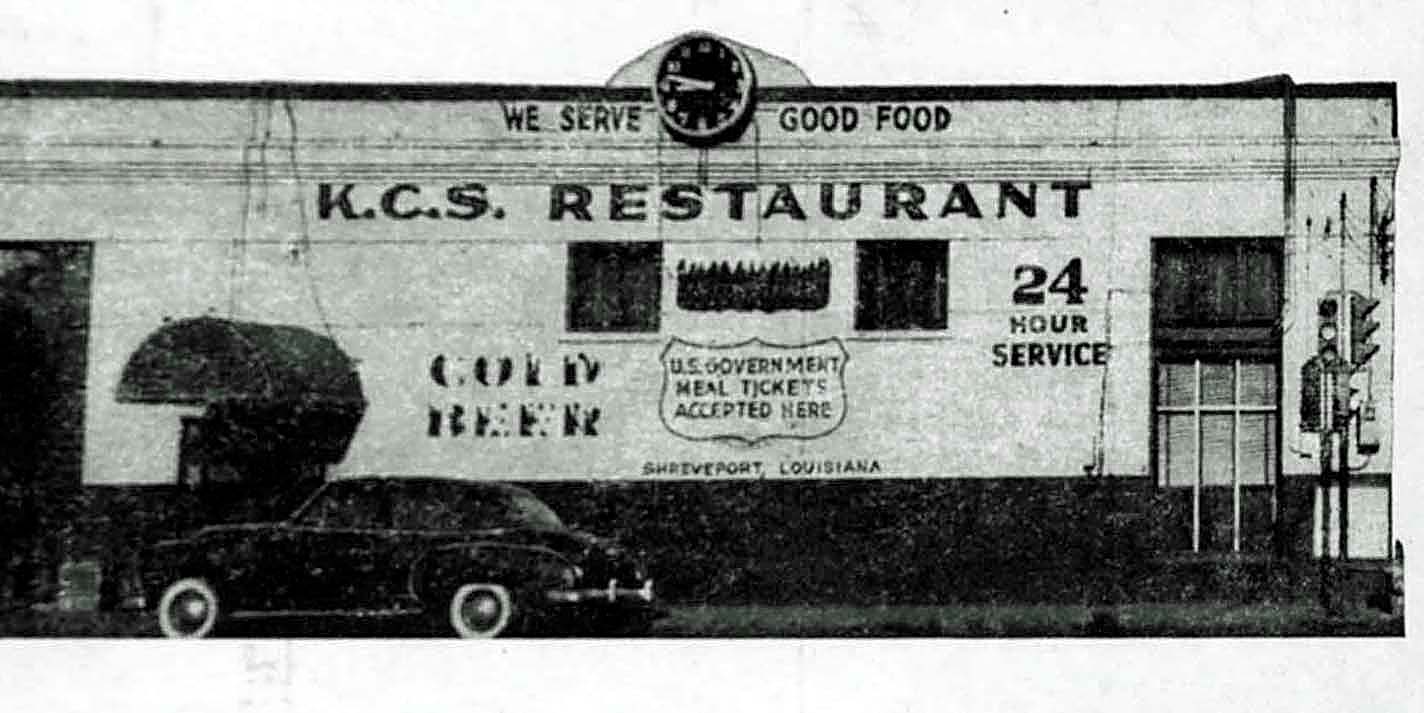
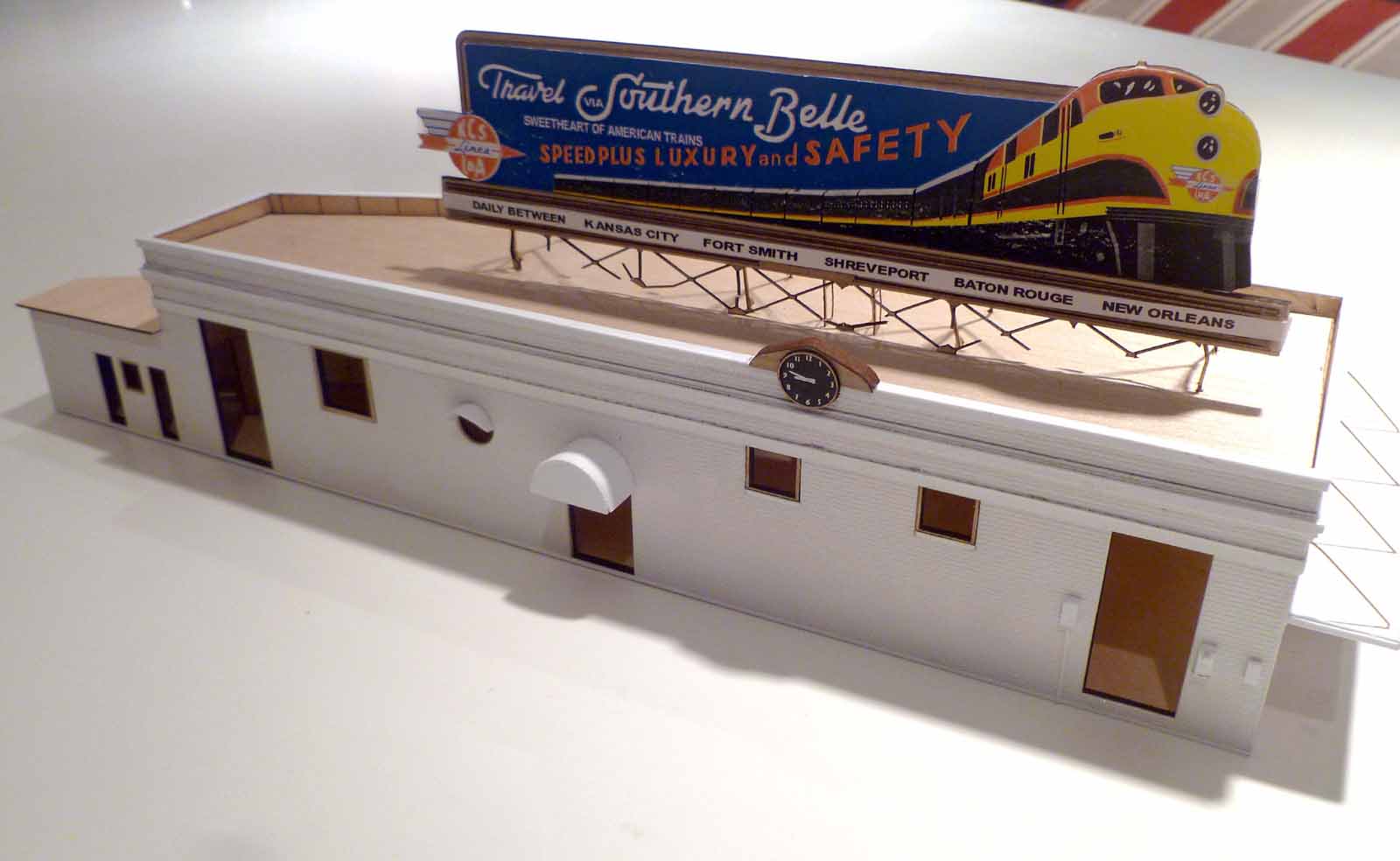
  • a model of the Kansas City Southern Restaurant by Nick Muff
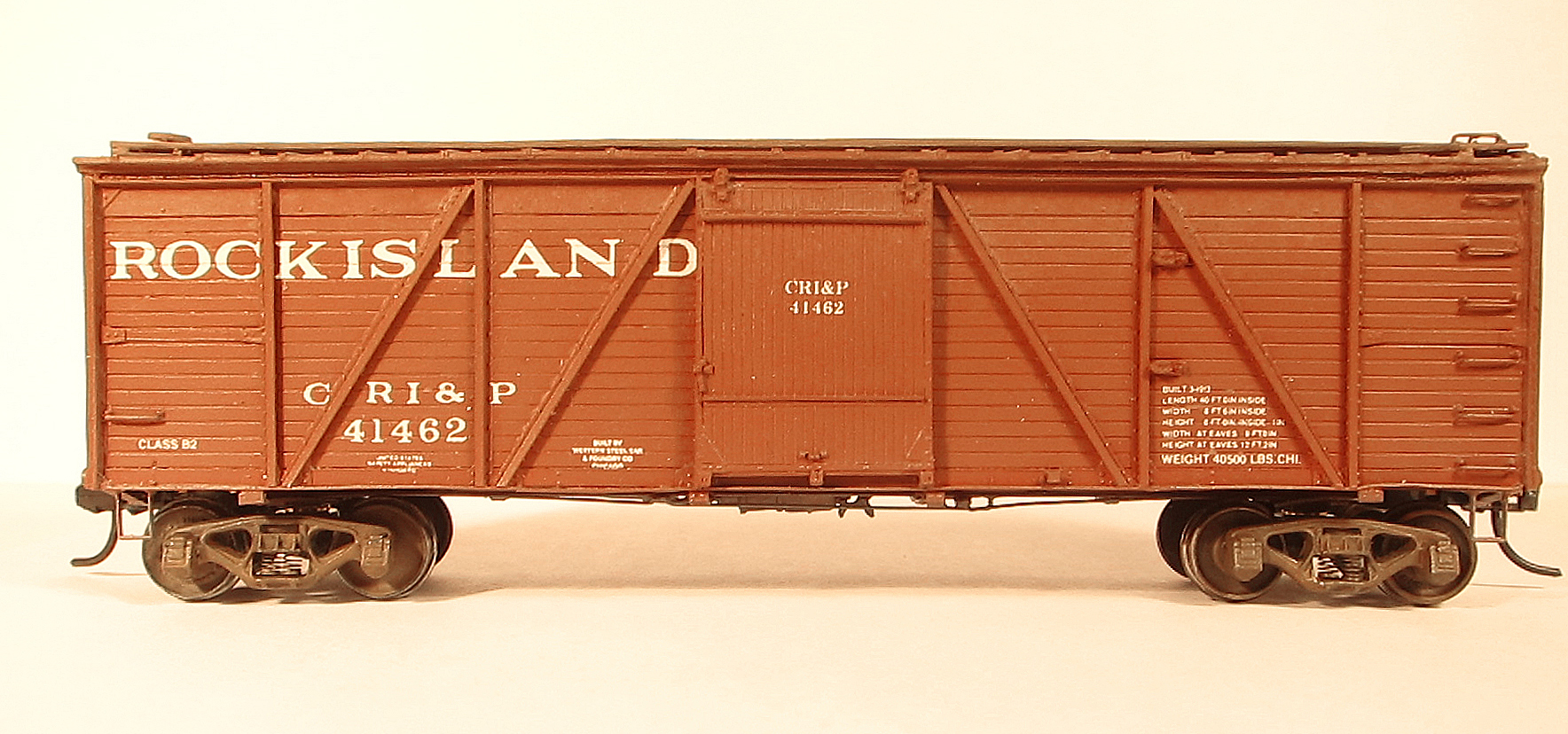
  • a completed and very nicely painted & lettered resin kit box car from Paul Koren
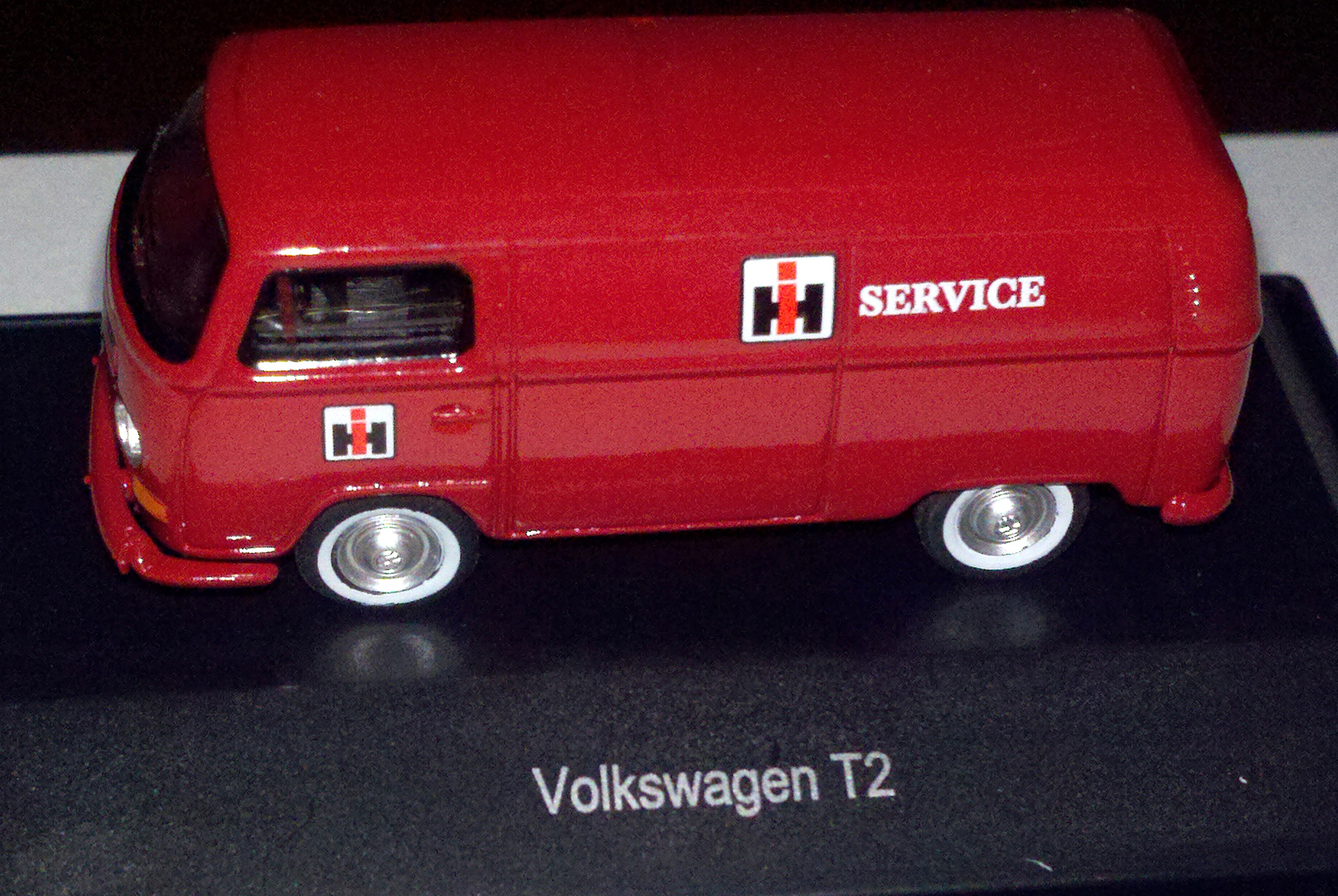
  • some German miniature cars/trucks from Tom Buckingham
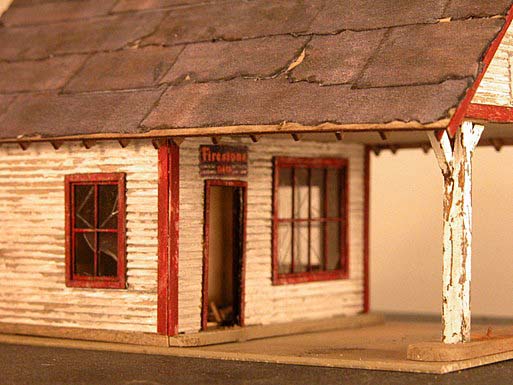
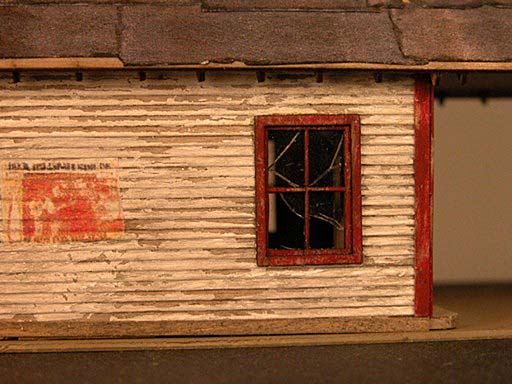
  • an abandoned gas station that time passed long ago by Al Carter
  • Folks are encouraged to share their modeling projects and techniques with others
Nick's KCS Restaurant model

Nick’s KCS Restaurant model

Nick's KCS Restaurant photo

Nick’s KCS Restaurant photo


Al's abandoned gas station

Al’s abandoned gas station

Al's gas station close up

Al’s gas station close up


Paul's resin box car

Paul’s resin box car


Tom's VW van from Germany

Tom’s VW van from Germany


Modeling Tips & Tools suggestions included:

  • a selection of nice, quality tweezers made in Pakistan available through Grizzly Industrial in Bellingham
  • the use of Mylar-type sheets for window glazing in industrial type buildings to represent very dirty and/or frosted windows
  • styrene brick (and other materials) sheets from The N Scale Architect which feature several different brick arrangements, arches, etc.
  • Vector Cut for very intricate laser cut details

Tom Buckingham, Clinician for the evening, showed us pictures from his September visit to Miniatur Wunderland in Hamburg, Germany. For those who do not already know, Miniatur Wunderland is the world’s largest model railroad, presently occupying over 14,000 square feet but still growing. This reporter will stop here with the barely believable statistics. For more information see the layout’s website. Tom’s photos showed most of the main features of the layout including many pictures of the seemingly infinite number of details, such as a penguin with his (her?) pet polar bear cub on a leash waiting at a station for the nest train and a couple making out in a convertible.

Coming attactions: the November 25th clinic (fourth Tuesday) will feature Nick Muff showing us how to use Joel Bragdon’s Geodesic Foam scenery process.

Other items of discussion included:

  • Rich Blake, spokesperson for the Skagit Valley & Whidbey clinic advising that they have a Yahoo Group page established for sharing ideas and asking questions.  More information about this will be included in our next newsletter.
  • NMRA membership was again encouraged with benefits including the NMRA Magazine which has developed into a very nice model railroading magazine.
  • Entry for future meetings will be through the rear door on the west side of the building which is kept open in the evening. This passes through a kitchen, then into the hallway. A sign will be posted at the correct door (as I understand there is a second back door).

Continuing the tradition established by the Skagit Valley & Whidbey group, anyone who wishes can meet at the Round Table Pizza restaurant at 5:00 PM for a no host pre-clinic dinner.  The restaurant is located on the North side of College Way just east of the freeway. See this link for a map and directions: http://tinyurl.com/lpcfa7x

Finally it was decided there would be no December clinic as the fourth Tuesday falls on the 23rd, only two days before the Christmas Holiday, when many folks have full schedules already.

Phil Ulmen, Former 3D Superintendent, Enters Hospice

Ed Liesse

Phil Ulmen, former Superintendent (several times) of the PNR’s 3rd Division is close to losing his battle with cancer. Phil chaired several of the excellent PNR conventions in Boise and attended the PNR/PCR Joint convention in Medford and PNR2014 in Tacoma.

He is still reasonably coherent but is easily confused. He is currently at home and being attended by family. They hope to get home health care/hospice from the VA shortly. He is receiving visitors, if you are in the area. He’s not doing much email now but would welcome cards or letters. If you would like to phone him, email me for his number.

Northwest Railway Museum Announces Steam Program

Peggy Barchi

The Northwest Railway Museum today announced plans for an annual steam locomotive program, and identified the locomotives selected for rehabilitation, restoration and operation.

The steam program will be integrated into the Museum’s interpretive railway, and has been developed with data measured during this year’s pilot steam program that continues in operation through this coming weekend, October 25 and 26. In 2015, summer steam trains will formally launch and operate with Santa Cruz Portland Cement 2, the 0-4-0 steam locomotive on loan from the Museum’s Curator of Collections Stathi Pappas. This introductory program will operate most weekends in July and August, Memorial Day weekend, Labor Day weekend, and Halloween Train weekend in October. Following completion of the first of the Museum’s steam locomotive rehabilitations/restorations, the program is tentatively scheduled to expand beginning in late 2016.

Steam locomotives were a driving force throughout much of Washington State’s history. They pulled trains throughout the Northwest beginning with the arrival of the first railroads in the 1870s and dominated transportation in Washington until diesel electric locomotives replaced them in the late 1950s at the dawn of the Interstate Highway era. Steam locomotives transported goods and people during the latter half of westward expansion, and fostered the development and settlement of communities across Washington State and King County.

Locomotive 924 selected as first project

Beginning immediately and over the next two years, the Museum will rehabilitate and restore former Northern Pacific Railway 924, a 0-6-0 (six-coupled) locomotive. Built by Rogers Locomotive and Machine Works in 1899 for the St. Paul & Duluth Railroad as their number 74, the locomotive was renumbered 924 after that road was purchased by the Northern Pacific Railway. In the early 1900s it was Seattle’s King Street Station coach yard switcher, later serving the Seattle and Tacoma yards, and in light branch line service. Sold in 1925 to the Inland Empire Paper Company in Millwood, Washington she remained in service until 1969.

This locomotive is a classic example of late 19th century Northwestern switching and branch line steam locomotives. When the locomotive is complete, the Museum will be the only American institution operating class one steam west of Colorado with regionally-appropriate motive power and rolling stock on its original railroad.

Locomotive 14 selected as second steam locomotive

If one rebuild is good, one more is better! Two operating locomotives will allow operation to continue during scheduled maintenance and periodic servicing, and will allow for expanded service during large events.

Following completion of steam locomotive 924, the Museum will begin the complete rehabilitation of steam locomotive 14, a classic 4-6-0 (“ten wheeler”) locomotive. The 14 was built by the Baldwin Locomotive Works in 1898 for the Union Colliery Company as their number 4 using the same design developed for the Esquimalt and Nanaimo Railway. When that Vancouver Island mine was absorbed into Canadian Collieries, it was renumbered 14 and continued in service until 1960 when it was purchased by the Museum.

Canadian Collieries 14 is a classic Baldwin ten wheeler that will allow the Museum to provide a complete and authentic experience recreating railway passenger service from the first two decades of the 20th century. Ten wheelers were the most popular and greatest-produced locomotive of all time and examples were found on nearly every major railroad in the Northwest, including the lines of the Seattle, Lake Shore and Eastern Railway that ran through Snoqualmie.

Qualified team and facilities

The Museum is making a significant commitment to steam by investing in people and facilities. A qualified team of paid and volunteer staff with prior experience in steam locomotive rehabilitation and restoration has been assembled and is led by Curator of Collections Stathi Pappas. Pappas has a graduate degree in Archeology, and has participated or led more than a dozen similar projects. The machinery required to perform the work has already been obtained for all aspects of boiler and running gear work. Several major grants and contributions have been pledged and work will begin next week; additional fundraising will be performed during the next 24 months to offset costs that will approach $1 million.

About the Northwest Railway Museum

The Northwest Railway Museum is located in Snoqualmie, Washington and is dedicated to the preservation, interpretation, and perpetuation of the rich railroad history of the Northwest. It was incorporated in 1957 and serves more than 120,000 visitors per year with onsite programs.

The Museum’s collection features the fully-restored 1890-built Snoqualmie Depot, a five-mile segment of the former Northern Pacific Railway Snoqualmie Branch, and representative examples of locomotives, freight cars, and passenger coaches. Train excursions operate April – October, and in December with tours of the exhibit building offered Saturdays April – October.

For more information, contact Peggy Barchi at 425-888-3030 Ext. 7203 or at peggy@trainmuseum.org.
 

Cliff Green to Edit Grab Iron

Al Lowe

After serving as your Grab Iron editor for the past ten years and webmaster for eleven, it’s time for me to move on and let some younger blood bring in fresh ideas.

Cliff Green

Cliff Green

I’m pleased to report that Cliff Green has agreed to be our new young blood. Cliff is a professional computer programmer and is well versed in current technology. I know he will continue to keep the 4D in the forefront of model railroad communications. Cliff has worked on the Grab Iron for over eight years; he’s the perfect man to take over this position.

Twelve years ago, we were one of the few Divisions to even have a website, but our member communication was strictly one-way. Each month, 12 paper pages arrived in members’ mailboxes, containing information up to six weeks out-of-date.

One of our first changes was to offer the Grab Iron in PDF format, emailed immediately upon publication, weeks before paper copies arrived in the mail, while saving the Division the costs of printing, addressing, and mailing. We also implemented a Division YahooGroup for email communications. But our biggest step was four years ago when Doug Bulger and I eliminated paper entirely with the Digital Grab Iron. Now, our news is disseminated instantly. Doug has agreed to stay on as the 4D’s official photographer.

I plan to stay on, too, as long as it takes to provide a smooth transition. So you may continue to email your articles (and website problems) to me or send them directly to Cliff at cliffg@codewrangler.net.

And the next time you see Cliff, give him a hearty “Thank You” for stepping up to serve the Division in this important way.

New 4D Secretary, Communications Chair

Russ Segner

4D Superintendent Russ Segner appointed two new officers to the Board of Directors at last Saturday’s meeting: Bill Messecar as Secretary and Bob Stafford as Communications Chair. Both of these men bring a wealth of experience that should serve the Board well.

Welcome aboard, Bill and Bob!

Eastside Get-Together this Thursday

JJ Johnston

This month’s Eastside Get-Together clinic presentation will be by our very own John Thompson, discussing “Cajon Pass Operations, 1946-1956.”

This PowerPoint show is about operations on Santa Fe’s CajonPass in Southern California during the steam-to-diesel transition years. Its mostly color photos show the Santa Fe and Union Pacific freight trains, passenger trains, motive power, helpers, and stations along the route, plus maps and slides explaining operations.

Come join us this Thursday as we relive the glory years on CajonPass!

We also have all the usual stuff, including door prizes, prize-roasted coffee & assorted hand-selected donuts, railroad items to buy and sell, the Model of the Month and just good times. You do not have to wear a costume to the meeting – we’re all spooky enough! The Model of the Month can include a carved pumpkin, however. See ya there, this Thursday, 7:30 p.m. in the Bellevue Foursquare Church.

October 2014 Skagit Valley & Whidbey Clinic Report

Al Frasch / Photos by Jon Wilbert

Dick Haines showing boxcar with installed sound decoder

Wednesday, October 8th, 2014 saw twenty-two interested model railroaders in attendance at the annual “Mini-clinics” session. Rich Blake welcomed everyone to the evening’s action which began with Dick Haines showing the new Sound Car decoder from Bachmann. He explained his installation in a boxcar with decoder, speaker and a “keep alive.” He indicated the price was in the mid-$30 range and requires a speaker of your choice. He suggested that one could add such a car every 3 or 4 cars to realistically portray the wheel click and squeal of the prototype.

The first Mini-clinic was a four part talk by John White titled “Flat Cars.” John models in On30, but the principles should hold for all scales except maybe for zed (Z scale). Part 1 was on giving the flat cars weight. He uses small lead shot to arrive at about 4 ounces, gluing them to the under structure using white glue to fully encase the shot. Then a coat of grimy black hides them quite well.

Part 2 was on wheels and couplers in which John said he tries to standardize to 36” Intermountain wheels and Kadee #5 couplers.

Part 3 was on the laying of the flat car deck. John starts with 12” scale wood which he stains (no paint) and cuts to length. He suggested to start gluing (using CA) the deck from the non-brake end to the middle, then from the brake end, meeting in the middle with a narrower plank if necessary. The nail holes are made with the end of a 7mm mechanical pencil at about 30 degrees to the vertical, making a small depression which is filled with weathering chalks. They really do look great!

John White finished flat car with stained deck

Part 4 concerned a method of loading the flat car using what John calls a “load retention device.” This is platform that will hold the loads which is built to exactly fit between the vertical stakes of the car. This allows a quick switching of loads either during or between operation sessions to reflect the load/unload at industries on the layout.

John Mann was next up with a discussion of the numerous options for airbrushing. He pointedly indicated that he was only talking about airbrushing tools, not techniques. Airbrushing requires three items: an airbrush, a source of air and paint. First, he showed a $15 airbrush kit from Harbor Freight, definitely on the low price end of things. Next was a $500 Badger airbrush on the high end. John suggested that a good middle ground would be the $50 (approximately) Badger 350 kit which is gravity fed and being popular, all the needed accessories are readily available. He suggested that one always get a dust/moisture filter for the air line. Whether you want a single action or dual, gravity fed or syphon fed, most any combination is available from the major brands.

John Mann showing how to store paints for long term usability

John was very insistent that one practice, practice, practice before tackling a “real” model. A cheap practice medium could even be watercolors or diluted latex paints.

The next need is air and John indicated several sources: the cans of air sold for airbrushing, a compressor (with a tank), or even a spare tire – really. With any source, a good air gauge is a necessity. He finished up by reminding everyone that a clean work area — including a painting booth or other source to evacuate the fumes — clean paint, clean airbrush and clean air source are the keys to great results.

Our third clinic was by Tom Hawkins, our resident layout design guru. His talk was titled “Lessons I Have Learned.” Tom is currently designing a 15’ X 15’ layout for another member of the clinic and was the third place winner in a national design contest by Model Railroader.

Tom Hawkins explaining plan details

Some of his lessons learned:
– no plan gets built exactly as drawn.
– always, always make sure you have access to hidden areas.
– if the layout isn’t reachable, make sure pop-ups included.
– double ended yard tracks can take more space than stub end tracks.
– yards need to be large enough to handle all the arrivals, departures and sorting that your operations scheme might require.
– it is amazing how much just a couple of inches in width of benchwork can make, adding a track or two extra in a yard or industrial area.
– avoid S-curves that are as short as your longest car, use #6 or greater turnouts to create crossovers.
– aisles need to be as wide as possible but it is always a compromise.
– try to keep minimum radii as large as possible and don’t forget the easements into curves.

After Tom, the clinic meeting was adjured to November 12th at which time Jack Hamilton and Di Voss are scheduled to present Nick Muff with his official MMR plaque and certificate prior to our regular clinic presentation.

Assortment of John White flat car loads

Steam Trains at the Northwest Railway Museum

Peggy Barchi

Steam trains have returned to Snoqualmie!

The Halloween Train, on October 25 and 26, 2014, features steam train excursions pulled by the Santa Cruz Portland Cement locomotive 2 (SCPC 2). Step back in time to an early travel mode to view the autumn colors of the Snoqualmie River, Snoqualmie Falls and the area nearby. Halloween Train fares are: $18/adult, $15/senior and $10/child.

But wait, there’s more!

One day of Santa Train 2014 will also be hauled by steam! One last time in 2014 the Santa Cruz Portland Cement steam locomotive 2 will pull a passenger excursion train during the Friday, December 19, 2014 Santa Train runs. There is no extra charge for steam, but advance tickets will incur a modest fee to defer the cost of postage. All Santa Trains depart from the North Bend Depot and your ticket includes refreshments served at the Snoqualmie Depot grounds, a visit with jolly St. Nick and a small gift for all participating children. Santa Train tickets sell out, so don’t miss out. Tickets may be purchased online or in person at the Snoqualmie Depot (38625 SE King Street, Snoqualmie, WA 98065). Tickets may also be purchased over the telephone at 425-888-3030 x7202. Tickets are $20 per person for ages 2 and older. Purchasing tickets early is recommended to help assure that guests can get their preferred choice of date and time.

www.trainmuseum.org

SCPC2

SCPC2_at_NRM

SCPC2_pauses_at_bridge_31_3

SCPC2_pulls_up_to_depot_w_Stathi_Pappas_at_throttle