Click here to read the second article on Chuck Ricketts Fantasy Island Railroad.
Grab Iron Posts
More News From Triple T
Article & Photos By Al Babinsky
Last year the Triple T acquired another unusual piece of rolling stock, a Wismar Railbus from the SVG (Sylter Verkehrsgesellschaft) Sylt Transportation Company. The SVG operated a Narrow Gage, Meter gage, rail road on the island of Sylt in Northern Germany. The railbus was originally purchased by the Kriegsmarine {Navy}for transportation of personnel and cargo to their bases in the North and South of the island. After WWII the railbus became property of the Sylter Inselbahn (Sylt Island RR) the fore runner of the SVG. It was in storage until steam operation ceased in the 50ties and operation began with railbuses. The Wismar railbus was powered with two Ford engines one on each end, they powered the axle on their end. During operations one of the engines suffered major damage and could not be repaired. Instead of scrapping the railbus the SVG removed the engine hood and all and replaced it with a Borgward truck engine and front end. The LGB model represents this particular railbus T 25 and the sound system also represents the different sound of the two engines. When changing directions, the proper engine starts and you can tell the difference in the sound. The accompanying photos shows the railbus after the replacement with the Borgward front end, you can see the difference in the hood and the radiators. The photo of the camouflaged version during operation of the Kriegsmarine as apparent by the uniforms. This particular bus was number 22 and had a trailer number 14. The bar that you see hanging under the front end was the coupling bar for the trailer. I believe the person standing in front of the door was the conductor/driver of the bus and a civilian. You can see the writing in the white band says Sylter Inselbahn to give the appearance of a civilian operation, the fact was that the military had control before and during the war. The personnel of the railroad before the takeover stayed on during the war and afterwards the state took over and then turned it over to private hands.
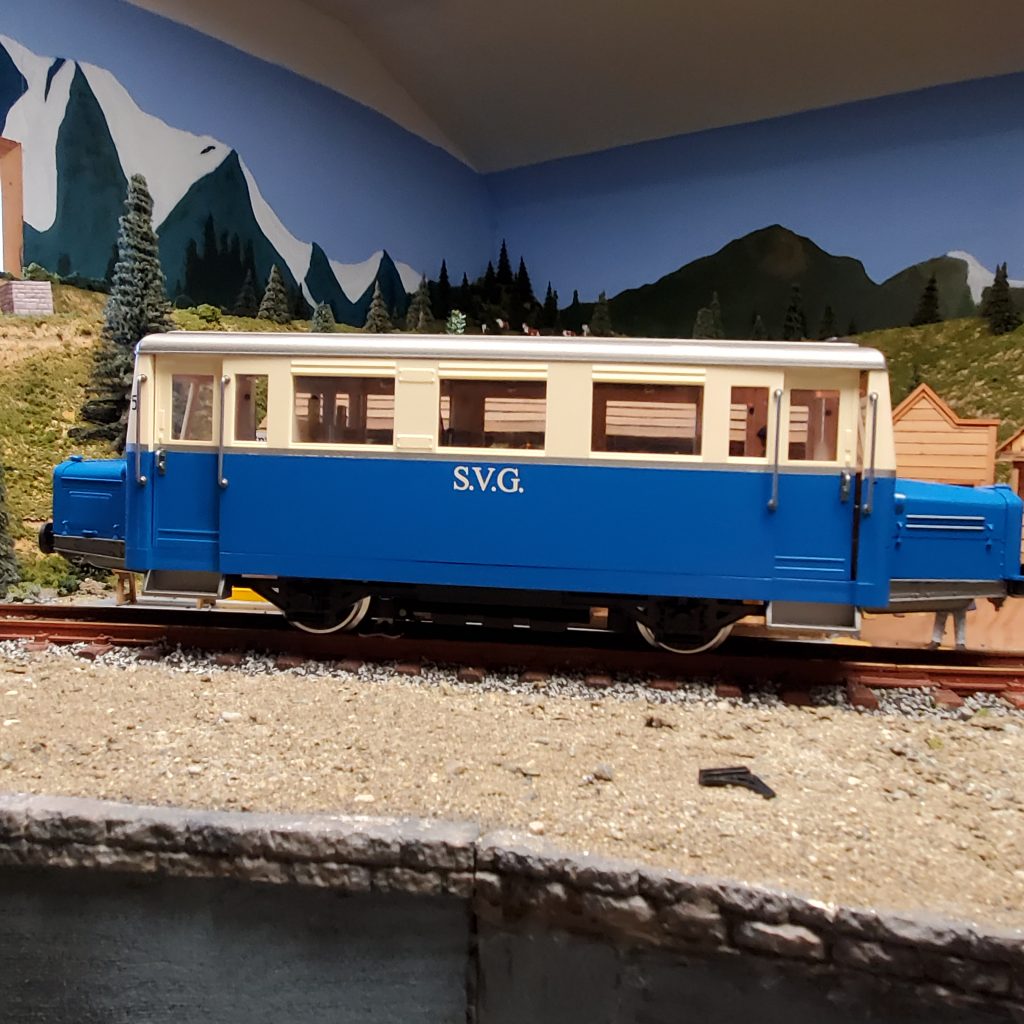
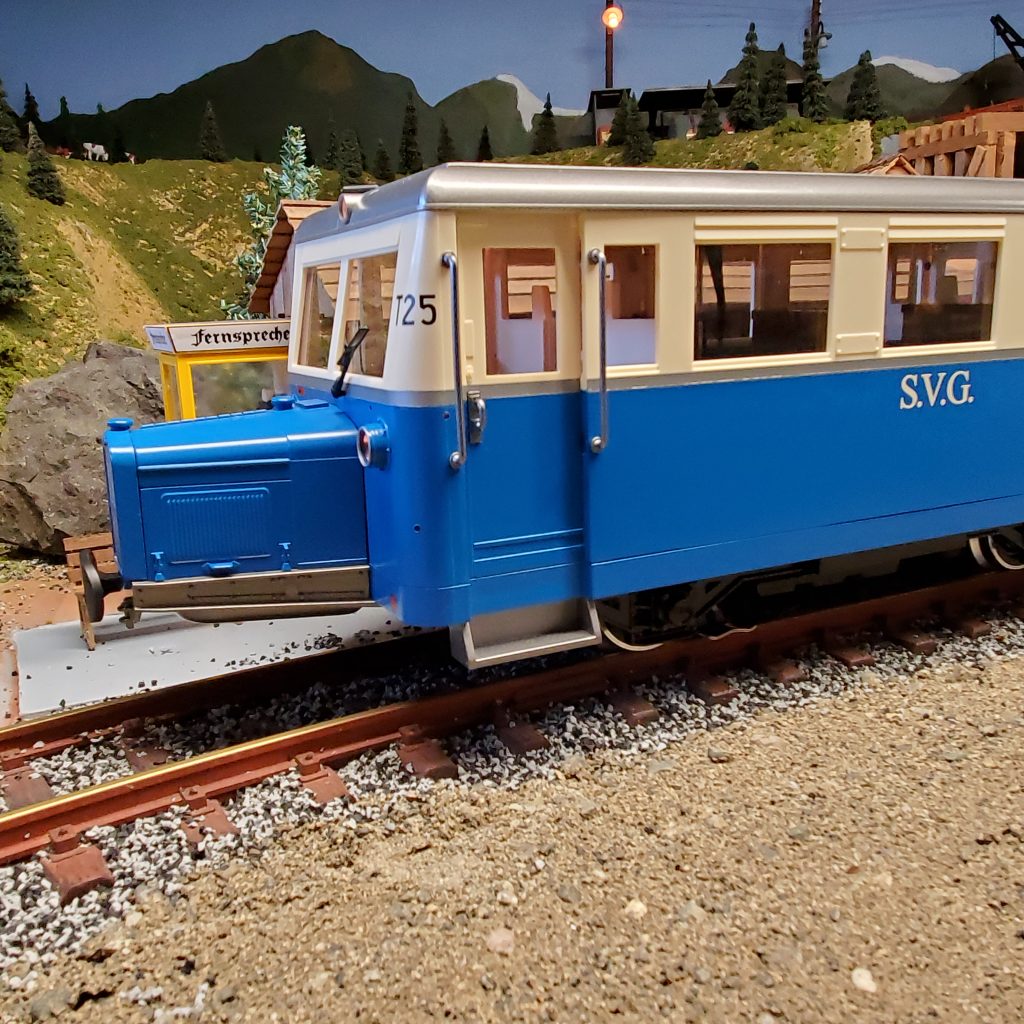
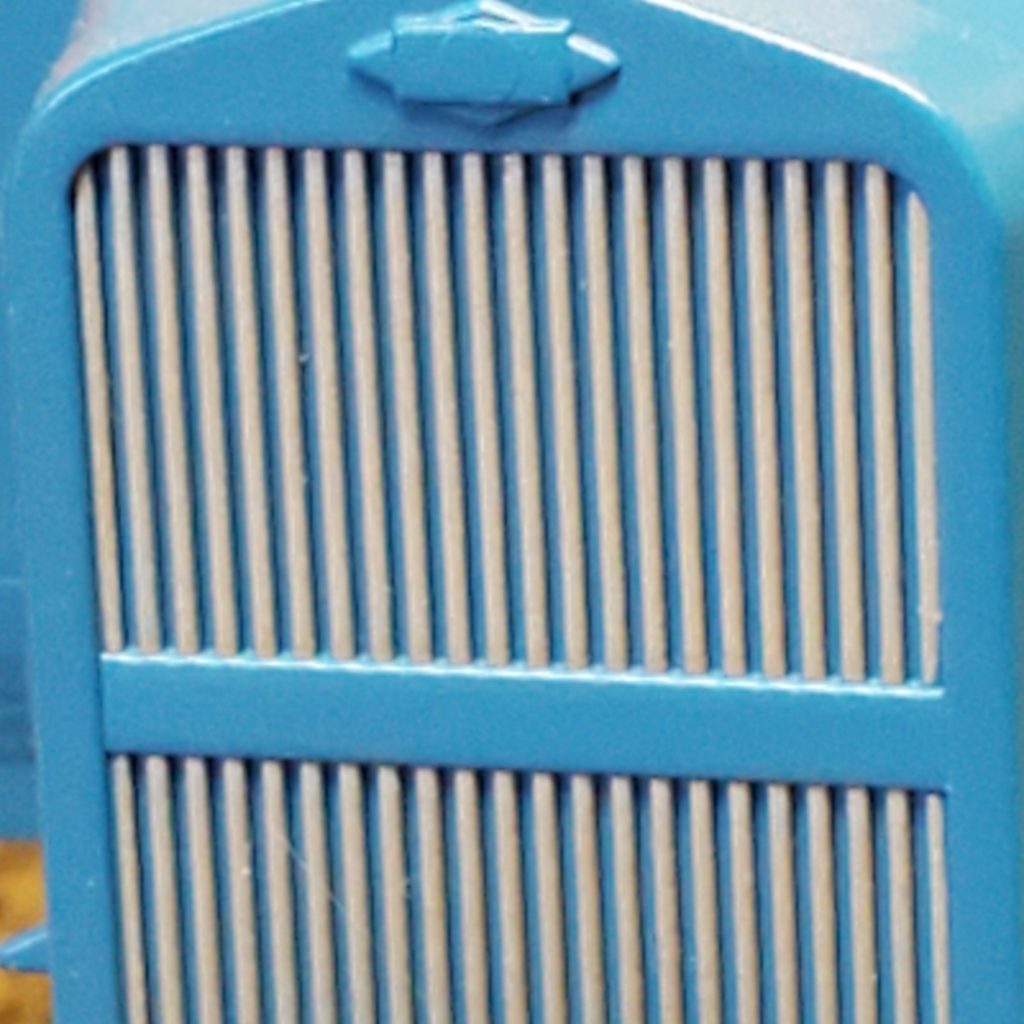
Ford front end 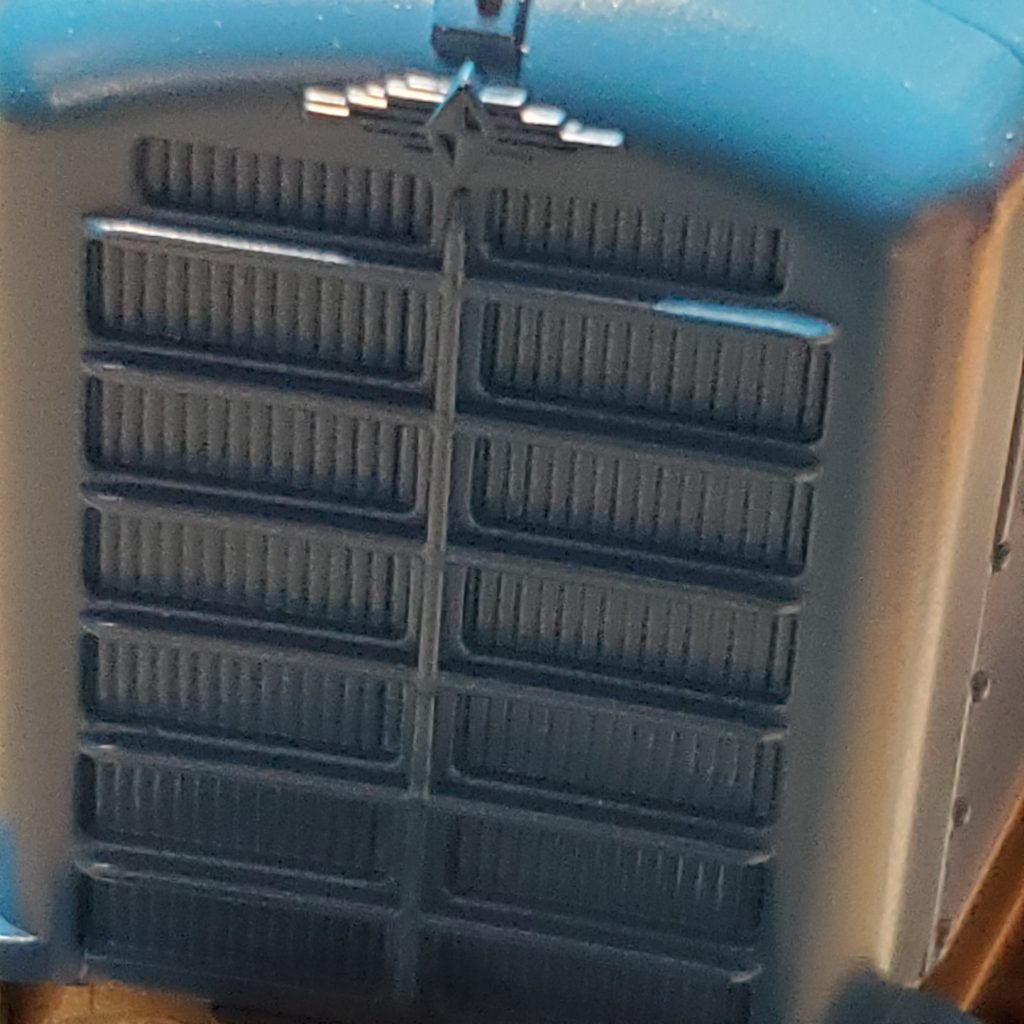
Borgward front end 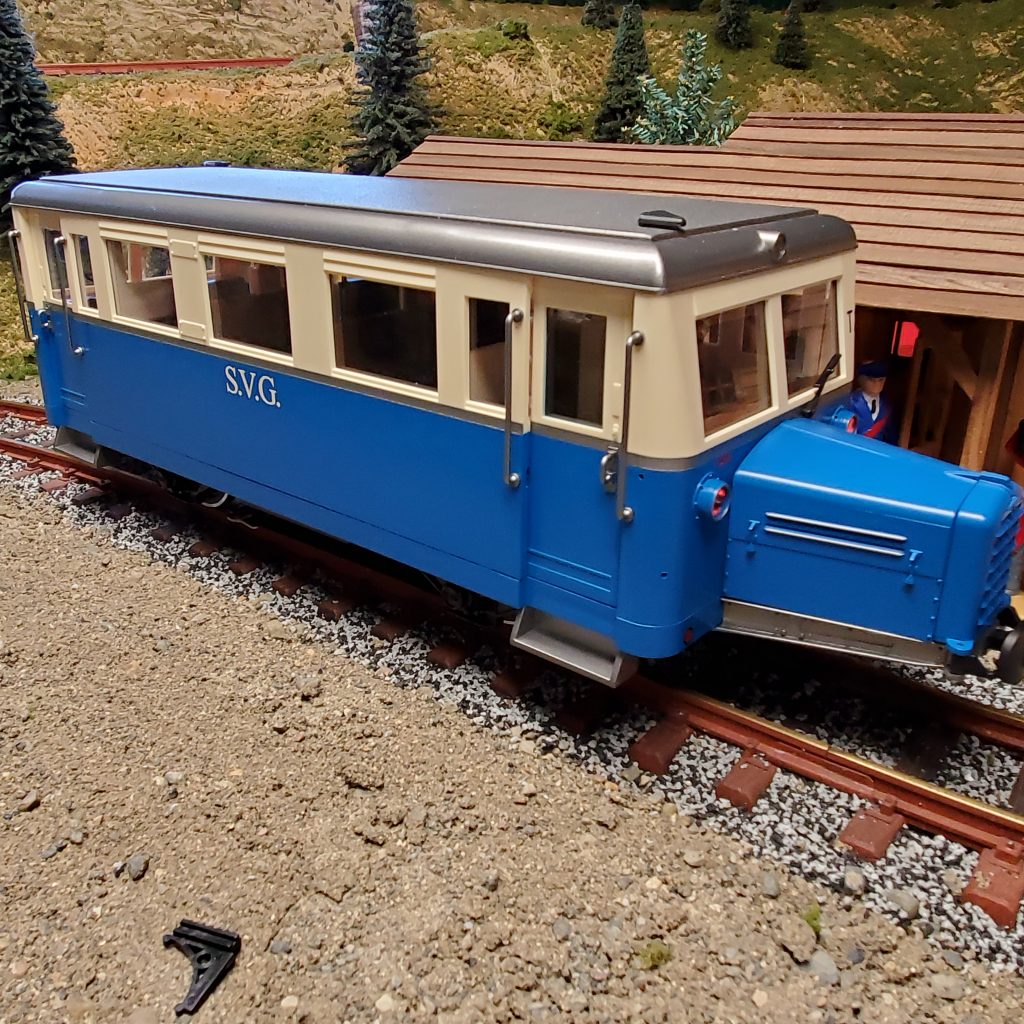
Al
Tacoma Clinic Helping the Community
By Kevin Klettke
The 4th Division of the Pacific Northwest Region’s Tacoma Clinic is proud to support the local community with our yearly contribution to the Emergency Food Network. For the ninth consecutive year, at our November 2019 clinic, the members presented a check to Michelle Douglas, Chief Executive Officer of EFN for $1,300. This brings our nine-year total to $12,360.
Our efforts are spear headed by member Leo Scafturon, who came up with the idea to give back to our community during the 2010 floods that brought so much local damage and hardship to so many, particularly in the Chehalis and Centralia areas. After presenting the idea to the members, and then leader Gene Swanson, the motion was passed. Every month since, the can has been passed around at each clinic to collect donations from our generous membership.
Food insecurity impacts people of all backgrounds, including the working poor, seniors, and people experiencing homelessness. Now, during the Covid-19 pandemic, the food bank network which EFN supports is even more important.
In a letter to the Tacoma Clinic membership, Director Douglas wrote, “On behalf of those who need it most, we thank you for helping us distribute more than one million pounds of food each month. We cannot do this alone; your generosity is greatly appreciated.”
Kevin
Tacoma Clinic Host
Triple T Rail Road
Article & Photos By Al Babinsky
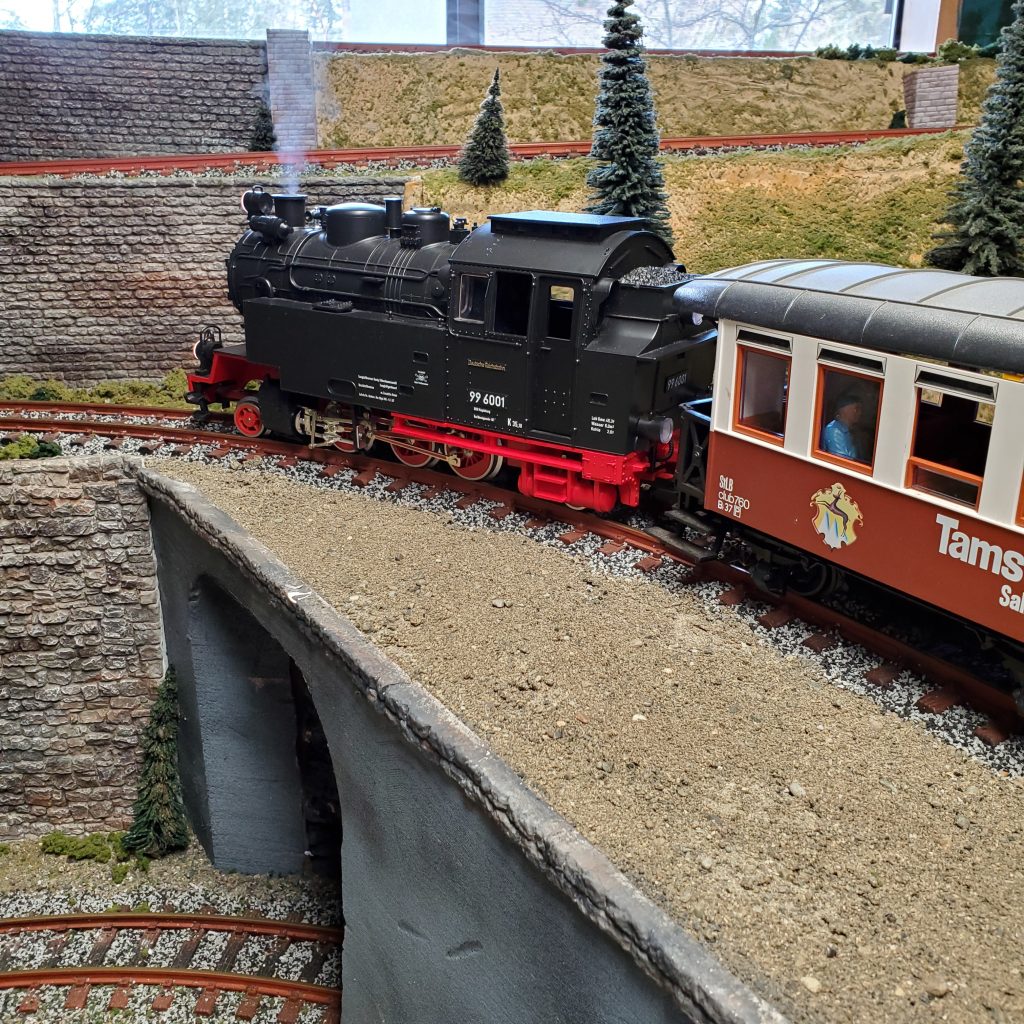
While in quarantine I have been working on the railroad and want to share some photos. A new addition arrived at the TTT, it is a LGB model 2080D. If you not familiar with the designation D after the model number it means Dampf (steam). I decided to install a sound decoder and fan driven smoke generator. My original choice was a Zimo decoder but found out that there was extra cost involved for the sound so I checked with ESU and they had the proper sound to install and ordered the decoder and their smoke generator. The installation involved removing the control board and connecting the wiring for the lights and motor to the decoder, installing the smoke generator and two speakers. There was no soldering involved since the decoder had terminal strips. After installation the decoder was programmed with the ESU Lokprogrammer the main change was to program the chuff to the wheel rotation.
A little background on the real locomotive that the model is based on. The locomotive is a 2-6-2T, the German designation is 1-C-1 2ht. the 2ht means it carries 2 tons of coal, the letter h means high pressure steam and the t means tender locomotive. In 1938 the Reichsbahn decided to build a series of narrow gage locomotives of different wheel configuration that would have interchangeable parts. The first locomotive that was built was BR 99 6001 which is the 2-6-2T and it was the only one built because the contract was canceled due to the gearing up for war production. The BR99 6001 is still in operation on the HSB Selketahlbahn in the Harz Mountains. There are YouTube videos of this locomotive running in the winter scenery last year.
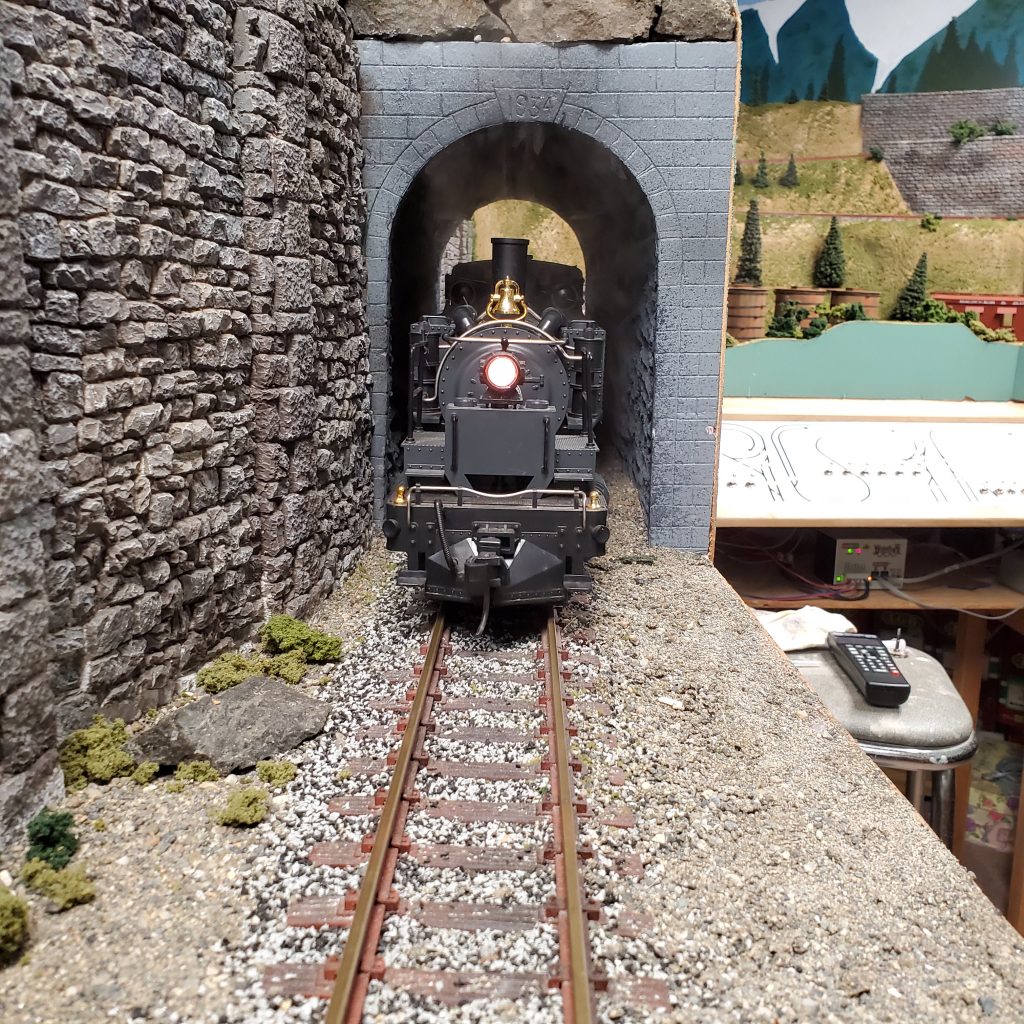
There are two photos one of the above model sitting at the station for passenger loading and the other is of the Uintah Railway #51, a 2-6-6-2T, coming out of tunnel #2 on the lower level.
Al
Election of Director and Superintendent
By Russ Segner
The report of the Nominating Committee is that Ed Ives has been nominated to another term as Director and Russ Segner has agreed to run for another term. Since there were no other nominations, an informal survey of the current Board supports the idea of not following the required formal sending of ballots by mail to membership. This will save about $500.
At the Board meeting on the 18th, we will open the meeting online using Zoom to receive any further nominations. If however, no further nominations are made, the Board will discuss a formal motion to forego the mailed paper ballot this election cycle. So, if you want to make a nomination on the 18th, be ready to join the meeting via the internet. The link to the Zoom meeting will be sent in a Grab Iron email, so keep an eye on your email. You can also contact me for the meeting link.
Russ Segner, 4D Superintendent
russseg@gmail.com 206 200 2211
From the Bunker
By Russ Segner
The current COVD-19 crisis has certainly altered the way we interact at work and home. It is also forcing some changes in our hobby. We can’t run to the hobby shop or craft store for supplies and we can’t get together to work on or operate our layouts with others. Of course, our health is the most important thing right now. But there are some things we can do together anyway.
Many of us are using social media such as Skype and Zoom to share things over the internet. That’s the way our Board will conduct business for the next few meetings. It is also a way we can better communicate throughout the 4th Division. Distance and traffic have become big impediments to our clinics and train shows. So, we are exploring ways to do clinics over the internet. So, check your email frequently.
Our next Board meeting was scheduled for April 18 at 10 AM . We intend to use the application Zoom to conduct that meeting online. It worked well in a test run Saturday. The neat thing about this is that many of our members who want to participate can do so. Many of you already use this in your workplace. The link to the Zoom meeting will be sent in a Grab Iron email, so keep an eye on your email. You can also contact me for the meeting link. russseg@gmail.com
Invitees will be organized in a waiting room and the moderator of the meeting will invite you in. That way we can control participation to members only. You will be able to ask questions and view any documents or exhibits we are discussing.
If you have questions, please email me or call me at 206 200 2211.
Russ
Chuck Ricketts Fantasy Island Railroad
Nothing To Do?
Article & Photos By Greg Price
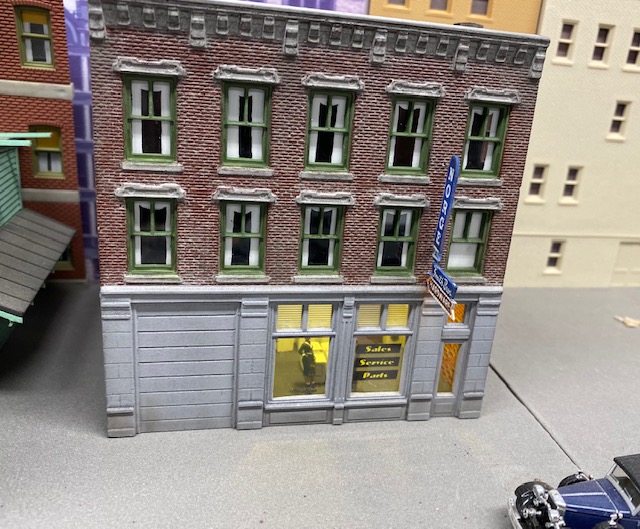
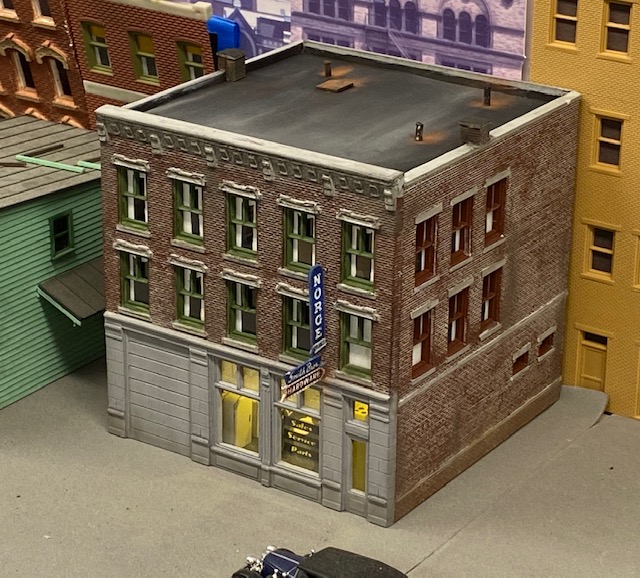
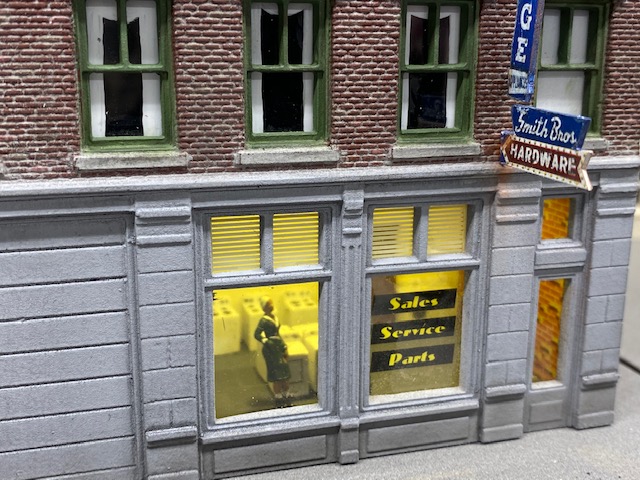
Thought I’d share my most recent “stay at home“ project. This is a standard DPM building with my own touches. Painted with spray paint followed by joint compound colored w/ gray acrylic paint. Then acrylic paint was used to paint window frames and corbels and lintels. I then weathered it with alcohol & India ink and Bragdon’s weathering powders. I made a sales showroom out of styrene as well as numerous washers, dryers, stoves and refrigerators. I then lit it with surface mount LED’s. I also used BarMills signs mounted on wire.
All in all a nice project for my city of Matheson!
Greg Price
Matheson & Western RR
Mt. Vernon March Non-Clinic Report
Click here to read the Mt. Vernon Non-Clinic Report for March 2020 .
Narrow Gauge on the “Isolation Circle Central” Route.
During this interesting time of following the “Stay Home, Stay Healthy” directive from the state, I am finding things a bit more challenging to avoid “honey-dos” since I’m in the house all the time. Sure this may be a great time to work on house projects but what fun is that.
So in order to get away from the world and especially chores for a while, I imagined a setup for my modules that could be used for testing and motivation to work on the real important home projects – model railroad stuff!
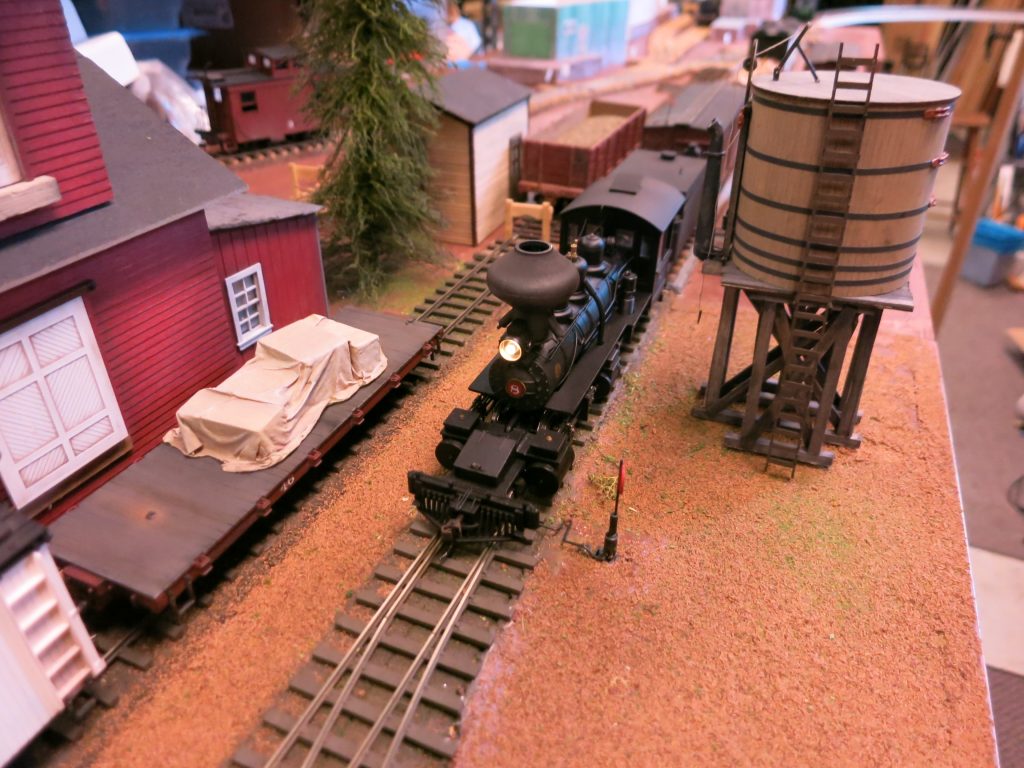
I am part of the Pacific Northwest On30 Modular Group and have six modules in my shop. Most of the time however the modules are stored in their transportation configuration and are only set up if I need to fix track or plant a structure. They share the shop with other vehicles and projects that usually get more attention and I normally don’t have a lot of time to work on them let alone set them up and run stuff on them.
Well the last few weeks have been a different story. Being in quarantine and working all day from my kitchen table “office” on the phone and on the computer, I am pretty much toast at the end of the work day and need to get out of the house. The only place I can go is the yard or the shop. While out organizing some stuff in the shop while I was bored, I found some birch plywood that could be possibly be used make a couple 22 inch radius curves. I thought, hey I’ve got four straight five foot modules that I could connect together and have an oval for continuous running. And so was born the idea for the “Isolation Circle Central”.
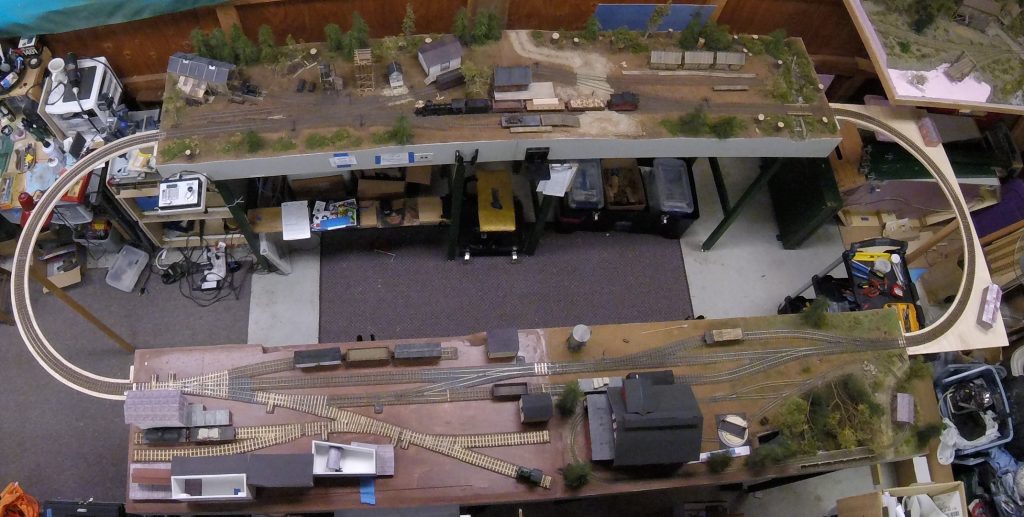
A few evenings of chopping wood and laying track resulted in a seemingly basic circle to run trains around on my finished and work-in-progress modules. There is no way my ol’ lady is going to negotiate that duckunder – so the “social distancing” part of the setup was an extreme success.
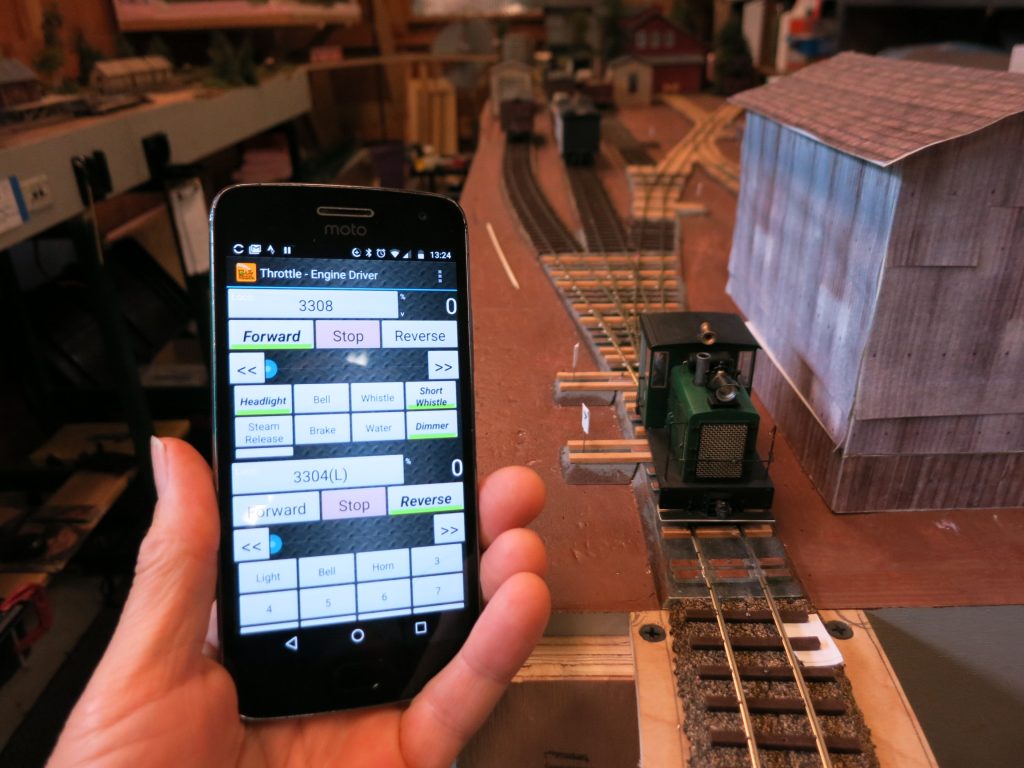
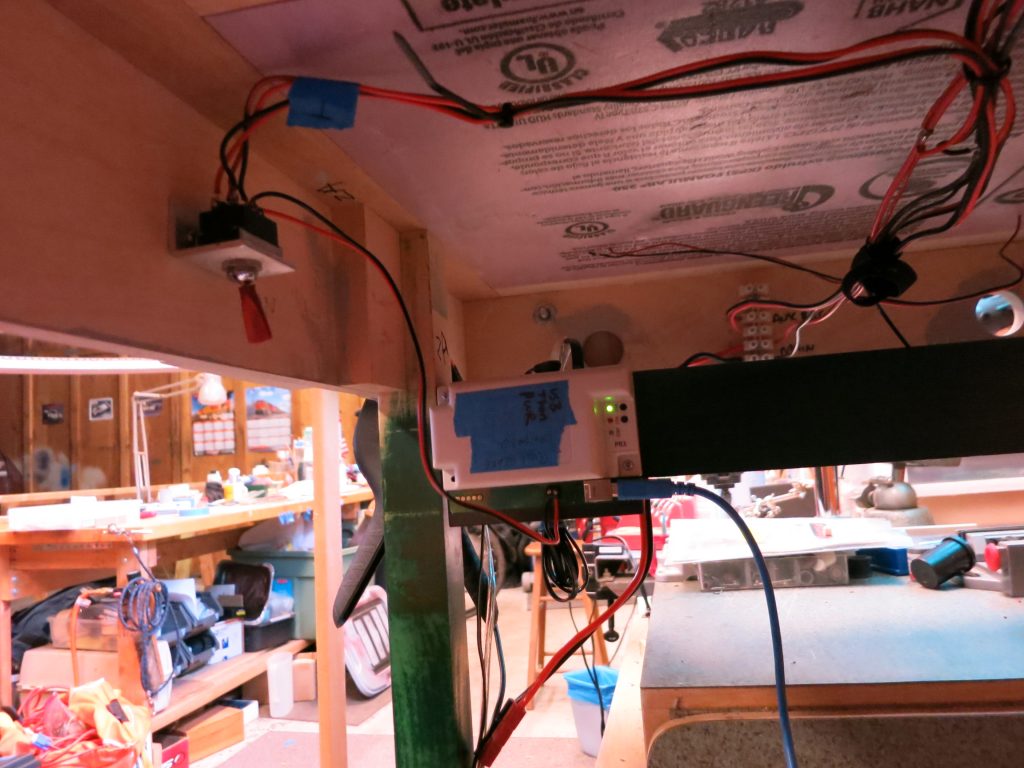
The layout is powered by a Digitrax Zephyr with a Digitrax PR3 to interface with a computer and run JMRI WiThrottles. This way I can run two (or six) locos at once on the cellphone Engine Driver app. I also modified one of my modules to provide a programming track for use with the PR3. Normally we program locos “off layout” on a test track but since I’m using the PR3 for the computer anyway, may as well upgrade capability and use the direct programming feature also. It is certainly much more convenient to program and test on the same track.
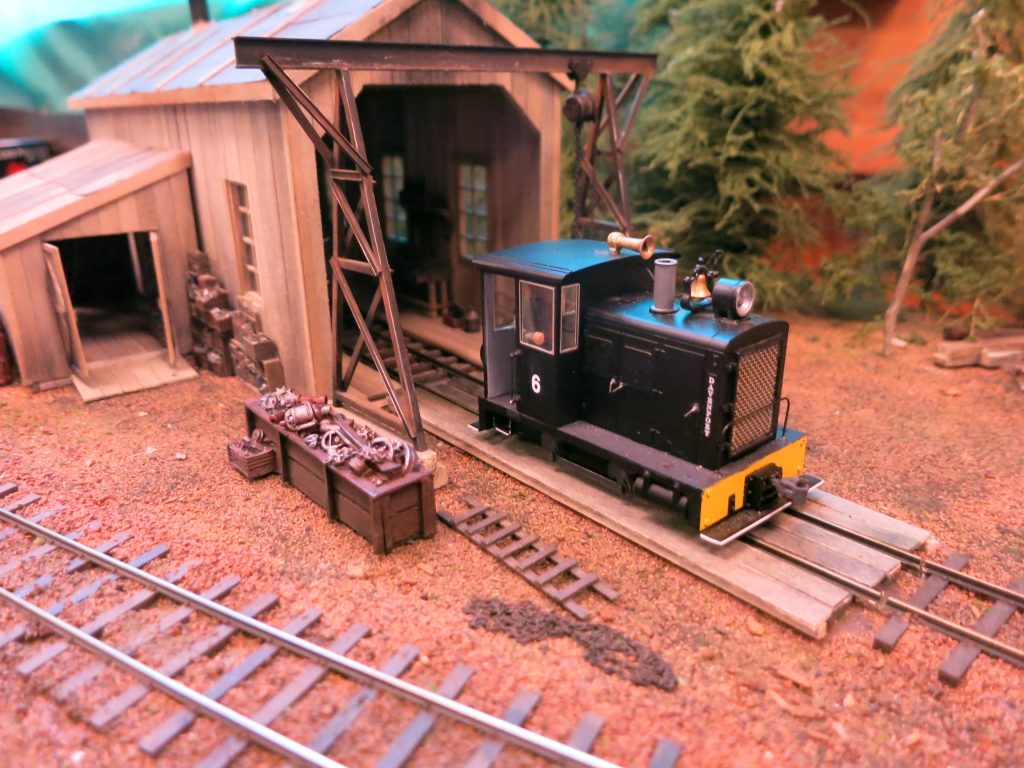
For our PNWOn30 Group we use JMRI Operations Pro to provide switchlists for our operations under TT&TO rules. My modules are already built up as locations with the appropriate spurs in the JMRI program for operations. All I had to do was create a modified route to only include my four modules and select cars from my inventory to be used for operations.
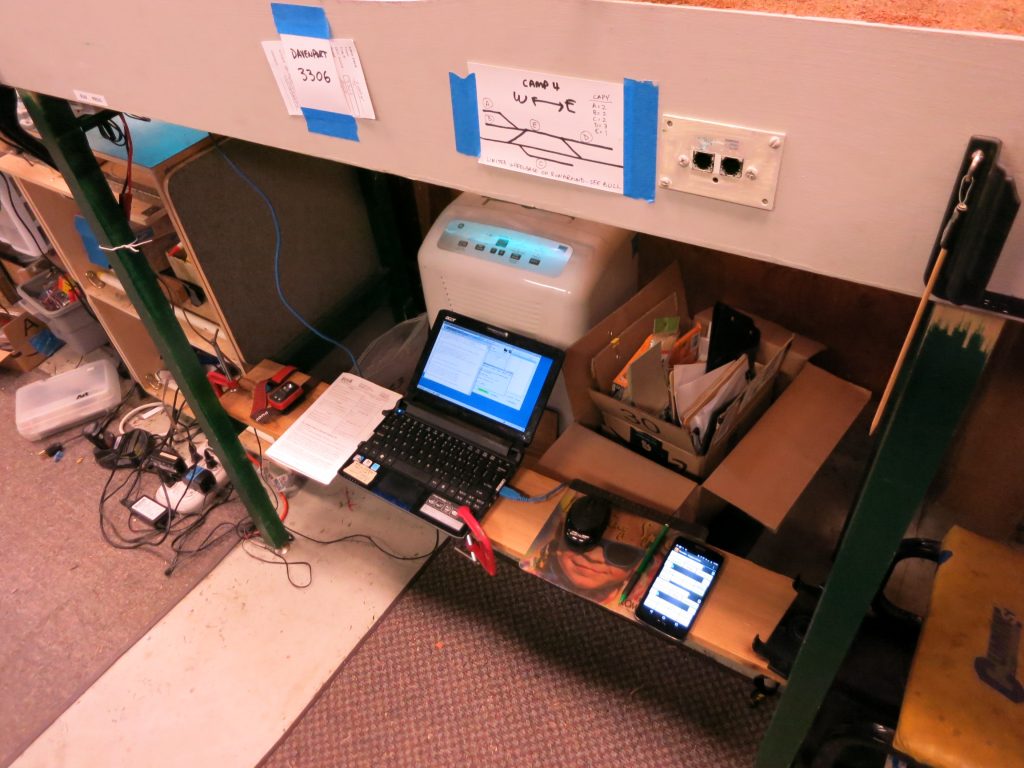
So, with little effort I had JMRI setup to run switchlists specifically for my setup. I designated one of the corners as a staging yard and run a route from staging to staging traversing all the modules and performing set outs and pick ups according to the JMRI generated switchlists. Between each module “location” I do a complete lap around the layout to get some distance before the next module stop. All told the “Circle Job” takes a little over an hour to complete. That’s the time for at least one cup of a refreshing beverage and certainly supports the “Stay Home, Stay Healthy” directive.
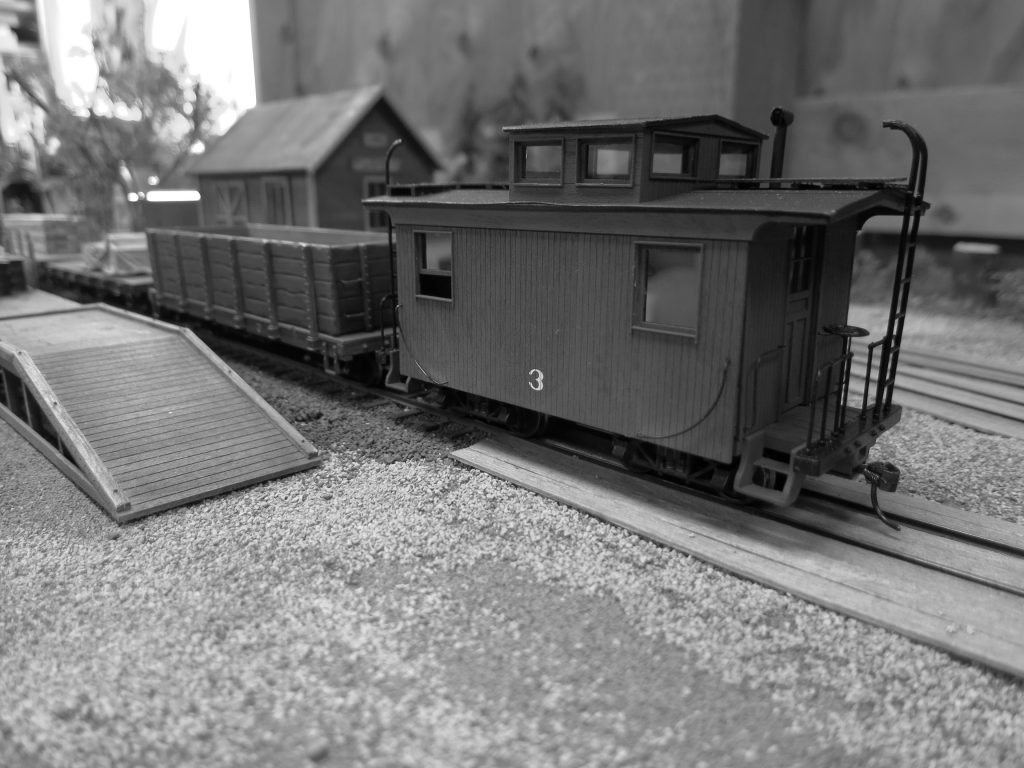
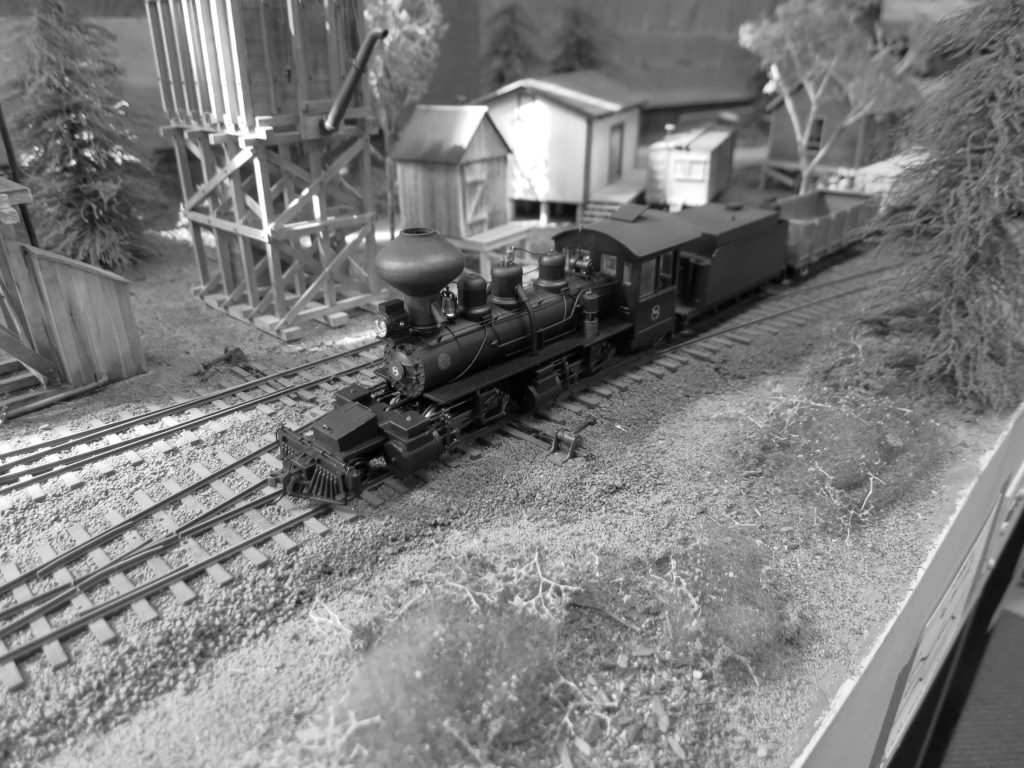
Have fun and Be Safe.
####