Grab Iron Posts

Fathers Ride Free at the Northwest Railway Museum on Father’s Day Weekend

Peggy Barchi

The Northwest Railway Museum invites children to treat their dads to a special train excursion aboard the Snoqualmie Valley Railroad this Father’s Day weekend, June 20-21. Fathers ride free when accompanied by their paying children – of any age! Enjoy views of the Cascade foothills, Snoqualmie Falls and the Snoqualmie Valley as you relax aboard the Northwest Railway Museum’s antique coaches. Bring the whole family!

Trains depart every 90 minutes beginning at 11:30 AM from the Snoqualmie Depot at 38625 SE King Street and at Noon from the North Bend Depot at 205 McClellan Street. Roundtrip fares: $10 ages 2-12, $18 ages 13-61, and $16 ages 62 and up!

Visitors to the museum experience the excitement of a working railroad while learning about the important role railroads played in shaping the character of the Pacific Northwest. The Snoqualmie Depot, exhibits and Depot Bookstore are open to the public 10:00 a.m. – 5:00 p.m. daily.

For more information on train schedules, the Train Shed Tour packages, Day Out With Thomas™ tickets and operating hours visit the museum on the web at www.trainmuseum.org or call (425) 888-3030.

Families ready to ride the excursion train at the Northwest Railway Museum.

Families ready to ride the excursion train at the Northwest Railway Museum.

Seattle-North on June 4, 2015 – North End Train Room Tour

By Jeff Moorman and Bobj Berger, Photos by Bobj Berger

Next Clinic:

Our next clinic (7 to 10 pm, June 4, 2015) is not a clinic at all, but a layout room tour with four stops in the Edmonds and Lake Forest Park area.

None of these layouts have been open for general viewing before and two will likely never be open again, since they are being sold.

Carpooling is highly encouraged, since these are all residences without special parking facilities. As always, please be mindful of where you park and of keeping the neighbors happy.

Starting Address: Everything begins at Brent C’s, 3744 NE 165th St, Lake Forest Park. The house is located on the NW corner of NE 165th St and 39th Ave NE in Lake Forest Park, in case the address is deceptive. Enter through the garage. On this first layout tour stop each carload of visitors will be issued a “Track Warrant” with directions to the next three train rooms, which are all within a mile or so of each other in Edmonds. Call Bobj’s cell phone at 206-948-0862 if you get lost or need additional directions.

What you can expect at Brent’s:

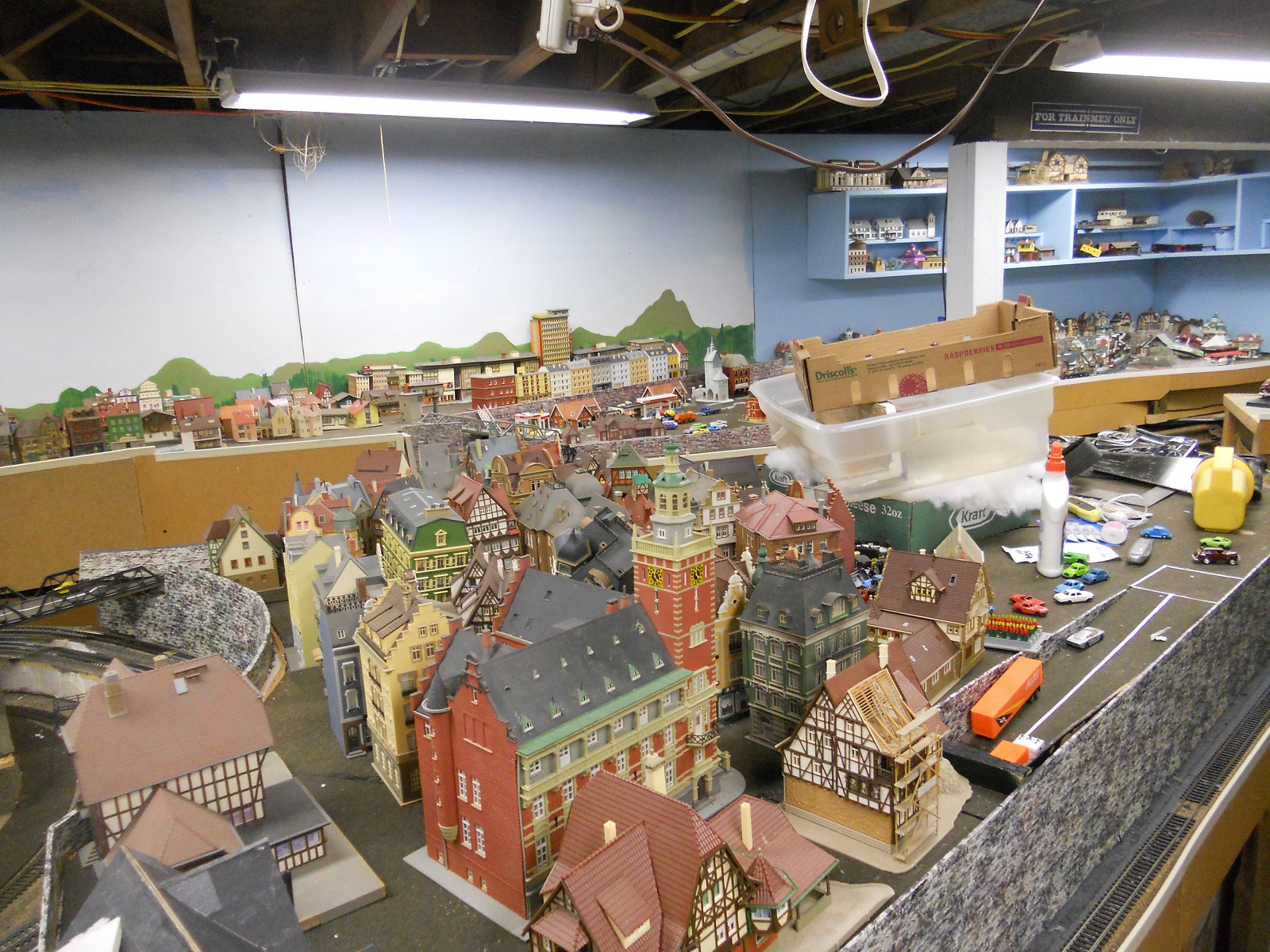
This is a large HO layout with more buildings than most of us have ever seen on a single home layout. Most of these buildings will be for sale (see the “Note” below). We will not only visit the basement layout, but also the upstairs train display room.

Note: [Friday hours updated 6/3/15] Immediately following our tour the hundreds of buildings and vehicles will be removed and assembled in the garage for a model railroad estate sale this coming weekend. On Friday, June 5 the estate sale hours will be from 5 – 10 pm and the Friday sale is for NMRA members only (the perfect way to start your 4th Division Spring Meet weekend). On both Saturday and Sunday the hours will be from 10 am to 4 pm and will be open for everyone.

What you can expect at the next three stops:

Bob P’s: This HO empire in a lower level of the home was constructed with grandkids’ operations in mind. The owners are now contemplating a retirement downsize so the rolling stock and all supplies (including track) are for sale. This layout mostly follows USA prototypes, but there are some English trains as well, plus some stories about getting them and building the layout.

Craig J’s: Combining households resulted in the original layout space being converted into living space and a new train room was created in a former bedroom. The room has wall shelving displays of O and Standard Gauge trains and accessories, a work/repair desk, and is all next to the antique toy room you pass on the way in.

Harley O’s: This is another lower level HO layout, based on the Great Northern transition era in the Pacific Northwest. The layout is fully scenic’d and completely fills the room. There are stunning views of mountains and trees. A spur runs into the next room and we all hope for future expansion!

Here are some pics of the train rooms we’ll see:

One of the layouts on the Seattle North Layout Tour in June 2015

One of the layouts on the Seattle North Layout Tour

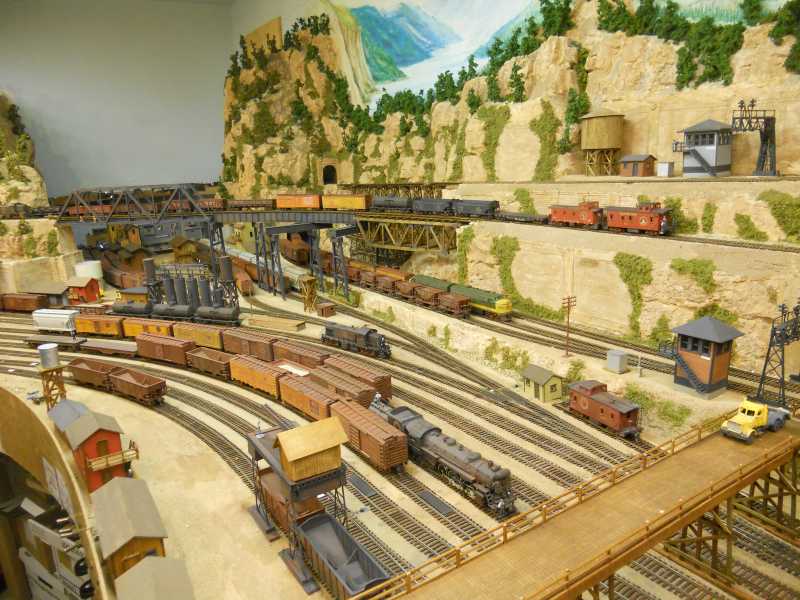
Brent C's double decker layout

Brent C’s double decker layout, on the Seattle North Layout Tour

Bob P's layout

Bob P’s layout, on the Seattle North Layout Tour

Prior Clinic:

If you missed last month, you missed a treat. Our clinician was Dave Honan, a civil engineer specializing in transportation. But Dave is also a train buff and a photographer. He awed us with pictures of the steam rebuilding program at the Northwest Railway Museum, followed by 2 AV presentations – one on coal mining and transportation, and one on modern urban transit.

Don’t take my word for the beautiful pictures. Go to his website at davehonan.com and see for yourself. Thanks, Dave, for a wonderful program.

The next meeting is June 4 at 7 pm when we embark on a North End Train Room Tour (see directions above). The next regular clinic is September 3. Hope to see you there or at least sometime on down the line.

A Narrower View – Private Lines

Syd Schofield

Editors note: Welcome to the fourth article of a series on narrow gauge by Syd Schofield. The previous article is available by clicking here, or by filtering with the category “Narrow Gauge”. Syd welcomes discussions and feedback, which can be made by clicking on the comment link at the bottom of the post.

When a business enterprise has to only deal with the immediate needs of the business, moving the business materials, construction, maintenance, and (sadly) deconstruction, the operating plans will most likely differ from the common carrier. Dedicated consists that remain coupled or run back and forth without turning around, along with equipment sized for the cargo, grades, clearances, fuel, water and crew availability all result in the probable lack of need for dining cars or sleepers with clean linens. Special configurations and equipment such as cableways, funiculars and cog railroads as well as unit trains provide some interesting possibilities in modeling.

The lumber and mining companies were typically short-term operations lasting only as long as the forest lease or mine claims were productive. The three phases of business – getting into the business, operating the business, and getting out of the business as painlessly and gracefully as possible – were the goals. We tend to take a particular snap shot in the life of a railroad to model. Aside from the financial aspects of the railroads, which is a whole ‘nother subject, we like to work with the operations and maybe even the construction of that future spur or branchline. I don’t recall seeing a model of the decommissioning phase of a railroad. Not much interest there. It’s bad enough to show the results of accidents and fires.

So we have the railroad proper and the immediate business enterprise facilities to add flavor to the model. The mines, mills, maintenance, staff housing as well as appropriate scenery can add a lot to the model over and above the nice rolling stock and track work we tend to focus on. This is all within the snap shot of what was technically possible in the chosen period, if not directly attributable to a prototype. The history of technology and practices employed in hardscrabble railroading typical of the narrow gauge lines can be interestingly and creatively reproduced in narrow gauge modeling.

Skagit Valley and Whidbey Clinic Report, May 2015, Ted Becker on R/C Servos as Switch Machines

Rich Thom, photos by Ted Becker except as noted

Clinic Chair Rich Blake welcomed 22 others to the SV & W Clinic’s May meeting at the Summer Hill facility in Oak Harbor. Rich reminded all of two upcoming NMRA events, the 4th Division PNR’s Spring Meet at the Sheraton Bellevue on June 6th (with layout tours on the 7th) and the NMRA National Convention in Portland in August. Jack Tingstad discussed next season’s model contest. The theme will be a flatcar with a load, with a scratch-built load as the main feature to be judged. The flatcar can be scratch-built, too; Jack mentioned that an excellent reference for building a generic wood flatcar can be found under Tutorials on the Kappler scale lumber website, www.kapplerusa.com. Detailed contest guidelines will be distributed in the fall.

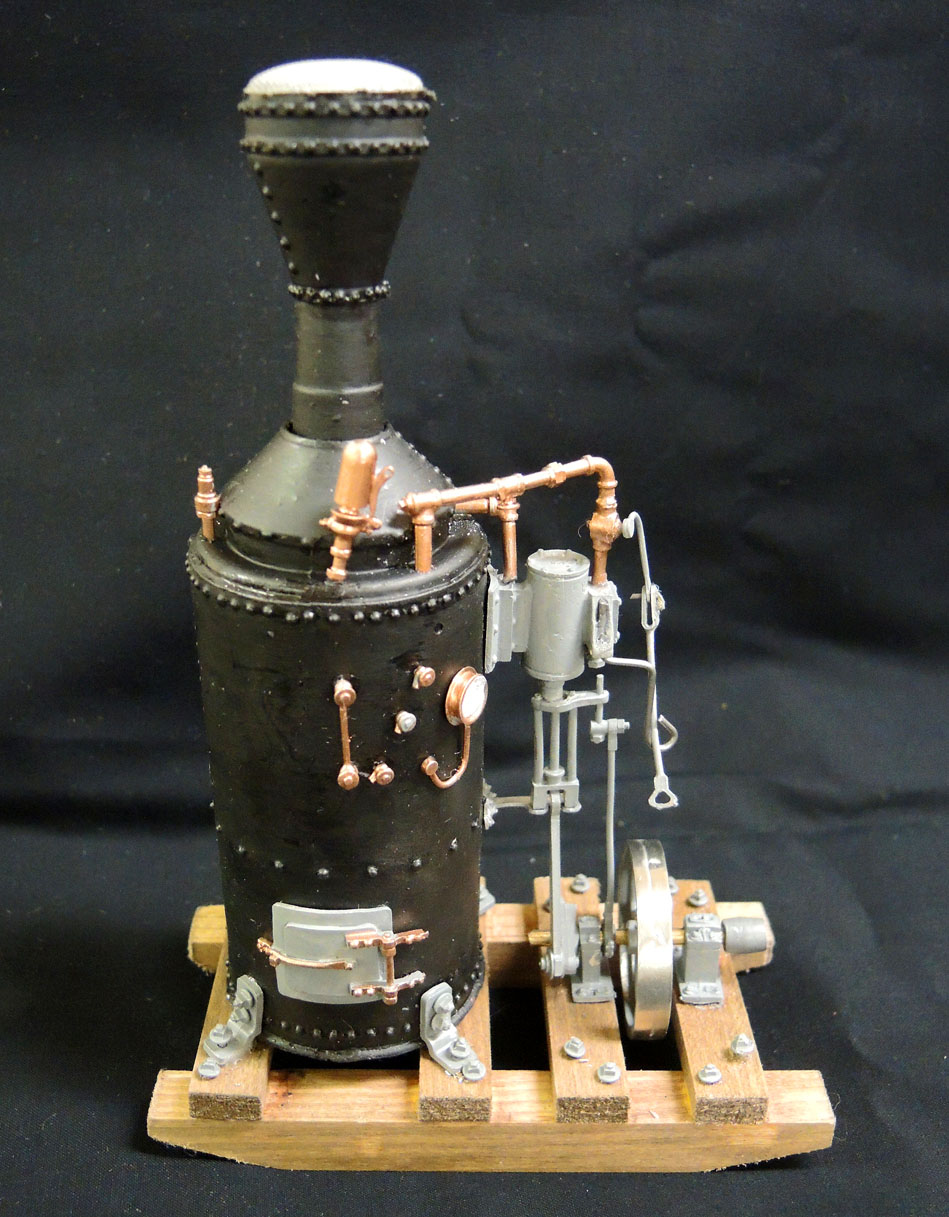
John Marshall brought one model for Show-and-Tell, another piece of essential machinery for his F-Scale (1:20.3) sawmill: a stationary steam engine (Fig 1).
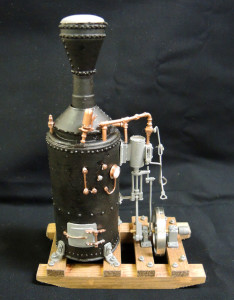
Fig 1 -  John Marshall’s F-Scale Steam Power Plant (Photo: Rich Thom)

Fig 1 – John Marshall’s F-Scale Steam Power Plant (Photo: Rich Thom)

This is a kit from Ozark Miniatures, their “Frick Portable Steam Power Plant.”

Ted Becker presented the evening’s clinic “Utilizing R/C Servos as Switch Machines“. “Servo” is short for servomechanism — in this case, a mechanism that provides a mechanical output position controlled by an electronic signal and actively held in that position via a feedback signal. Sophisticated servos see widespread use in aerospace and other industries, but less expensive ones were originally developed and adapted for use in radio-controlled (R/C) airplanes.
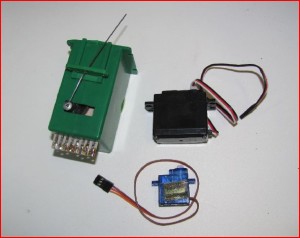
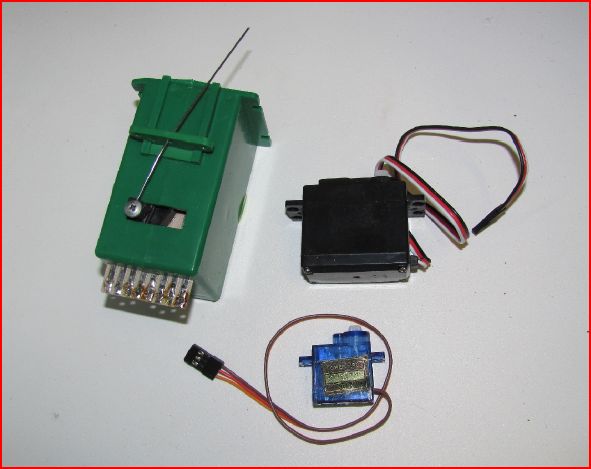
Fig 2 - Smaller Size is One Advantage of Servos

Fig 2 – Smaller Size is One Advantage of Servos

One advantage of servos for model railroad applications is smaller size compared to commercially available stall-motor switch machines, such as the Tortoise by Circuitron (at left, Fig 2). Although an excellent product, it requires a fair amount of volume below the benchwork. Another servo advantage (Fig 3) is ease of installation, in a variety of possible orientations (discussed later).
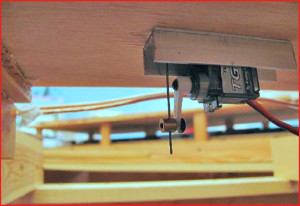
Fig 3 - Ease of Installation is Another Advantage

Fig 3 – Ease of Installation is Another Advantage

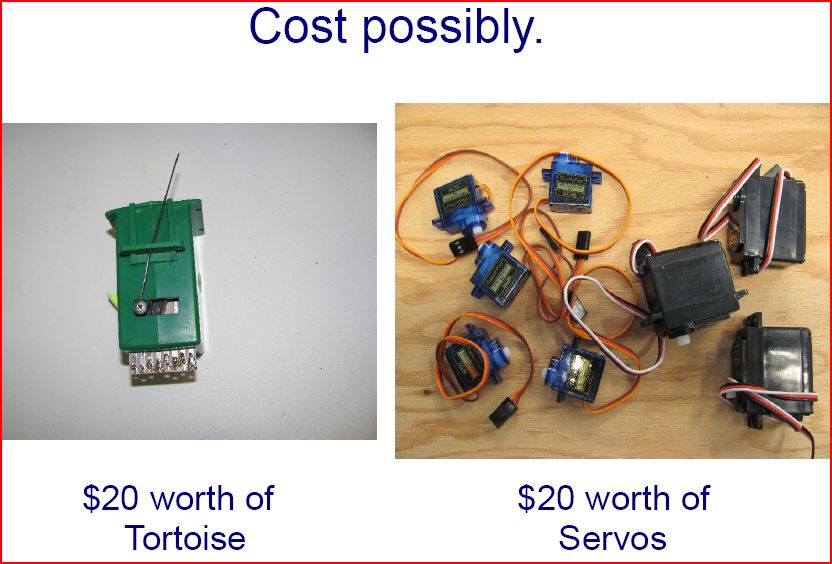
The third advantage is possibly cost (Fig 4). The qualification is due to the fact that servos require an electronic signal provided by a servo controller or driver, so that the total cost per servo (the figure to compare to the cost of a Tortoise, for example) includes the cost of the servo plus the electronics to drive it.
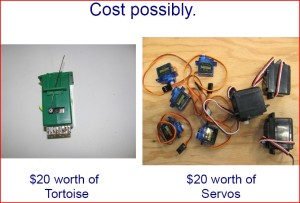
Fig 4 - Cost is Possibly a Third Advantage

Fig 4 – Cost is Possibly a Third Advantage

There are many suppliers of suitable drivers, and the products offered vary widely in features and cost that result in a very wide spread in the final cost/servo for the modeler. Ted thoroughly researched the products of some of these suppliers which include:

Ted tabulated the characteristics, features and cost of the servo controllers offered by these suppliers, and then calculated the resultant cost/servo for each. The resulting table is too large to reproduce in this article, but interested readers can email Ted at rail.bird@att.net and request the spreadsheet. It also includes the website addresses of all the suppliers for exploring further.

The models available from these suppliers can drive anywhere from one servo up to as many as 48. Some are compatible with DCC, while others are not; some products also include relays (for powering frogs) whereas others don’t. The resultant cost/servo calculated by Ted ranges from a low of about $6, to $36 — quite a range, so buyer beware!

As a result of his research, Ted selected the servo controller product line manufactured by Arduino which, depending on the model, yield a cost/servo between $6.25 and $7.50. In addition to lowest cost of all the products on a per-servo basis, the Arduino boards are versatile and easy to program (a simplified version of C++). Arduino was developed, in fact, to make micro-controllers accessible to artists, students, and hobbyists without extensive digital circuit knowledge.

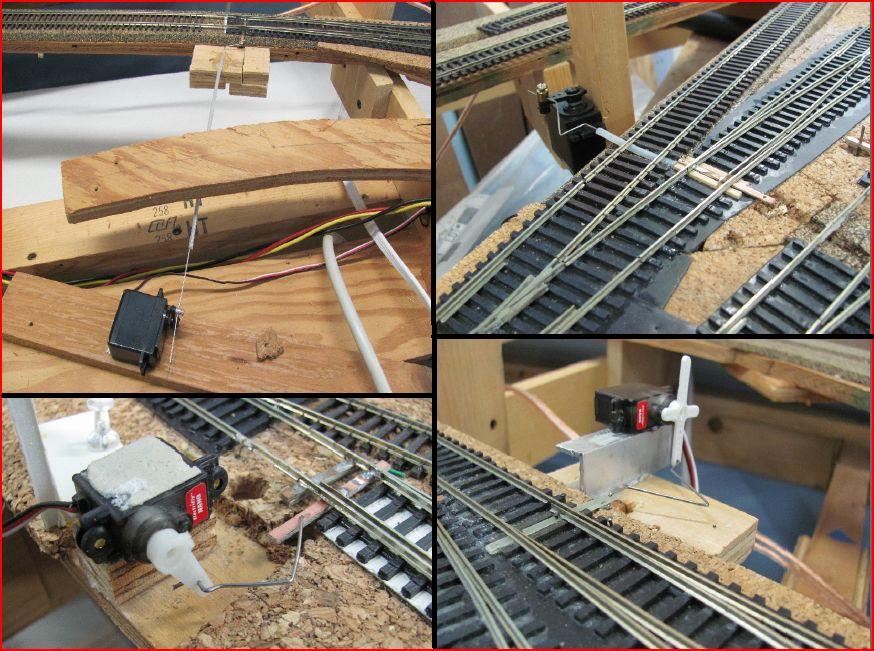
Back to the servos themselves, regardless of manufacturer the servos all have three wires with a standard color code, a connector with connections on 0.1” centers to match common header pins, and an operating voltage range of 4.8 to 6 volts. Mounting and installation can be accomplished in a number of ways. Some commercial mounts are available, but Ted makes his own, some customized to the location; again, the relatively small size of servos permits squeezing them into tight or awkward locations, such as the four examples on Ted’s layout shown in Fig 5.
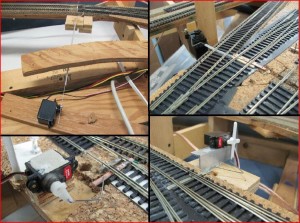
Fig 5 - Four Installations of Servos in Tight or Awkward Places on Ted’s Layout

Fig 5 – Four Installations of Servos in Tight or Awkward Places on Ted’s Layout

Installation requires selection of throw arm (available in a number of configurations and sizes) and wire linkage between the throw arm and turnout point tie bar. Depending on location, you can use (1) push-pull linkage; (2) “waving wire”; or (3) “pivoting wire” (such as the Tortoise employs). Ted finds that 0.032” and 0.047” diameter music wire is the most useful for linkage in HO scale, while the next smaller size, 0.025,” is too flexible except for some push-pull installations. Du-Bro makes 0.032” pushrods (wire within plastic tubing) for model aircraft applications which can also be used for switch machine linkage.

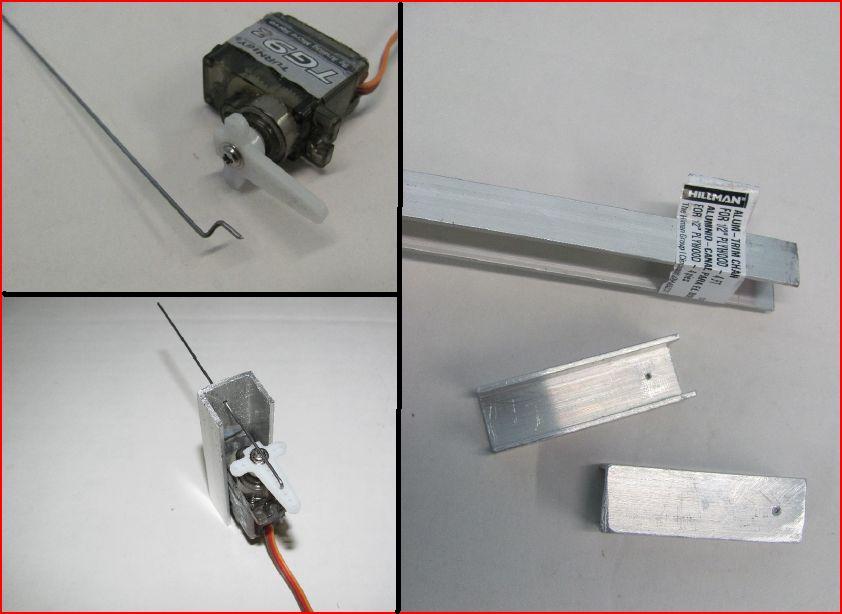
One of Ted’s “standard” mounts, useful for straightforward “pivoting wire” installations where the servo is below the sub roadbed, is shown in Fig 6. He cuts a 2” length from aluminum channel (e.g. Hillman Aluminum Trim Channel for ½” Plywood), and then drills a 0.045” to 0.05” pivot hole (#55 or 56 drill) for 0.032’ music wire, as shown in the figure. If you want to mount with screws instead of double-sided tape or adhesive, add two screw holes. The resulting simple mount is shown at the lower left. At the upper left, “Z-bends” in the music wire are typically used in the installations to secure the wire to the servo throw arm.
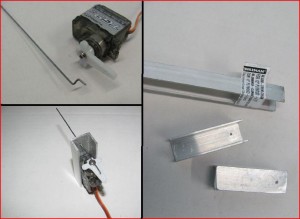
Fig 6 - One of Ted's "Standard" Mounts Uses Aluminum Channel

Fig 6 – One of Ted’s “Standard” Mounts Uses Aluminum Channel

Finally, if you want to power a turnout frog (or a signal), you can add a SPDT microswitch to the servo/throw arm assembly as shown in Fig 7.
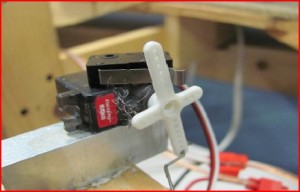
Fig 7 - Adding a Microswitch for Powering Frogs or Signals

Fig 7 – Adding a Microswitch for Powering Frogs or Signals

In summary, if you are planning a layout with a large number of turnouts where switch machine cost might be a factor, and/or have tight locations where their small size and versatility might be an advantage, consider using R/C servos!
Mt Vernon May 26, 2015 NMRA Clinic Report

Roger Johnson, photos by Roger Johnson and Bob Gilbert

Twenty-six folks attended our last clinic of the season to enjoy an excellent program (see below) and some delicious brownies baked by Paul Koren’s wife. Thank you Mrs. Koren! Ted Becker, our MC, once again opened with encouragement to join NMRA, the sponsoring body for our meetings through the 4th Division of the Pacific Northwest Region

Announcements reminding us of upcoming events included:

Tool of the Month: Al Carter brought our attention to a web site that has the free graph paper generator, where you can adjust the graph squares to represent a scale foot in your given scale, very handy for scratch builders. The link to the web site is http://www.incompetech.com/graphpaper/lite/

Bring & Brag items featured:

  • Two more of Paul Koren’s fine resin box cars
  • Nick Muff displayed more of his 3D printed sugar cane cars by Shapeways
  • Roger Johnson showed a color palette displaying the five brick colors he uses
  • Roger also displayed the home made hot wire foam cutter he made for under $15

Our program for the evening was about Tesoro Logistics’ crude oil rail off loading facility on March Point, Anacortes. R. L. (Bob) Gilbert did an excellent job telling us about the construction and operation of Tesoro’s rail offloading facility at its March Point refinery. This writer was so interested in what Bob had to say that he didn’t take notes until he got home. So any meandering and/or inaccuracies are the fault of the writer, not the speaker.

The facility was completed in September of 2012 located at the bottom of the slope on the west side of the point. The site originally proposed was higher up the slope but it was determined that there were some wetlands in that area which could have been mitigated but the alternative site was determined to be the best option to be able to proceed in a timely and economically feasible fashion.

The facility consists of a concrete pad 1,600’ long by 110’ wide lying in a NNW to SSE orientation parallel to the Fidalgo Bay high water mark 200’ to the west. There are four tracks built into the pad, each able to hold 25 cars or a 100 car train. Bob described a very complicated and comprehensive infrastructure under the pad for the collection of the crude oil, control of emissions and capture of any oily water (he claims it rains around there occasionally) that may accumulate. These include piping, wells for inspection and testing, pumps, etc., the details of which were somewhat dizzying to this writer. Under it all a single piece rubber diaphragm extends the full 1,600’ by 110’ facility to catch anything that may escape the more sophisticated capture devices above.

Under normal conditions, one train arrives each day, hauled to the refinery site by Burlington Northern Santa Fe. A train can be ready to roll out of the refinery within 12 to 18 hours from the time it enters. At the gate, the BNSF crews are replaced by crews from Savage Services. These folks conduct the rail and off loading operations under contract with Tesoro. They bring the train in, break it into 25 car cuts and back them into the offloading facility. They then proceed to offload the crude via 4” hoses attached to the underside of each car with the oil draining out by gravity into a 36” recovery line underground. The vent is opened at the top to avoid a vacuum forming inside the tank car. Every other car is vented with emissions from the emission recovery system via an emissions recovery pipe that leads from the underground recovery line to the car’s top vent. The other half of the cars take in regular atmospheric air to equalize the pressure.

Once enough oil has been collected, pumping it from the offloading facility to the refinery (7,000’ distant and 200’ higher) begins. There are three pumps, each rated at 2,500 gallons per minute (GPM). They are brought on line sequentially to pump at the rate of 7,500 GPM when all three are running at 100%. This flow rate is essentially equal to 10,000 barrels per hour (BPH). One tank car holds approximately 680 barrels (42 gallons/barrel). Thus a 100 car train carries 68,000 barrels. At a rate of 10,000 BPH the train can be emptied in approximately 6.8 hours.

There is also a team of UTLX people on site to do any repairs or maintenance a tank car may require. If repairs cannot be completed soon enough to return the car to its train there are contingency cars on site for replacement, with the repaired car put in the contingency group when repairs are complete.

As noted above, a full 100 car train is carrying upwards of 68,000 barrels or 3 million gallons of oil. What is called West Texas Intermediate is a common benchmark used to gauge the prices of various types and grades of crude oil. The current value of WTC is approximately $52/barrel but Bob indicated that the oil they bring in is priced somewhat less than that. He was understandably vague on Tesoro’s actual cost. This writer did a hypothetical calculation using a cost of $40/barrel resulting in cost of a train load at the gate of slightly more than $2.7 million.

With regard to environmental safety, Bob indicated that they have had zero spills and zero injuries since inception of the operation in September 2012. As an indication of the extent to which Tesoro goes to avoid environmental damage, before the cars are drained, each one gets a hand placed fiberglass drip pan placed underneath it to catch any stray drips from the fittings. On a final note, while recent tank train derailments that have been prominent in the news do not pertain to the refinery itself, the over the road transportation is obviously part of getting the oil from the ground to our gas tanks, so it is of concern to Tesoro and other producers. Bob pointed out that while improving the integrity of the cars is important, the most important thing is to eliminate the derailments. No matter how a tank car is reinforced, if it hits the ground at 50+ MPH there is probably going to be trouble (my words, not Bob’s).

Thank you, Bob, for an outstanding presentation.

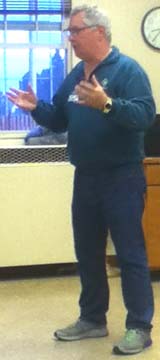
our speaker Bob Gilbert of Tesoro Logistics

Our speaker Bob Gilbert of Tesoro Logistics


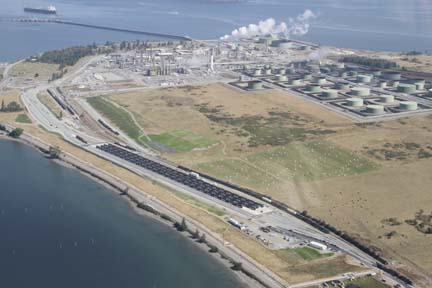
Tesoro Logistics' crude oil rail off loading facility, March Point

Tesoro Logistics’ March Point crude oil rail off loading facility


This was the last clinic of the season for the Mount Vernon group. A total of 140.5 (an 8 year old son of one of our adult participants) people attended the eight clinics for an average of about 17.6/session. Our email list has 56 addressees on it and we have another 17 names of folks who just drop by from time to time, including a fellow from Texas. A schedule of interesting and informative programs will be developed over the summer months and announced in the next newsletter in mid September. Have a great summer!

4D Spring Meet June 6, Register Now To Assure Lunch

Russ Segner and the Spring Meet Committee

The seats are filling for the 4th Division’s Spring Meet on June 6. Registration is still $25 until May 31. This includes lunch and passes to the layout tours on June 7. You can pay at the door or register online at wnrr.net/4dspringmeet/. We need a count for lunches, so if you wait beyond May 31 to register, you will not be guaranteed a lunch.

There are fabulous clinics offered on the 6th including:

  • An Example of a Prototype Layout
  • Making Tracks on your Layout (Fast Tracks hands on clinic)
  • Making Tracks to a Prototype
  • Freelancing
  • Making Tracks to a Large Layout
  • Modules
  • Trackside Details and Weathering
  • Bridge Design and Construction

There are world class layouts offered for touring on the 7th including:

  • JJ Johnston’s Puget Sound Iron Goat Railway, HO scale, a mythical GN layout set in 1939 with many structures
  • Burr Stewart’s merged GN, NP, Q and SP&S in the 70’s, HO scale, a big layout designed for operation
  • Bill Messecar’s ATSF Operation in the LA Division, HO scale, a 1950’s era layout with blocks of reefers handling citrus
  • Di Voss’ Everett and Monte Cristo Rwy, HO scale, a historical representation of 1895-1910 line hauling gold to the mill in Everett
  • Bob Stafford’s Memories Branch Line, HO scale, an operations oriented layout based on the many branches of the Lackawanna, Jersey Central, and Lehigh Valley railroads in Northampton County Pennsylvania
  • Boeing Employees Model Railroad Club’s Seattle and North Cascades Railway, HO scale, a bridge route connecting the Pacific Northwest to the Midwest
  • Ron Hopkins’ Moclips & Beck’s Creek, On30 scale, a layout featuring many prize winning scratch built logging, lumber and shingles structures
  • Russ Segner’s Coal Creek Lumber Co, Sn3 scale, a Northwest logging layout with lots of scratch built structures and geared locomotives
  • Bill Scheef’s Wind River Railway, Sn3 scale, a layout with excellent logging scenes and an operating incline
  • Al Lowe’s Modular Home Layout, N scale, consisting of 9 NTRAK and oNeTRAK modules on a unique, 54”-tall rack allowing plenty of operations in the space of a one-car garage
  • Steve Depolo’s Alaska Pacific Railway & Terminal Co, Sn3 scale, a layout featuring Alaska scenes with steep grades between mines and wharfs
  • Michael Dziubinski’s Northwestern Pacific (Southern Pacific), N scale, a layout based on the Northwestern Pacific in August of 1953

Sign up today. Click here for more details including registration and you can also contact Russ Segner at russseg@gmail.com or 425-228-7327 for more information.

Brent Carlson, 1943-2015

Bobj Berger

Brent Carlson 1943-2015

Brent Carlson 1943-2015

We have learned from Kathleen Carlson that her husband Brent Carlson, long time Seattle-North Clinic and Eastside Get-Together attendee, has lost his many-years-long battle with cancer. Brent was well-known from his huge amount of HO structure and billboard purchases at Clinic Marts and model railroad swap meets. For a time he also participated with the HO Modular group.

Brent retired as a CPA auditor a few years ago and he and Kathy traveled many of the the world’s most beautiful and interesting museums and locations. They also had a wonderful time cruising and attending car shows with their classic Cadillac Eldorado Biarritz convertible. In typical Brent style, he bought a complete second Cadillac, disassembled it and stored the pieces out of the way and all around the house for any future replacement needs.

Brent attended the March Thursday night Eastside Get-Together, went to a doctor appointment the next day, from where he was hospitalized, and unexpectedly died the following Monday. He leaves his widow Kathy, two daughters, Jeanine and Maureen, and three grandchildren.

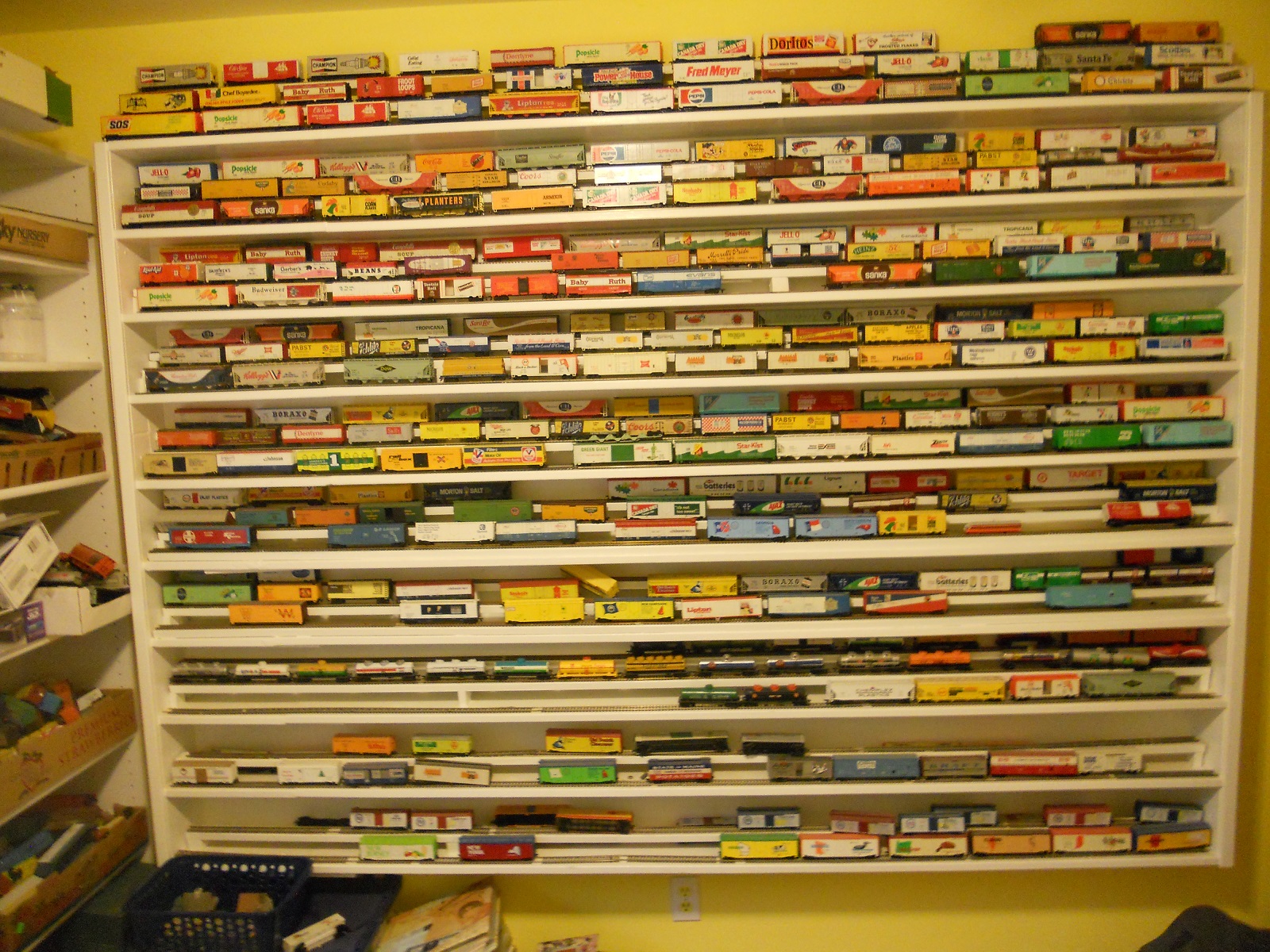
Besides travel, car cruising, Bible reading, and great food, model railroading was Brent’s passion. He loved collecting completed structures and graphically-illustrated billboard boxcars and trucks (as his layout pictures demonstrate). There are hundreds of buildings and thousands of vehicles. Before his illness, Brent liked to have a sales table at swap meets to have early access to those completed structures and vehicles (no kits!). Kathy has recalled how he loved helping Railfun (Bobj & Roger) set up for meets in the last few years, as it also gave him early access.

Kathy has agreed to open the layout for its first, last, and only open house tour during the June 4, 2015 Seattle-North Annual Train Room Tour. This tour will include three other never-before-seen train rooms in Edmonds and will begin at Brent’s with both his layout room and his upstairs train room. The address and details will be announced in the Grab Iron next week. After the tour, the layout, structures, rolling stock, vehicles and all other details and supplies will be sold by Railfun the following weekend, with details to be posted in the Grab Iron.

Brent Carlson's collection of structures.

Brent Carlson’s collection of structures.

Brent Carson's double deck layout.

Brent Carlson’s double deck layout.

Brent Carlson's double deck layout showing some of the many structures he collected.

Brent Carlson’s double deck layout showing some of the many structures he collected.

Brent Carlson's colorful collection of billboard rolling stock.

Brent Carlson’s colorful collection of billboard rolling stock.

Memorial Day Weekend Trains Salute America’s Military at NWRM

Peggy Barchi

The Northwest Railway Museum pays tribute to America’s service men and women and their families this Memorial Day with a special weekday steam train run on Monday, May 25th. This is in addition to the railroad’s usual weekend train schedule. To commemorate the holiday, the museum will offer $5 round-trip train fare Saturday May 23, Sunday May 24 and Monday May 25, to members of the military: active duty, guard, reserve, retired, and their dependent family members, with current military ID. The Museum offers scenic train excursions aboard its antique train, through the Cascade foothills of the Upper Snoqualmie Valley, including a ride to the top of Snoqualmie Falls.

We have recently learned that the Northwest Railway Museum will be the only site in Western Washington offering steam train excursions this holiday weekend. We will be preparing the steam locomotive for its weekend runs on Friday afternoon.

Trains depart every 90 minutes beginning at 11:30 AM from the Snoqualmie Depot at 38625 SE King Street and at Noon from the North Bend Depot at 205 McClellan Street. Regular steam train round-trip fares: $12 children (ages 2-12), $20 adults (ages 13-61), and $18 (age 62 and up)!

Northwest Railway Museum depot prepared for Memorial Day 2014.

Northwest Railway Museum depot prepared for Memorial Day 2014.

Eastside Get-Together on Thursday, Dave Hikel Will Present Drawbridge Design

JJ Johnston

Reminder: The Eastside Get-Together meets Thursday (tomorrow), May 21st at 7:30 pm at the Bellevue FourSquare Church. Our clinic will be presented by professional model railroad builder Dave Hikel. Dave will share the design of a drawbridge he created with lots of photos specifically for a magazine article. You can see it first prior to publication.

Of course we will have all of the usual stuff. Bring a model, eat a donut, have some free coffee, buy or sell something, win a door prize, talk with fellow modelers and generally harass JJ. See ya.

For Eastside Get-Together location and other information, see the 4D Clinics page.