Grab Iron Posts

Spring Meet Latest Clinic List

This is the latest list of clinics.


9:00 Session
Modular Construction Techniques – Alan Murray

Have you considered starting or joining a modules group? Do you need some help getting started?This clinic will take the mystery out of module layout design, types of operations, module standards and the construction of individual modules.

You will be exposed to techniques developed for construction of simple, robust rectangular modules and complex inside/outside curved modules. Prototype examples will be available for viewing.

Alan Murray is a member of the PNW On30 Modules Group which has shown and operated its layouts at Monroe, Puyallup, Ilwaco, the Seattle Center, Portland and the 2012 National Narrow Gauge Convention. Thirty-two modules (130 feet) were assembled at the Monroe show in February 2017. He has constructed more than 20 modules for use by club members.

9:00 Session
Modeling the Southern California Citrus Industry – Bill Messecar, MMR

The clinic will cover Southern California citrus packing houses served by the Santa Fe, SP and UP in the 1950s. It will include how to kit bash existing models as well as scratch build models of these packing houses and other aspects of modeling the citrus industry such as orange groves


10:30 Session
Backdrops – Paul Rising

Techniques and tips from a well known artist, Paul Rising


10:30 Session
Construction Materials – Jim Sabol

Prototype construction methods still around during the steam-to-diesel transition era: stone, brick, pole, timber, stick framing. Flip Chart Talk plus Slides


2:15 Session
Scenery – pink foam, plaster and two-part epoxy. Tinting with acrylic washes – Russ Segner Room 3

Practical demonstration of the use of plaster in latex rubber molds to simulate rock structures. Use of two-part epoxy Bragdon casting will also be demonstrated, Tinting and coloration of rock will be demonstrated. This will be a two hour hands-on clinic.

2:25 Session
Trees – Big and Small – Mark Allen

Mark has assembled a fine clinic on building model trees. He will explain his techniques and those developed by Tom Beaton, Paul Scoles and others. Mark’s module won recognition at the Portland NMRA Convention.

2:25 Session
Water Falls and Streams – David Yadock

This clinic will explore the use of common materials to produce realistic waterfalls and river rapids. The clinic will be concentrated on those two water features since they are usually very difficult and time consuming to produce. The keys to this method combine fast installation, realism, inexpensive common materials, and only a few easy to follow steps that produce great results.


3:45 Session
Freelancing a small layout – JJ Johnston

A discussion of 7 key decisions to make prior to actual construction of a non-prototypical layout. After obtaining the designated right of way, topics will include establishing the legend, scenery and operations, scale or gauge, time period, continuous run or point to point and naming rights. This fast paced and sometime humorous clinic will feature photos from JJ’s well-known Puget Sound Iron Goat Railway and his Fantasy Wing.

3:45 Session
How to wire a DCC Layout – Di Voss

This clinic will discuss how to find those niggles on a layout that cause shorts – Crossovers, reverse loops, and Wyes. This clinic will also discuss how to select power segments. Finally, this clinic will discuss the different turnouts – Power Routing, Insulated Frog and Power Frogs – that present different problems for a modeler.

Di is the NMRA Chair of the Standards Committee and writes monthly for the NMRA magazine.


Spring Meet Scenery Clinic Expanded to Two Hours

The following changes are made to the clinic schedule.

Di Voss will replace Russ Segner’s 3:45 Clinic in Room 2 with a clinic on DCC, How to wire a DCC Layout.
This clinic will discuss how to find those niggles on a layout that cause shorts – Crossovers, reverse loops, and Wyes. This clinic will also discuss how to select power segments.
Finally, this clinic will discuss the different turnouts – Power Routing, Insulated Frog and Power Frogs – that present different problems for a modeler.

Di not talk about LCC unless someone asks a question. “

Russ Segner will then lead and present his clinic which is:

Scenery – pink foam, plaster and two-part epoxy. Tinting with acrylic washes. It will be a two hour hands on clinic starting at 2:15 in Room 3.

Mt Vernon Clinic Report – March 2017

By John O’Connell   Photos:  Al Carter, Paul Koren, Bonnie Hollingsworth

March 9, 2017, Mt Vernon Senior Center

Ted Becker opened the Clinic with 14 attendees. The theme of this month’s clinic is Model Madness and as pictures later will attest it was a success despite light attendance.

Announcements

After the usual housekeeping business, Ted announced some upcoming events:

The April Clinic, April 13, will focus on the mini-clinics held over from December Clinic that had to be canceled due to weather. So far we are looking forward to:

Roger Johnson: Modeling blackberries.

Bonnie Hollingsworth: Update on models for the Skykomish Substation

Nick Muff: Using metal foil on structures

And, a Mystery Mini-Clinic.

The May Clinic is on Saturday, May 13th! There will not be a regular Thursday night Clinic in May. See Ted’s announcement of the details on this all day affair, which is a joint effort with the Skagit Valley / Whidbey Island Clinic. There will be multiple demonstrations (some with hands on opportunities), swap tables, work space for you to bring a project and work on it there. What a great way to wrap up the 2016 / ’17 Clinic year.

June 7-10     Pacific Northwest Region Convention, Spokane. Click here for details.

DPM Kit Build

Hey! These are coming together! Take a look:
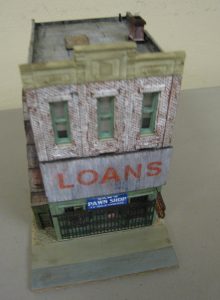
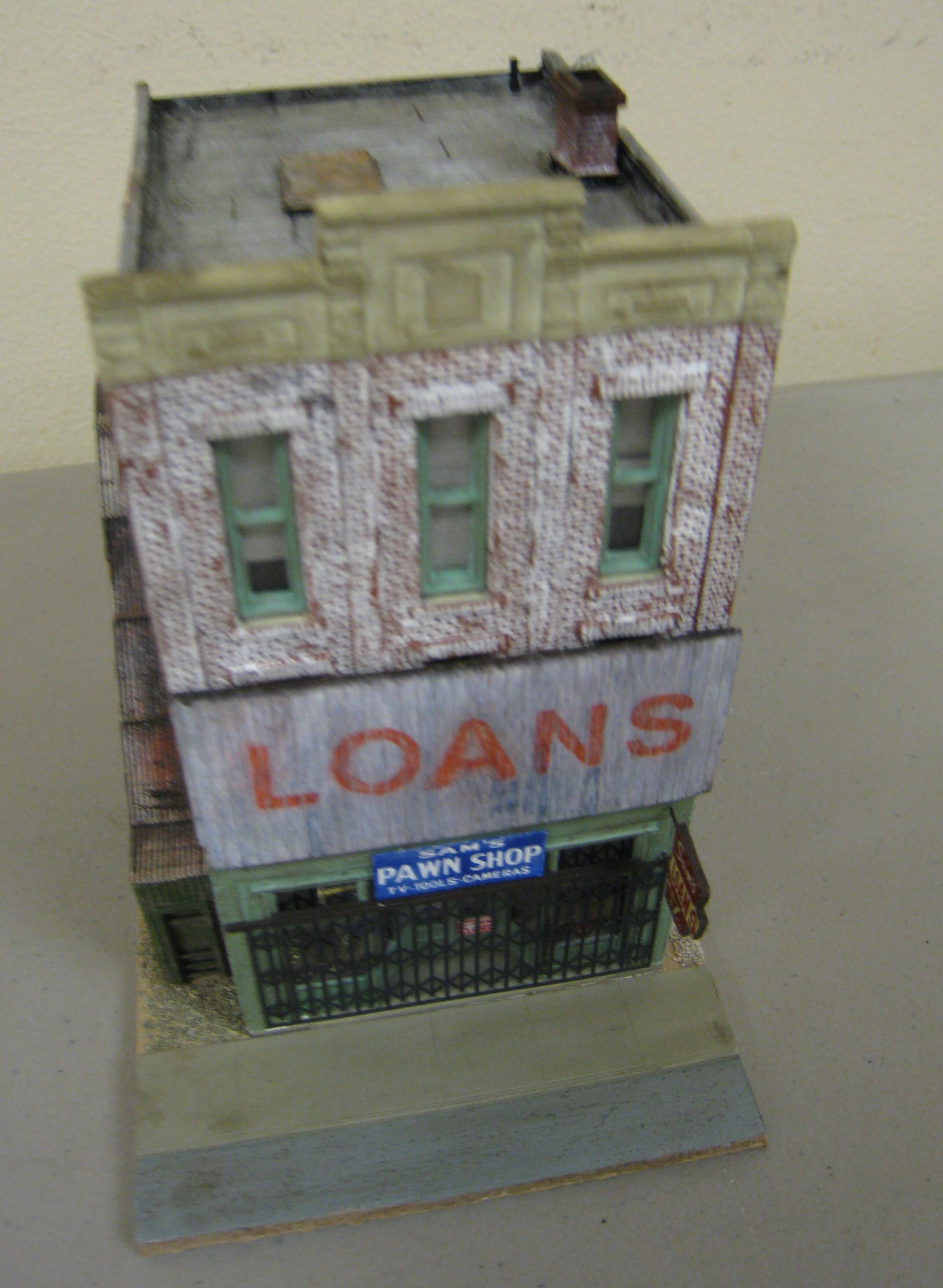
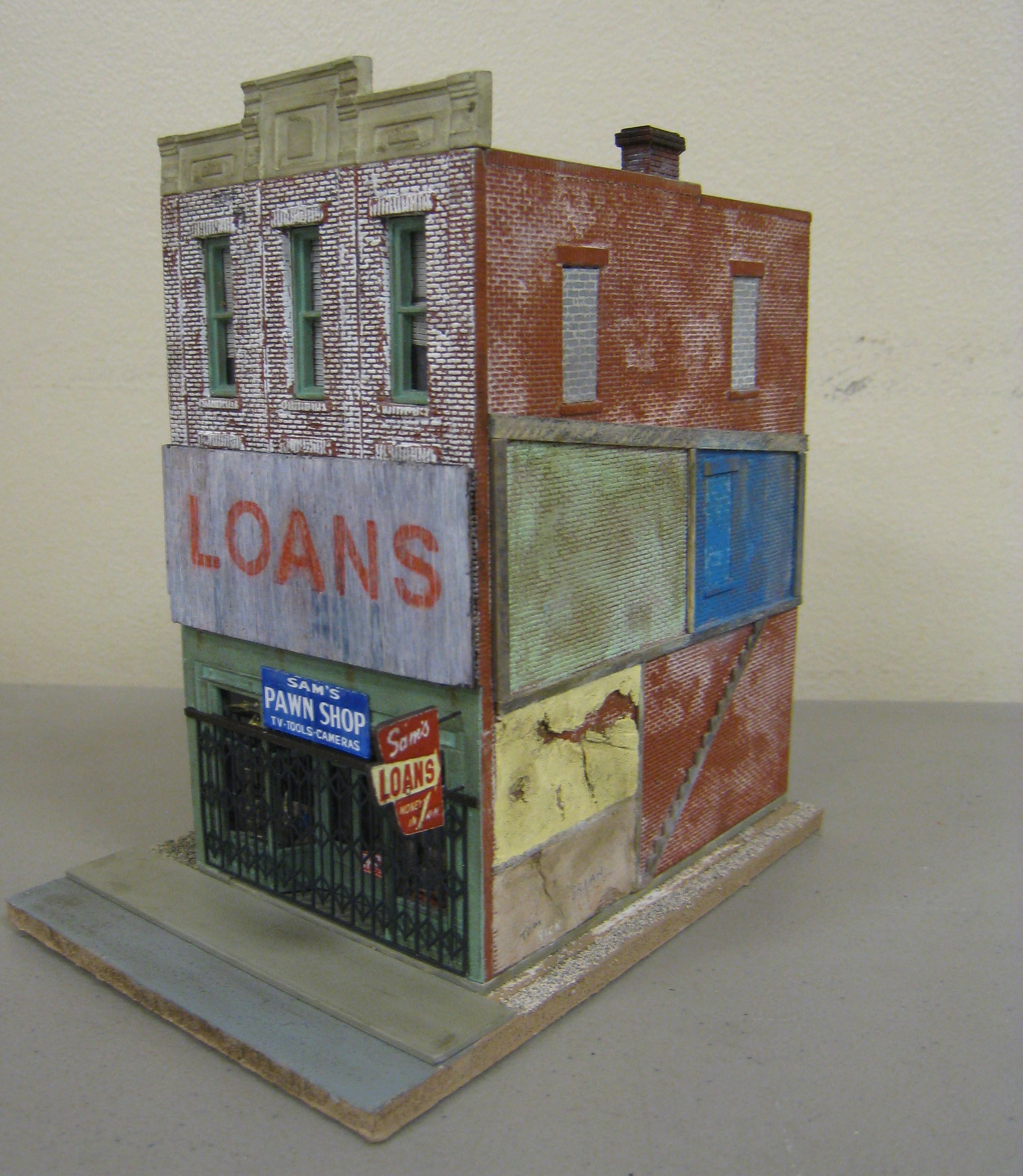
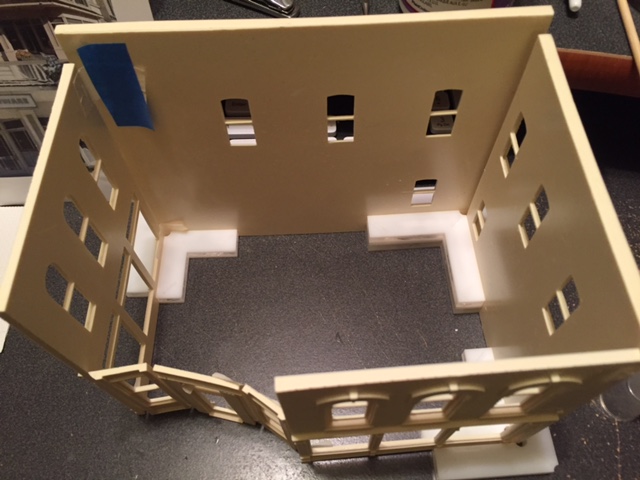
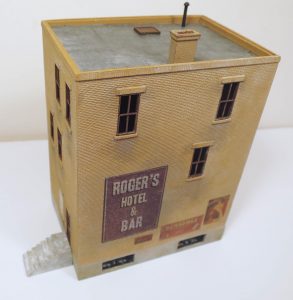
Al Carter turned the respectable HO Walker Building (20400) into one of the seediest surviving businesses in town.
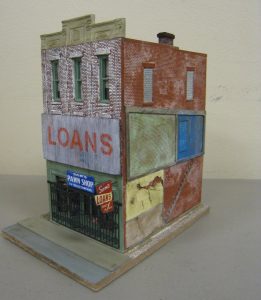
Check out all the effort and detailing he added to make this so spectacular in the Appendix at the end of this Report.
 

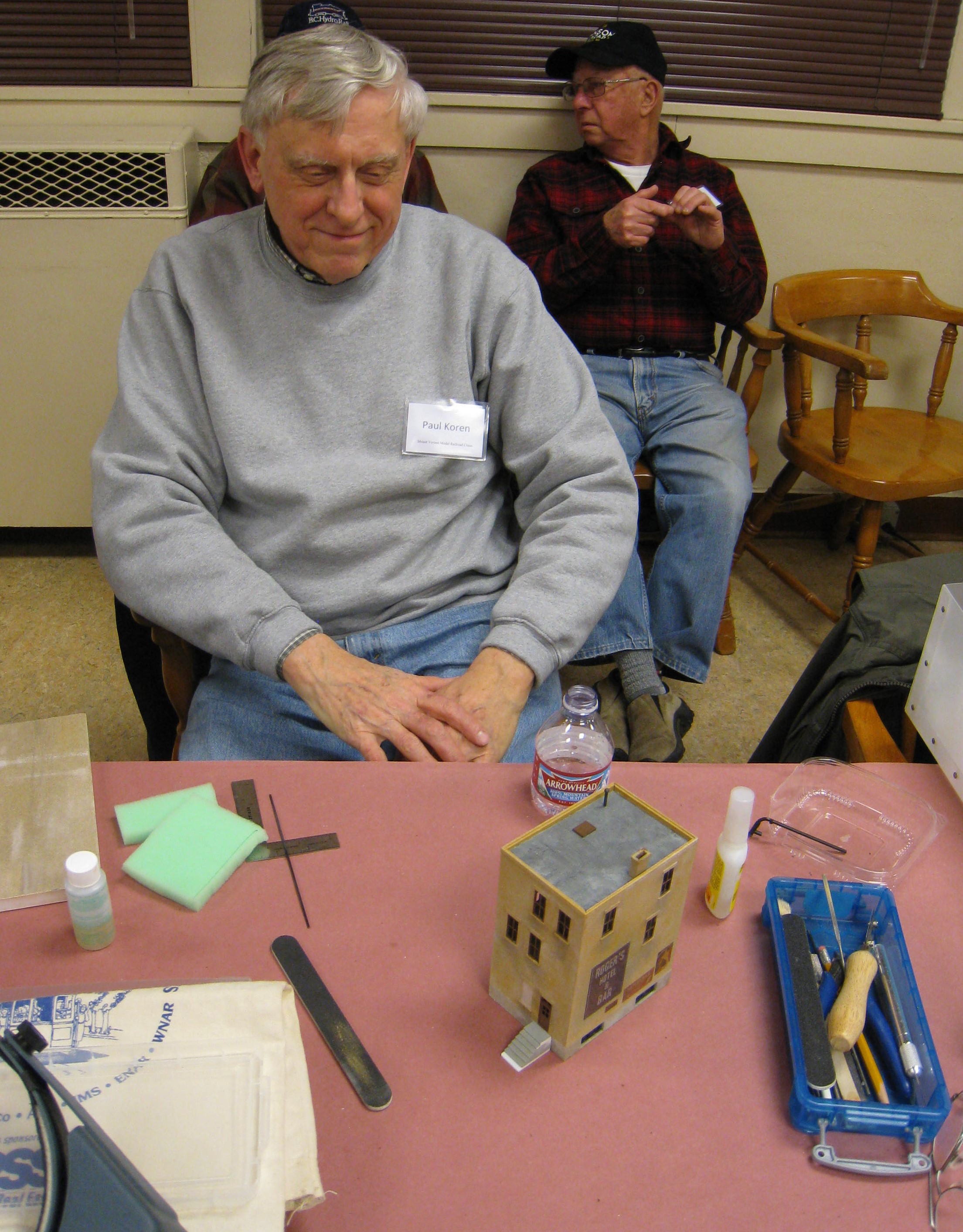
Paul Koren’s HO Walker Building (20400) is still in progress.He turned the back of the building into the front with a nondescript entrance to the bar with ubiquitous East coast glass block lighting. The cornice has been removed, Tichy doors and windows were substituted for the kit versions, and a basement with windows added. Paul promises a handrail will be added to the scratch built entrance steps. Finishing touches will include window glass and treatment, gutters, and, eventually, interior lighting.

Note that Al’s and Paul’s models are both based on the same DPM kit, the HO Walker Building (20400).
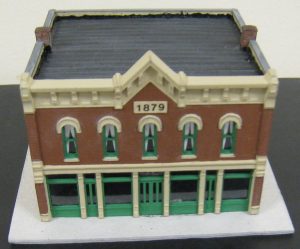
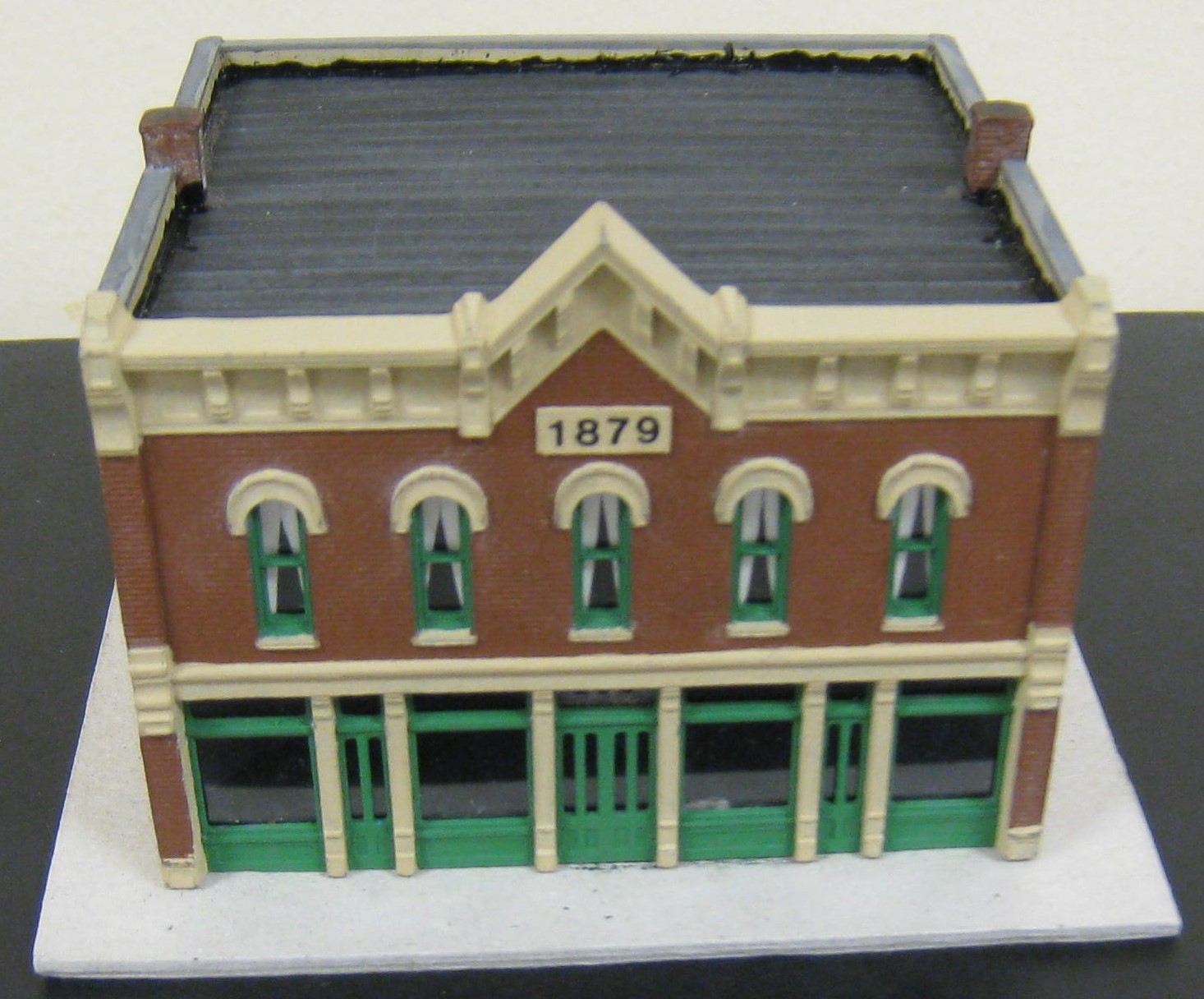
Ron Nelson’s Goodfellows Hall began life as DPM’s N scale Erik’s Emporium (51400) and is looking very good with the window treatment and tar water proofing on the roof.
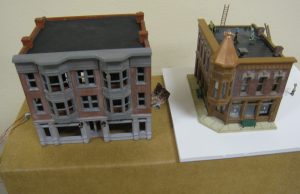
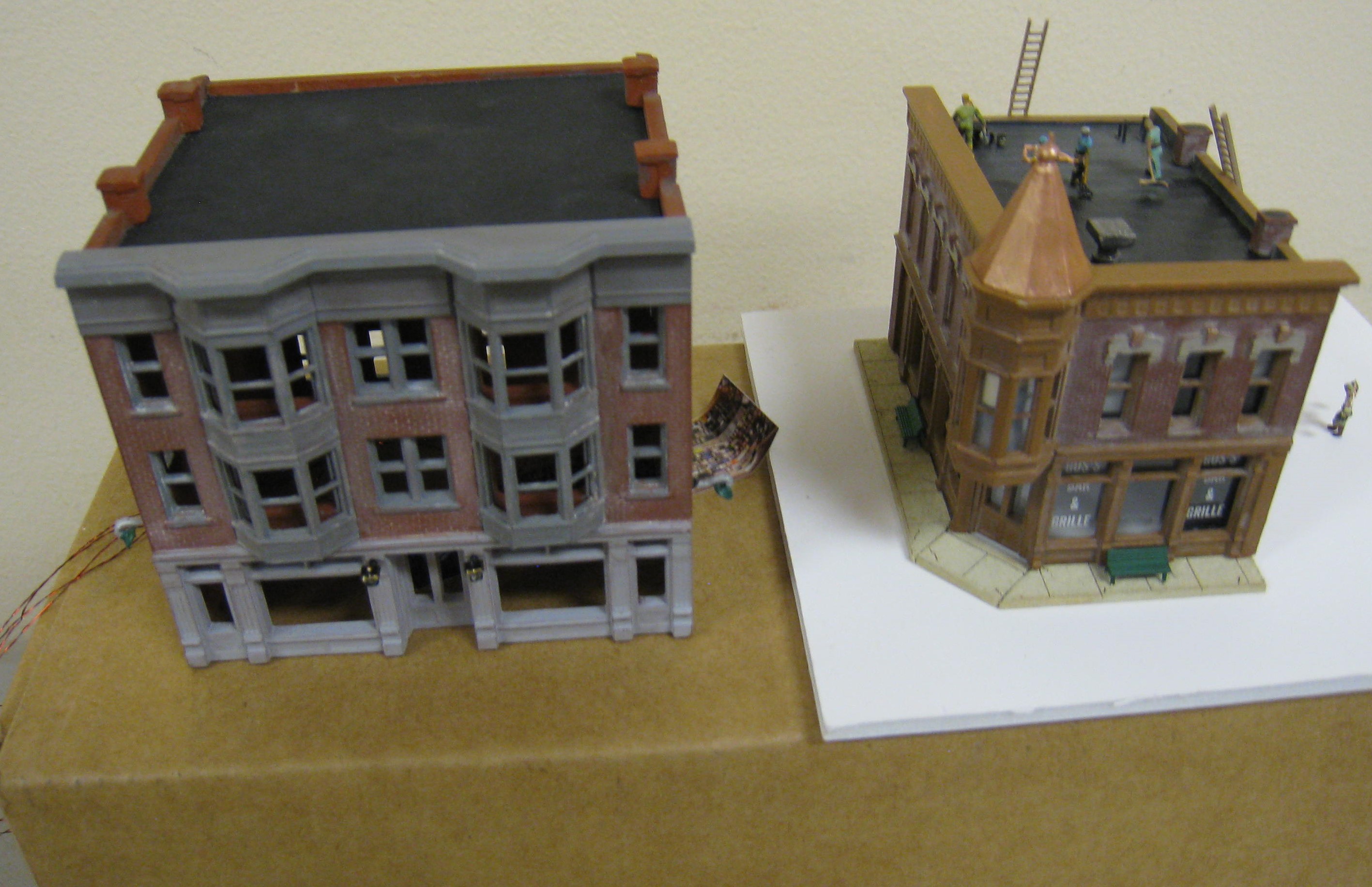
Left: Mike O’Brien’s N Reed’s Book Store (51500) features interior lighting using a new lighting product, Just Plug, from Woodland Scenic. Right: Roger Johnson’s N Corner Turret Building (51300) features a copper clad turret and a roofing project in progress.
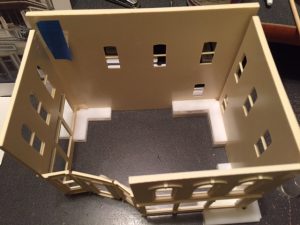
 

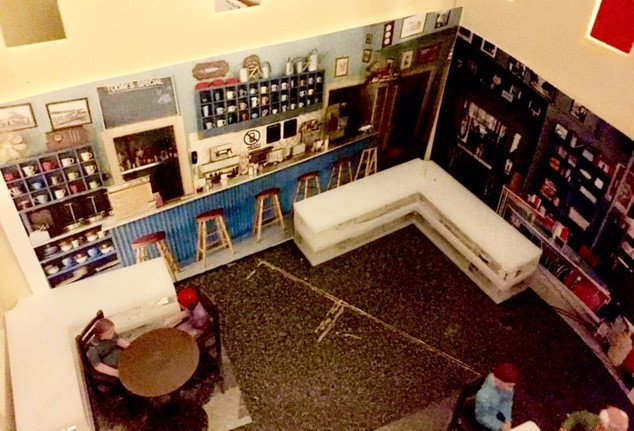
Bonnie Hollingsworth is building Kirsten’s Corner Café, O Scale (80200) as Luke’s Diner. She said the walls in this resin kit were warped and she’s still working to correct.
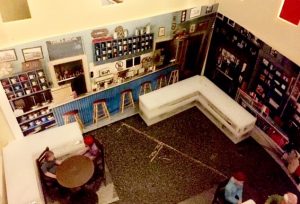
Bonnie is using photos to add realism to the interior.


Tool Time
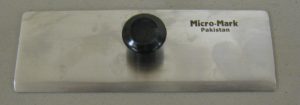
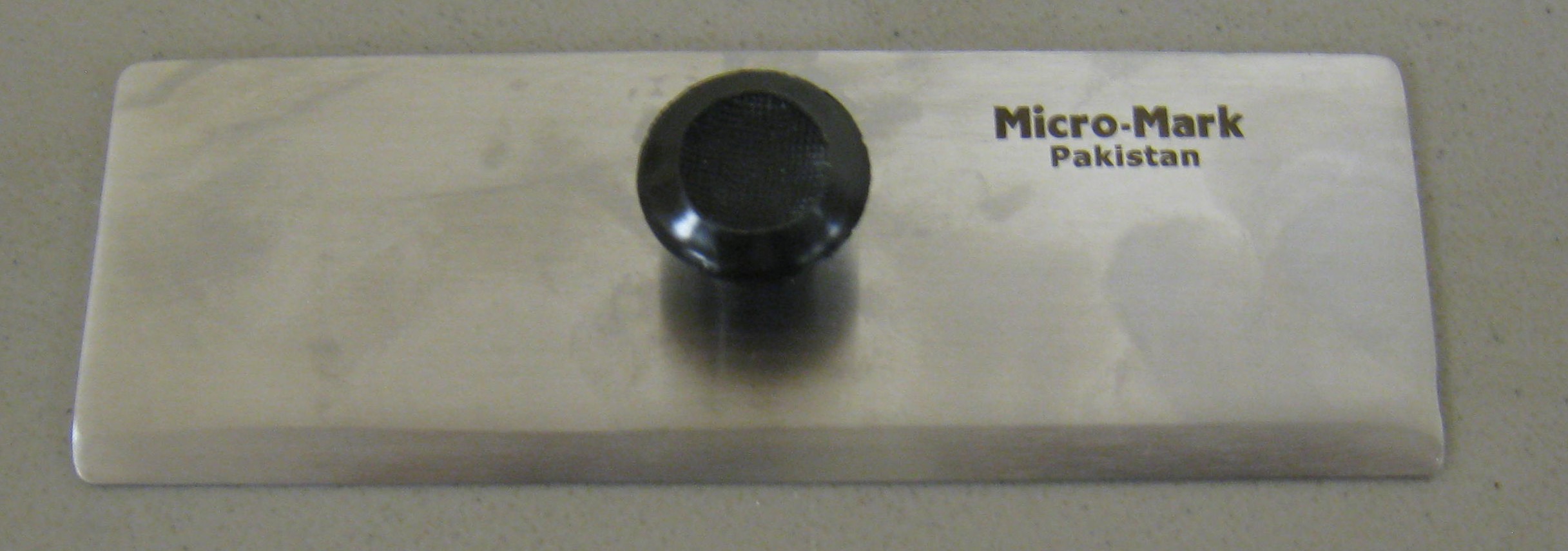
Al Carter brought this Pakistani Finger Saver from Micro Mark. This 6” knob-held, beveled edge stainless steel straight edge makes scribing or cutting styrene or other material much safer. Also available in 12”, click here to see them on Micro Mark’s site.
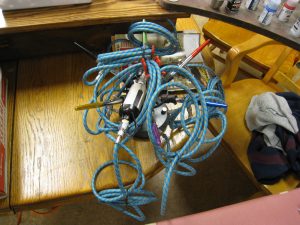
 

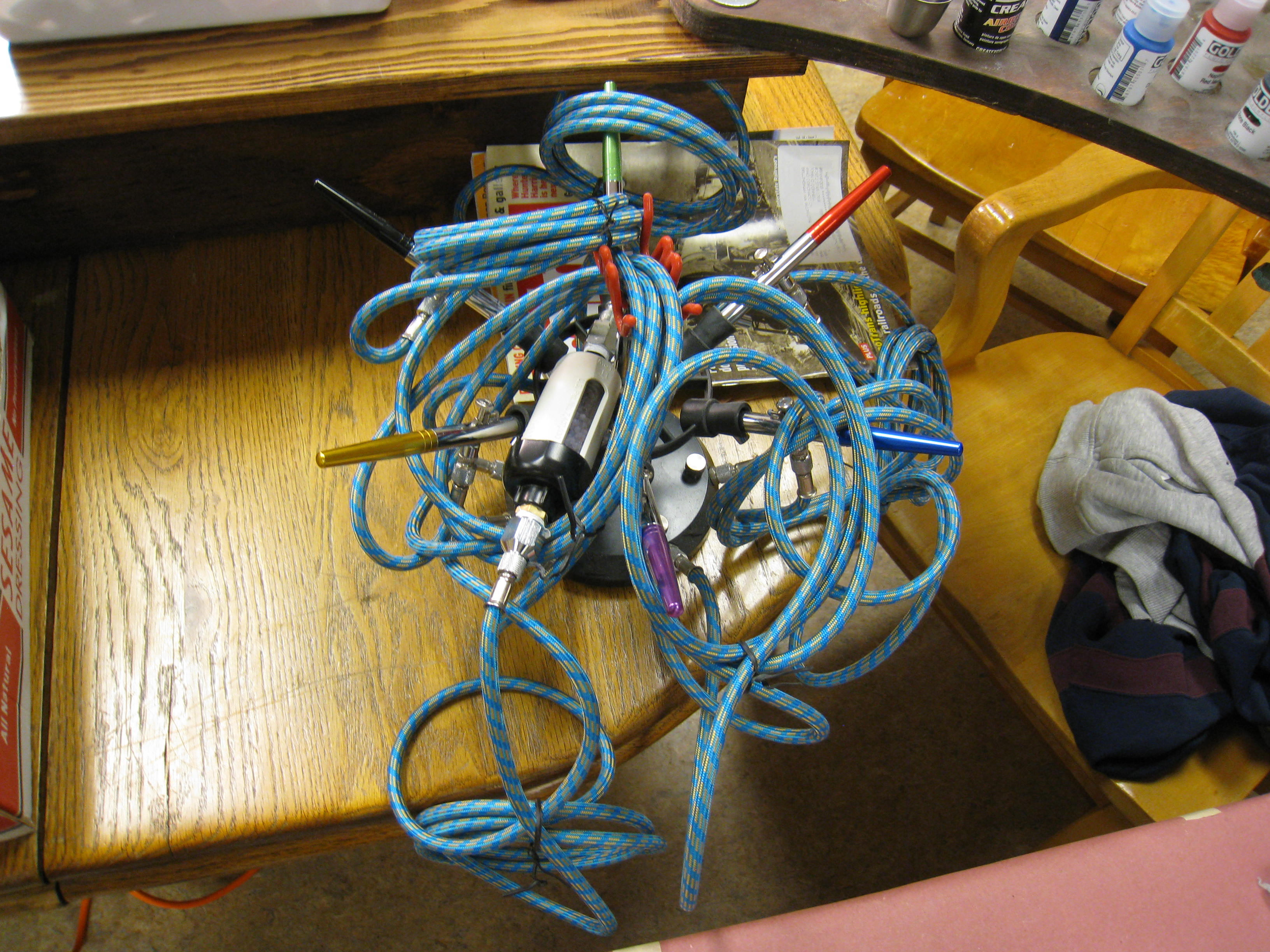
Brian Jacobs brought this Spray Brush Manifold which allows him to have several brushes active at once.

Show and Tell

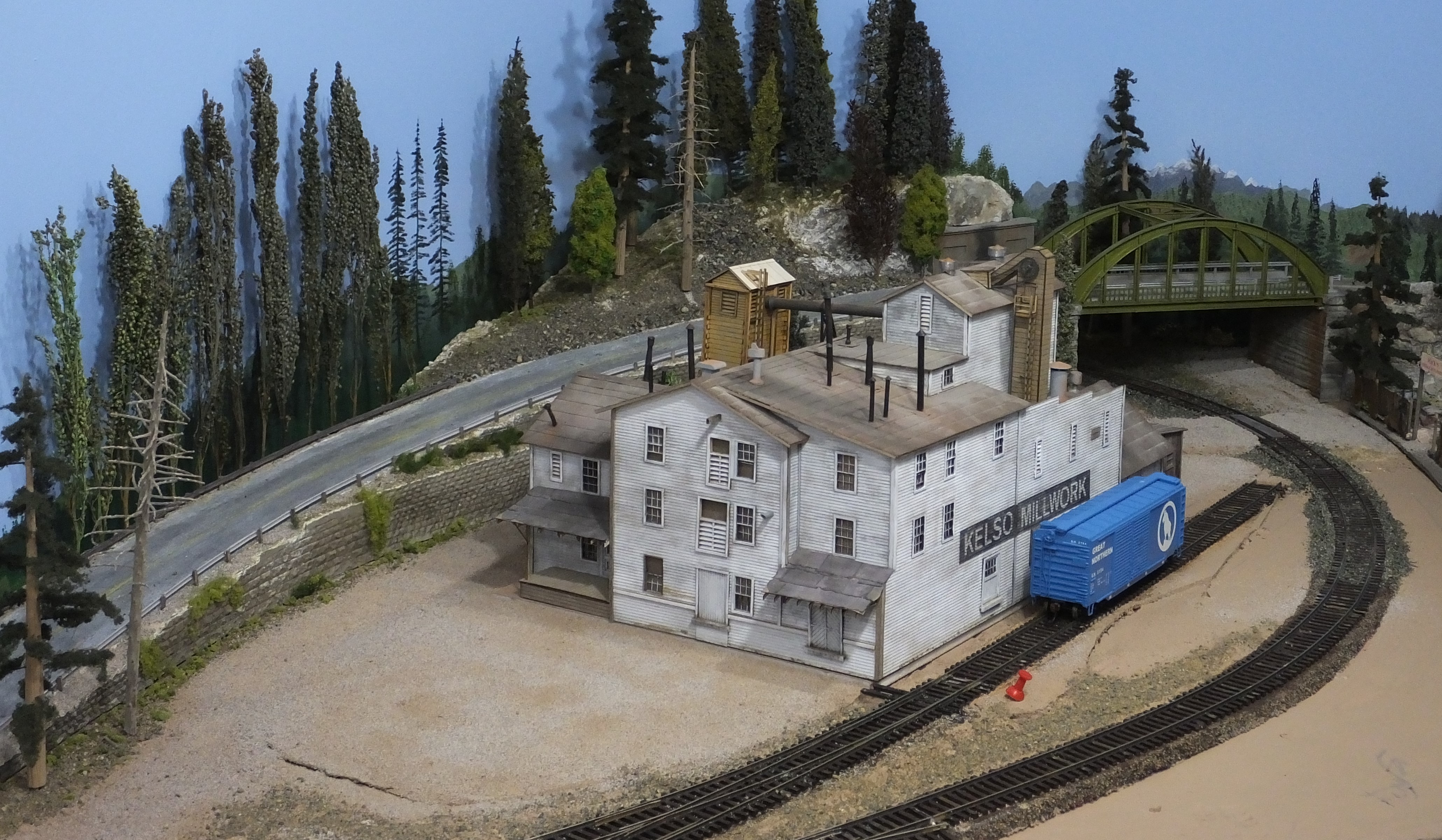
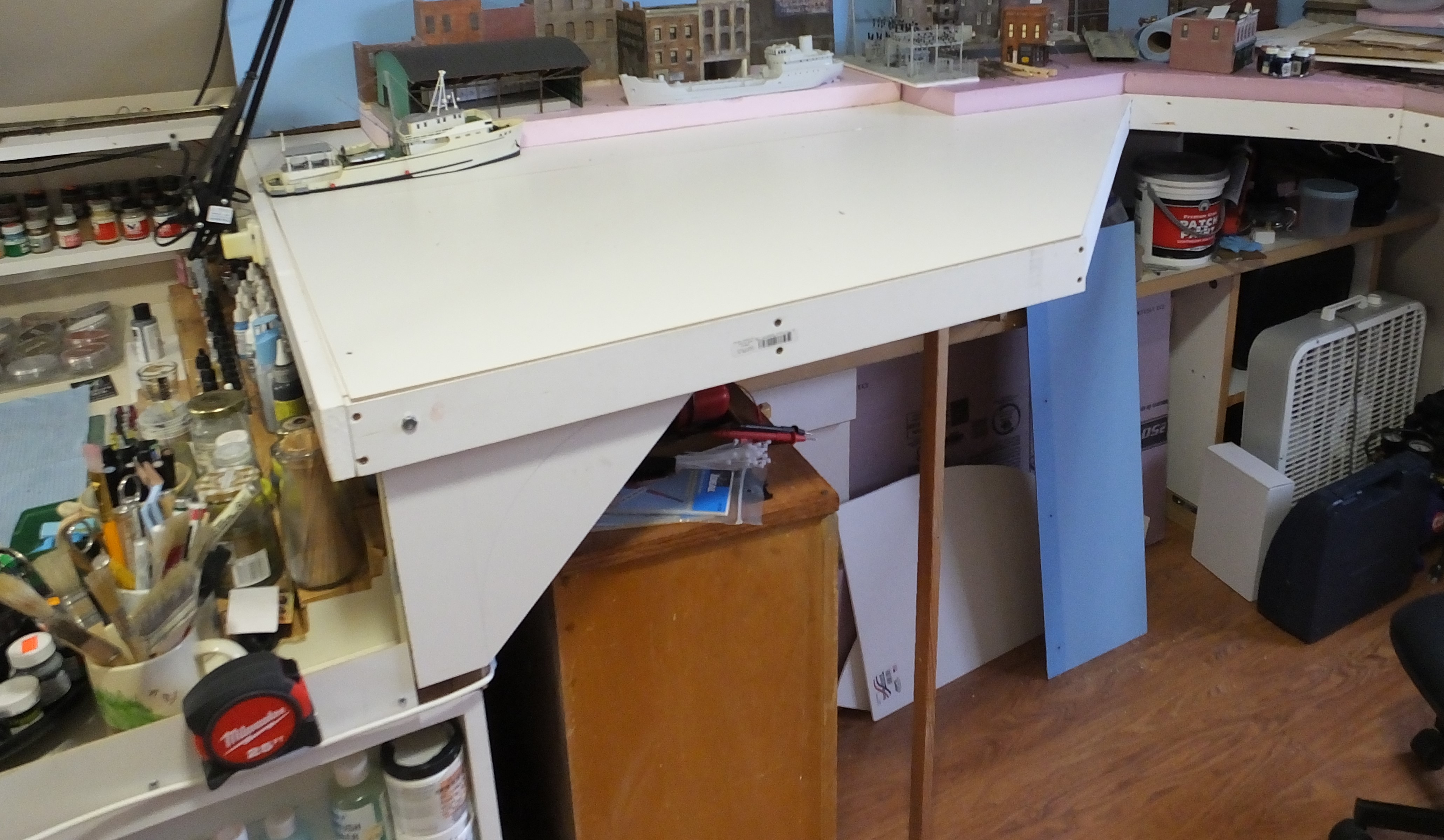
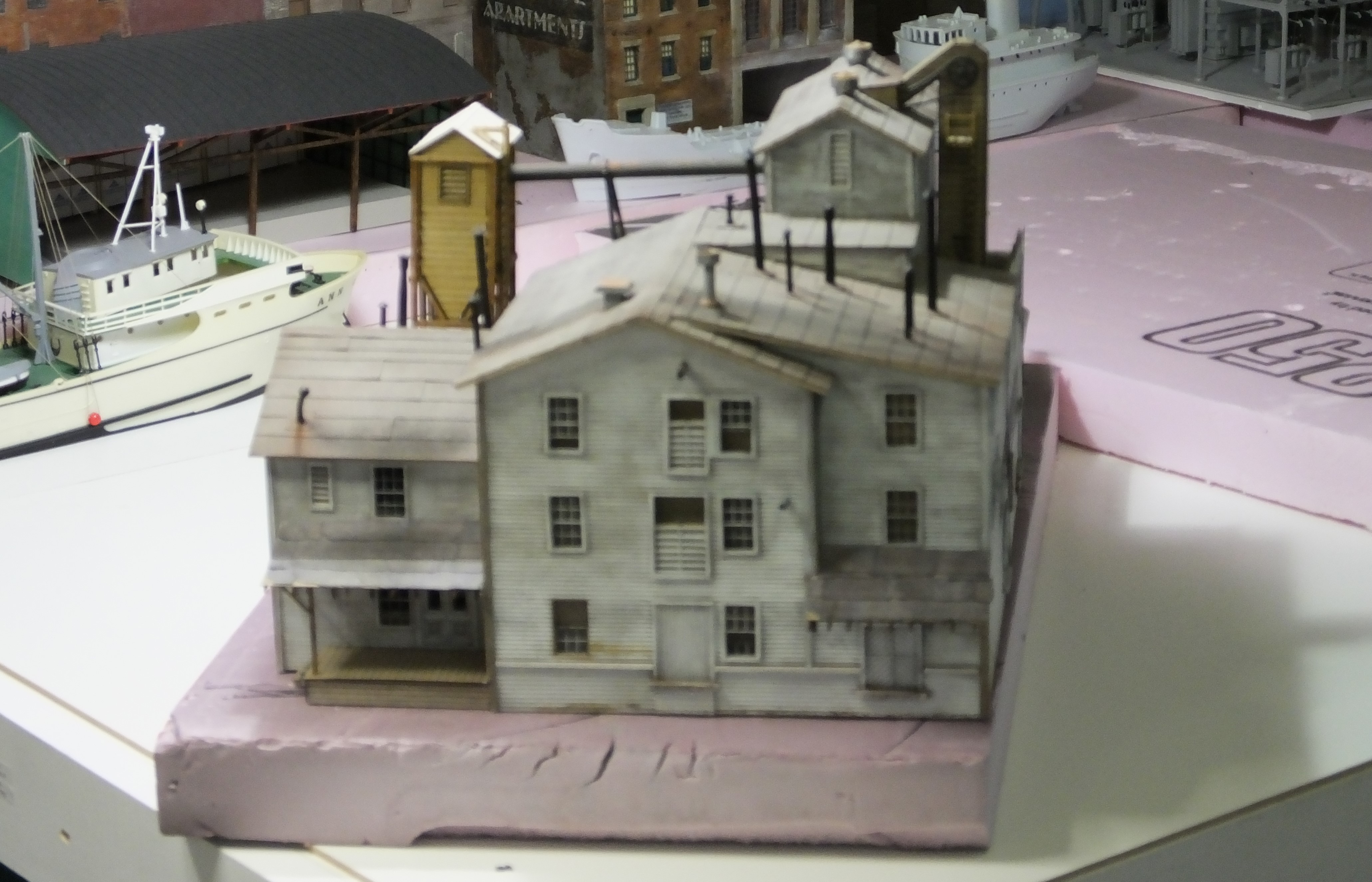
Al Carter brought his Kelso Millworks to illustrate a challenge. It is American Model Builders “Dabler Millworks” kit that he built about 15 years ago, and named after his friend and Tabooma County Railway crew member Jerry Kelso (now deceased).  The “issue” Al had was placement of the building on his current layout because the mill has some really neat features on all four sides, and the location he had earmarked for it only showed two sides.  Al continues, ”So I added a small peninsula to the layout bench work so the mill could be placed on a diagonal showing off all four sides.  A good excuse to expand the railroad, no?”
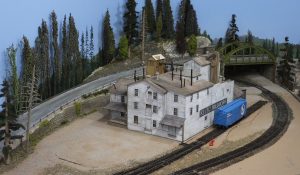
Original placement of the Kelso Mill, but only two sides are visible.
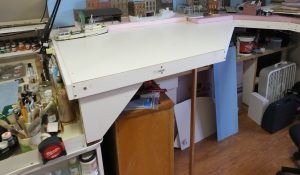
Al added a peninsula to his bench work.
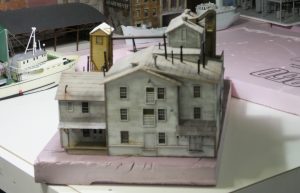
Positioned prominently on the peninsula, the mill will be visible on all four sides! Al’s message: “Don’t be constrained… if you need to, just build more bench work!”


My Workspace

Al Carter shared his work space story with us:

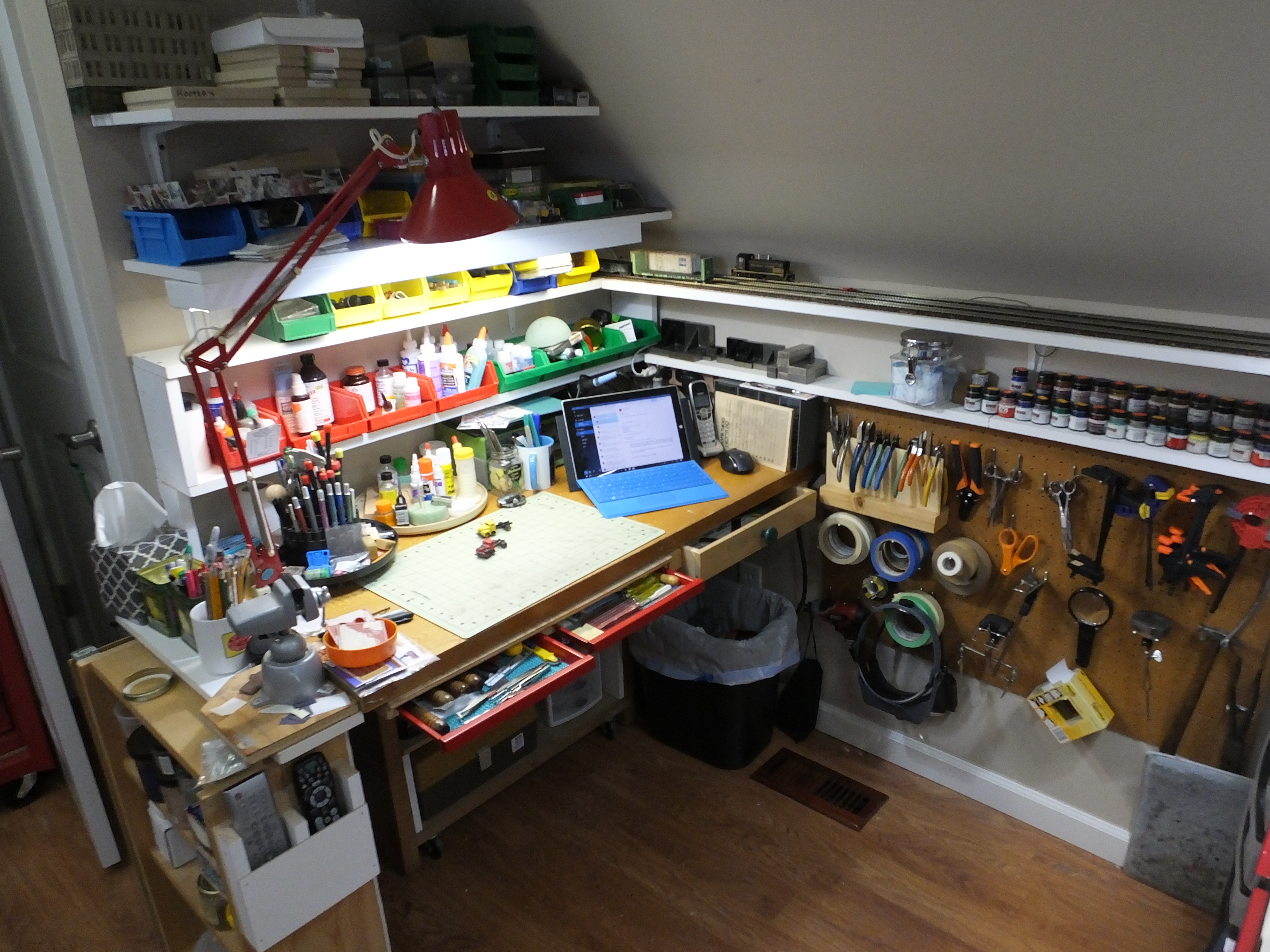
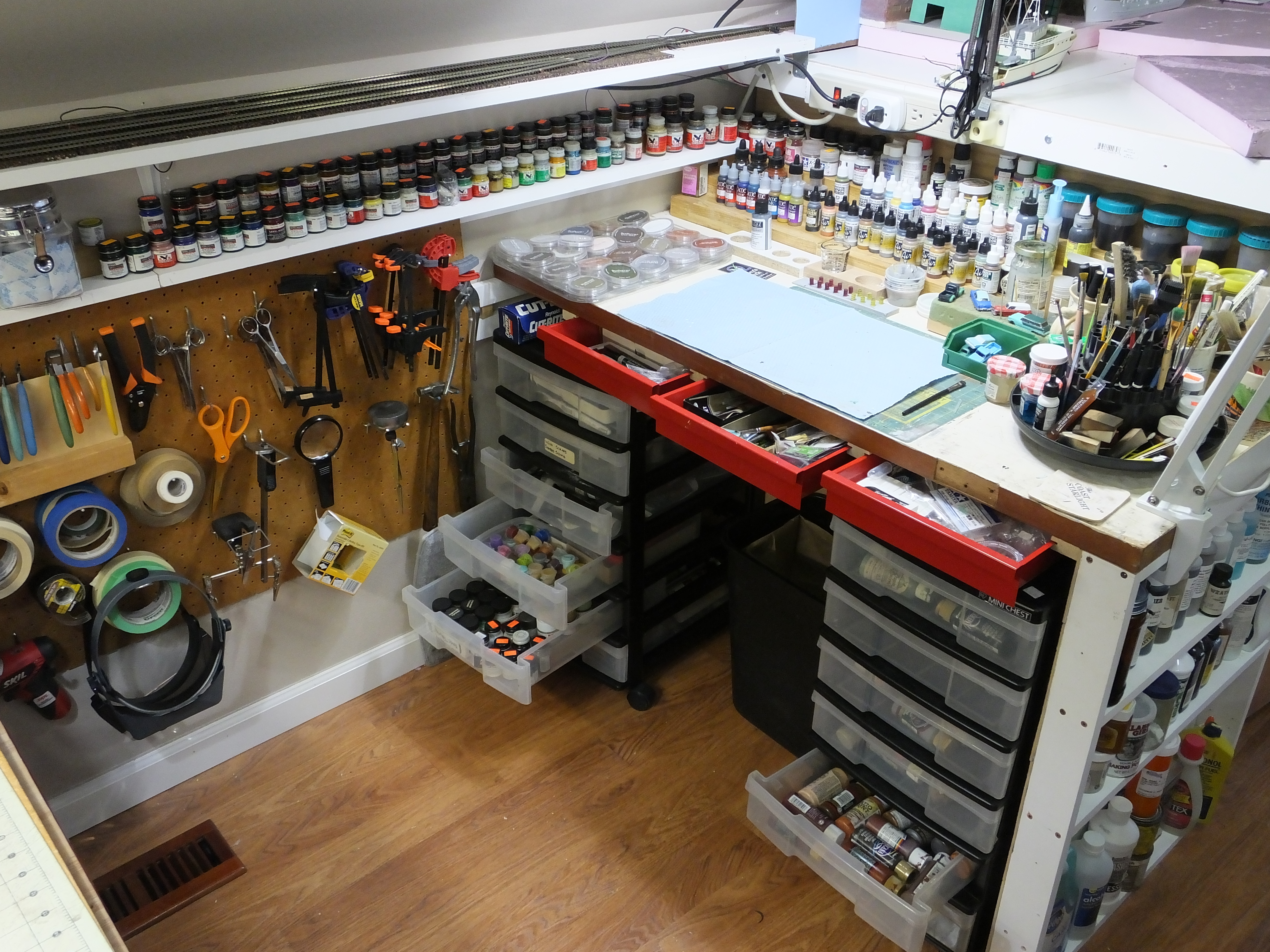
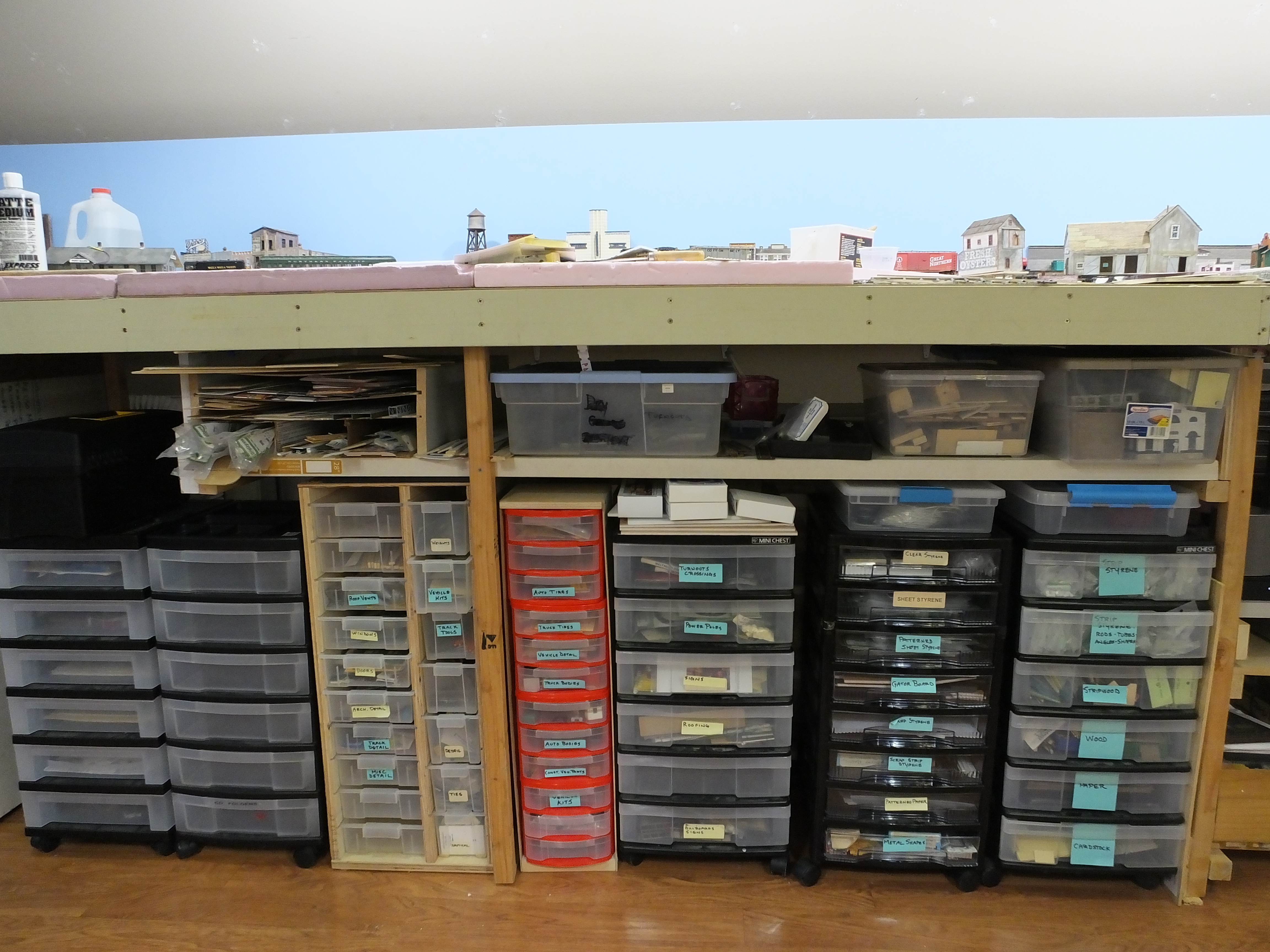
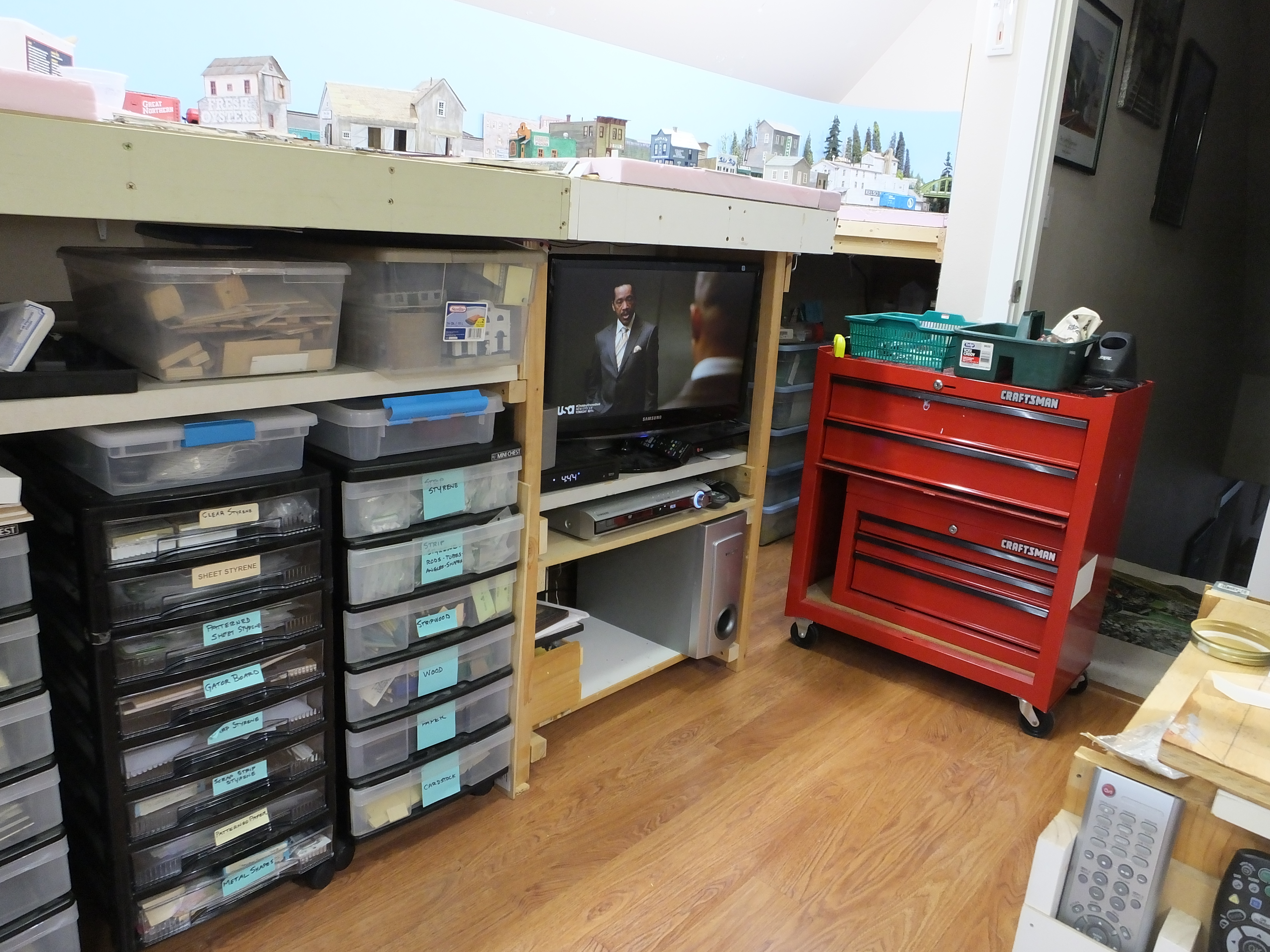
“Moving from a home with a layout room and a separate 10×14 work space/shop area to a much smaller combined layout/workbench area has caused me to really be creative in space utilization.  My work area is about 4×7, with a swivel chair between two workbenches – a “main” one and a second for painting/weathering.  I’ve made extensive use of roll around drawer units, and also found some nifty stamped steel 1″ deep drawers (Lee Valley/Veritas) that are great for small tools right under my workbenches.  Larger tools, such as soldering equipment and motor tools and the like are stored on a rolling cart kept under the work bench.  Everything under the layout is on wheels for easy access.”
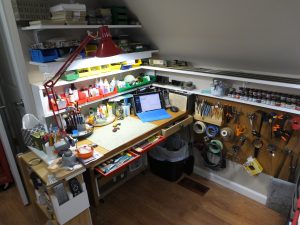
Main modeling station
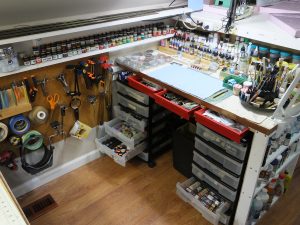
Painting and weathering station
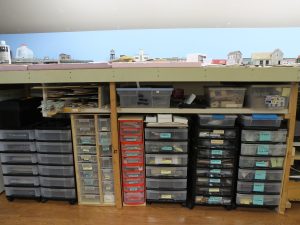
A vast collection of wheeled drawers add efficient organization and orderliness to a tight space.
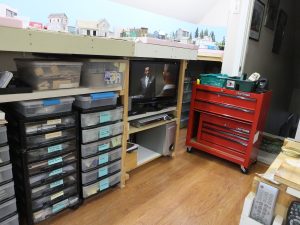
There seems to be just enough extra room for a TV and a DVR. No harm watching an inning or two while waiting for the glue to dry.


The Program

March Modelness, a Hands-on Working Session. Quite a few brought projects to work on along with tools and materials.
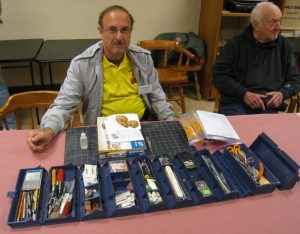
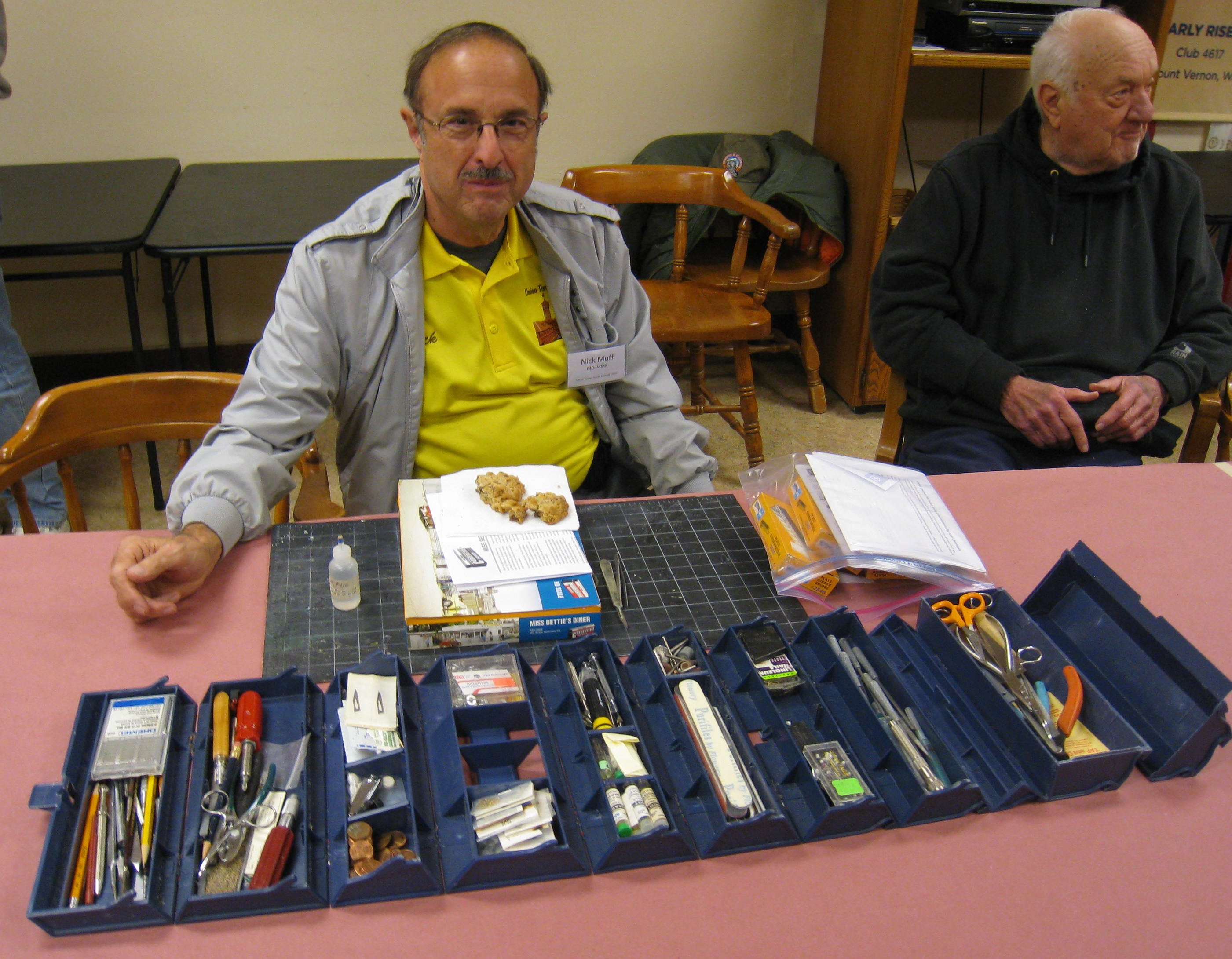
I was so busy checking out MMR Nick Muff’s traveling storage box, I almost missed the project he is working on. It is Walther’s Cornerstone HO Miss Bettie’s Diner (933-2909). The Rolykit rolls up on itself into nine sealed compartments… perfect for taking a project along while travelling.
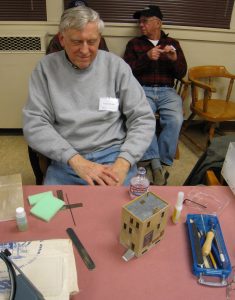
 

You’ve already seen Paul’s Bar and Hotel up close. No wonder he has a calm sense of satisfaction.
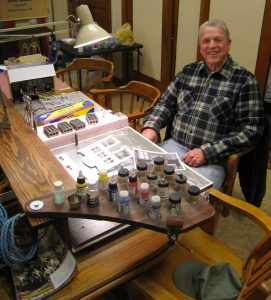
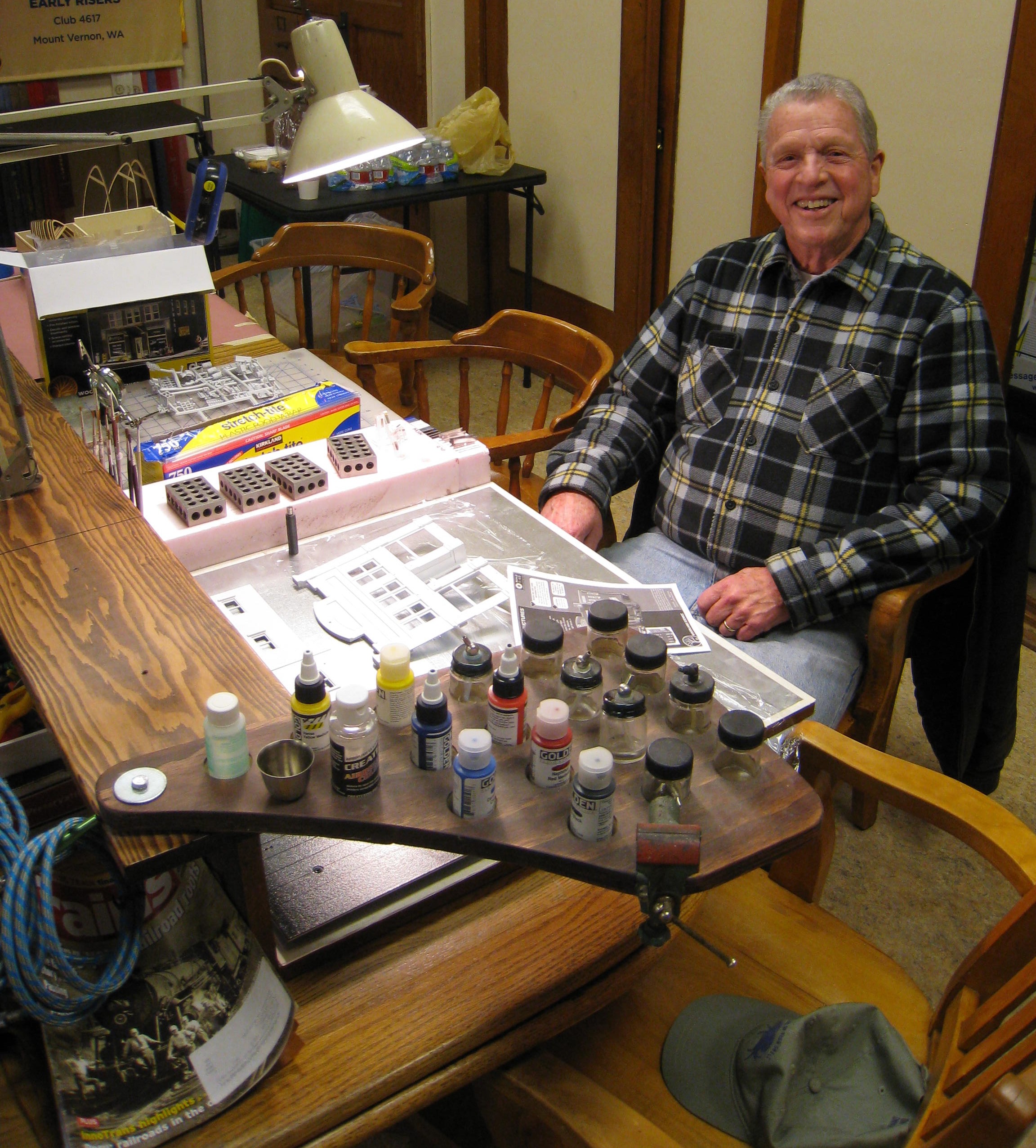
Brian Jacobs brought his work space as well his project, Harrison’s Hardware, O Scale PF5891.
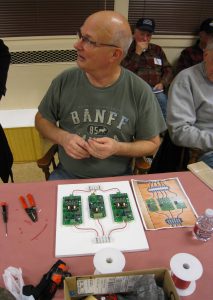
 

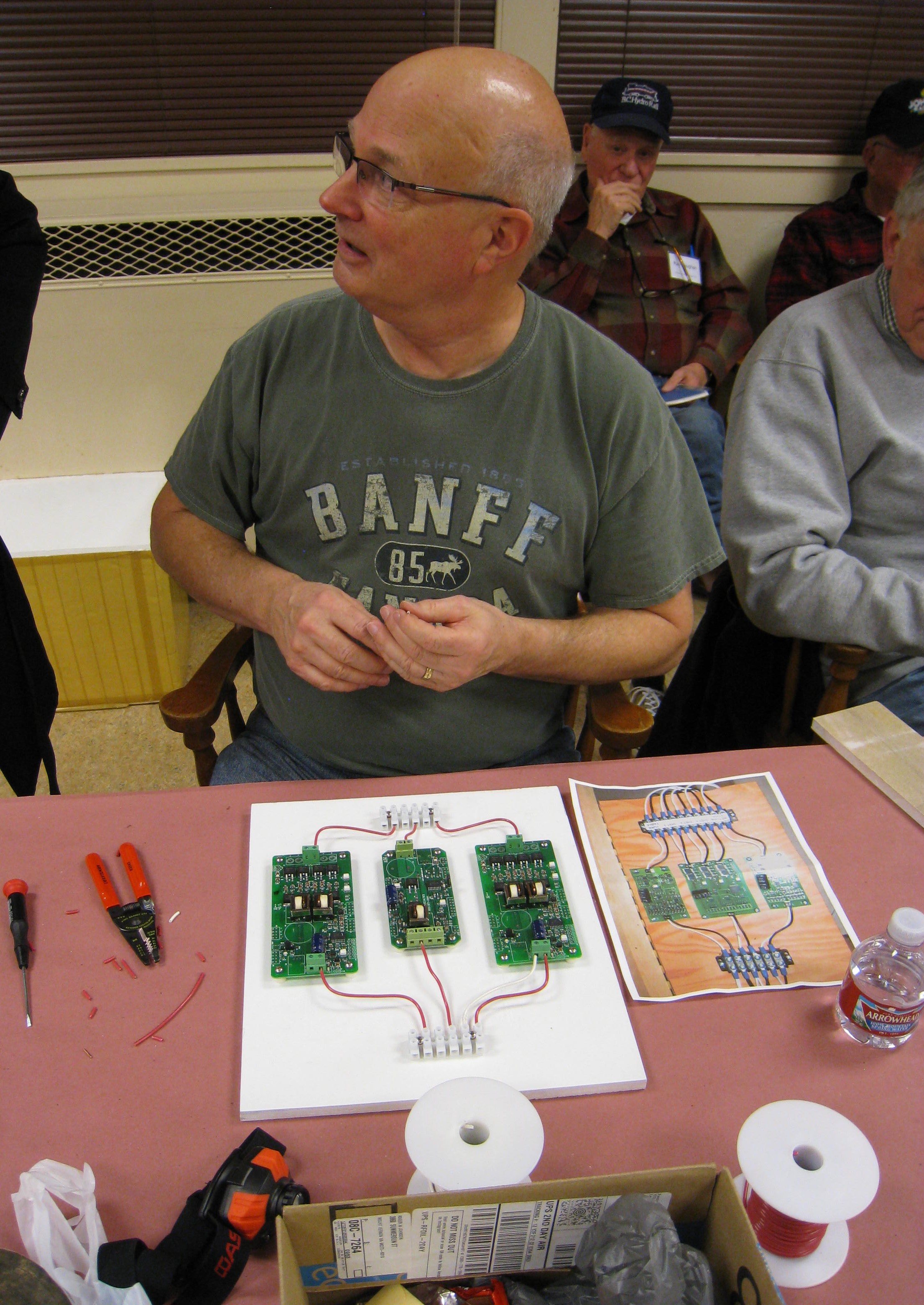
If this was anyone but Mike O’Brien, we might be concerned what he’s wiring up here.
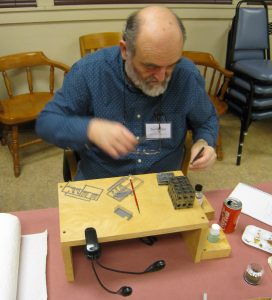
 

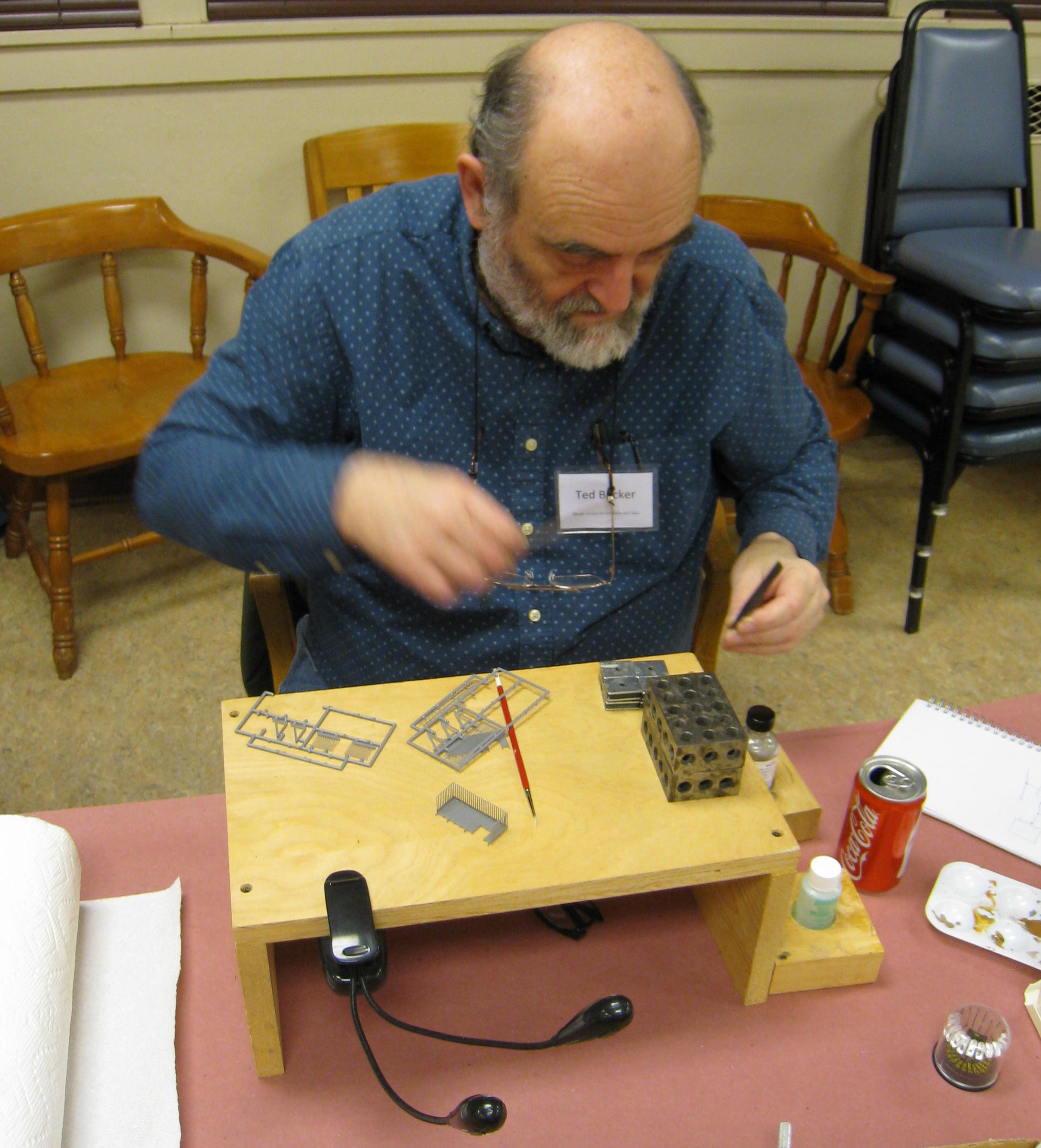
Ted Becker is assembling a fire escape. Note the raised work surface that brings the project closer to eye level and saves the back.
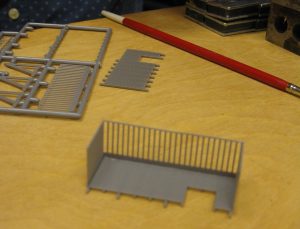
Regarding the fire escape, Ted commented, ”I found this very difficult as there is little to hold the parts together.”


Appendix

DPM Kit #20400 Walker Building – Al Carter – 3/5/2017

General:
Primed with red/brown primer
Mortar = Baking Powder
Weathering = Pan Pastels

Front: 
Sign = Scribed wood, stained w/Prismacolor markers, then dry brushed white.
Lettering = ½” alphabet stencil; red colored pencil
White Peeling Paint (3rd floor) = Typewriter correction paper burnished onto surface
Storefront = Smalltown USA w/ styrene filler strips
Burglar Bars = Gold Medal Models (brass)
Venetian Blinds = Builders in Scale
Signs = Blair Line styrene signs

Interior:
Window Displays with tuba, saxophone, clarinet, flute, TV, radio, misc.
Left side:             Covered Stairwell = Bar Mills kit, reinforced
Covered Stairwell corrugated roofing = thin (tissue) paper copy of “texture” from web

Back:
Burglar Bars = Tichy casting
Electric Masthead = metal casting
Electric Conduit = phosphor bronze wire
Electric Meter = metal casting
Downspouts = scratch built from styrene

Right side:
Windows Blanked Out = cement block paper (Micro Mark)
Stair Risers = styrene casting (unknown origin)
Stucco (upper) = Model Railstuff stucco
Stucco (lower) = Lightweight spackle

Roof:
Tarpaper = Builders In Scale roofing paper
Chimney = Styrene (unknown origin)
Roof Access Hatch = Styrene
Vent Pipe = Ngineering tubing

 

Spring Meet Clinic Update

There have been several adjustments to the clinic topics, presenters and times. Please continue to check the website for additional information.

9:00 Session
Modular Construction Techniques – Alan Murray
Have you considered starting or joining a modules group? Do you need some help getting started?
This clinic will take the mystery out of module layout design, types of operations, module standards and the construction of individual modules.
You will be exposed to techniques developed for construction of simple, robust rectangular modules and complex inside/outside curved modules. Prototype examples will be available for viewing.
Alan Murray is a member of the PNW On30 Modules Group which has shown and operated its layouts at Monroe, Puyallup, Ilwaco, the Seattle Center, Portland and the 2012 National Narrow Gauge Convention. Thirty-two modules (130 feet) were assembled at the Monroe show in February 2017. He has constructed more than 20 modules for use by club members.

9:00 Session

Modeling the Southern California Citrus Industry – Bill Messecar, MMR

Synopsis: The clinic will cover Southern California citrus packing houses served by the Santa Fe, SP and UP in the 1950s. It will include how to kit bash existing models as well as scratch build models of these packing houses and other aspects of modeling the citrus industry such as orange groves

10:30 Session
Backdrops – Paul Rising

Techniques and tips from a well known artist, Paul Rising

10:30 Session

Construction Materials – Jim Sabol
Prototype construction methods still around during the steam-to-diesel transition era: stone, brick, pole, timber, stick framing. Flip Chart Talk plus Slides

2:25 Session
Trees – Big and Small – Mark Allen
Mark has assembled a fine clinic on building model trees. He will explain his techniques and those developed by Tom Beaton, Paul Scoles and others. Mark’s module won recognition at the Portland NMRA Convention.
2:25 Session
Water Falls and Streams – David Yadock
This clinic will explore the use of common materials to produce realistic waterfalls and river rapids. The clinic will be concentrated on those two water features since they are usually very difficult and time consuming to produce. The keys to this method combine fast installation, realism, inexpensive common materials, and only a few easy to follow steps that produce great results.

3:45 Session
Freelancing a small layout – JJ Johnston

A discussion of 7 key decisions to make prior to actual construction of a non-prototypical layout. After obtaining the designated right of way, topics will include establishing the legend, scenery and operations, scale or gauge, time period, continuous run or point to point and naming rights. This fast paced and sometime humorous clinic will feature photos from JJ’s well-known Puget Sound Iron Goat Railway and his Fantasy Wing.

3:45 Session
Scenery – pink foam, plaster and two-part epoxy. Tinting with acrylic washes – Russ Segner
Practical demonstration of the use of plaster in latex rubber molds to simulate rock structures. Use of two-part epoxy Bragdon casting will also be demonstrated, Tinting and coloration of rock will be demonstrated.

Seattle-North – Next Meeting is 4/6/17

By Jeff Moorman

Important note regarding meeting arrangements. For the months of February, March, and April we will be meeting downstairs in the church Fellowship Hall, not upstairs where we have been. That space is being used to temporarily house a tax service. However, the church hosts community dinners in the Fellowship Hall on the evenings we meet. Those dinners end at 7:00, so their clean-up will overlap our set-up. Therefore, we may encounter some situations where we need to be flexible.

Next Clinic:

The next Seattle-North clinic is Thursday, April 6, 2017. We will continue to explore the subject of creating layout backgrounds. And, we will test the theory that only green and mars black paints are needed to create green background foliage.

Last Clinic:

The fallen flag mini-clinic concerned the Grand Trunk Railway (GT). It was the predecessor to the Canadian National (CN), but some of its US holdings are still in operation under the Grand Truck (actually Grand Trunk Western (GTW)) moniker. The Grand Trunk Pacific (GTP) was the western arm of the GT and was one of three Canadian transcontinental routes. Did you know the GTP had a pier on the Seattle waterfront to service its steamships on Puget Sound?

We began our discussion of backdrops. It seems there may be more ways of doing a backdrop than there are of ballasting track. So, like many aspects of model railroading, when asked about what’s the best way of doing a backdrop, the answer is, “It all depends.” You first need to set the context of your backdrop and determine what you are trying to accomplish with it. Only then can you start making the big decisions, like a painted versus a photographic backdrop (or perhaps some hybrid form). Or will the backdrop be flat or 3-D (or maybe some of each). Another thing to consider is what level of detail needs to be depicted in the backdrop. A backdrop which is much more detailed than the foreground may detract from the trains. But, it cannot be too simple either.

We viewed a YouTube video by Chris Lyon called “Painting Backdrops for Large Layouts, Part 1”. This demonstrated a slightly different approach to doing backdrops, as well as providing a common reference point for further discussion.

There were 3 contributors for show and tell.

  • Dennis T brought 3 N scale buildings assembled from laser cut wood kits. One was a saloon, one a small station, and one a more generic structure he had first started in a make and take clinic some time ago.
  • Bob K brought another newly acquired HO 4-6-6-4, although this time in brass. The Tenshodo box label says it is a Northern Pacific Z6. However, Bob seems to think that since it is an oil burner, it is likely of SP&S heritage. Either way it is a nice model.
  • Thom K had several little vehicles he had found at a recent swap meet. But his big discovery was a copy of the book “Express, Mail & Merchandise Service” by Jeff Wilson (published by Kalmbach). Clinic regulars know of Thom’s affinity for REA operations in the Pacific Northwest and he says this book is much broader in scope than what he has previously presented to us.

Directions: We meet at the Ronald United Methodist Church, 17839 Aurora Avenue North, Shoreline, WA. That is on the west side of Aurora (State Route 99) between 175th and 185th Streets and more specifically, between the Cadillac dealer on the south and Deseret Industries to the north. Going southbound on Aurora, make a right-hand turn into the church driveway immediately after passing the Deseret location. The parking lot is at the rear of the church. From that lot go up the steps to the main entrance. Once inside, the room where we meet is up to your left. [Per the note above in February, March, and April  you can follow these instructions, but go down the stairs once inside. Or you can enter the lower level door on the far left from the rear parking lot.]

Meetings are the first Thursday of each month, September to May. In June we often do something different, so there is no “regular” meeting. Doors open at 7:00 PM and the program will start at 7:30.

Remember the next regular evening meeting is April 6, 2017. The next clinic after that will be May 4. Hope to see you there or at least sometime on down the line.

Burien Clinic Thursday

by Russ Segner

Our new clinic in Burien will meet this Thursday at 6:30 at the Northwest Railroad Archives. Because this will be the third meeting, we are still getting acquainted. So, we share our various interests in model building, layouts and operation.

Bring a model to discuss or a project to describe. If you have questions about techniques or sources of information, there should be someone there with answers.

Location:

Pacific Northwest Railroad Archive
425 SW 153rd Street
Burien, WA 98166

Time: 6:30 to 8:30

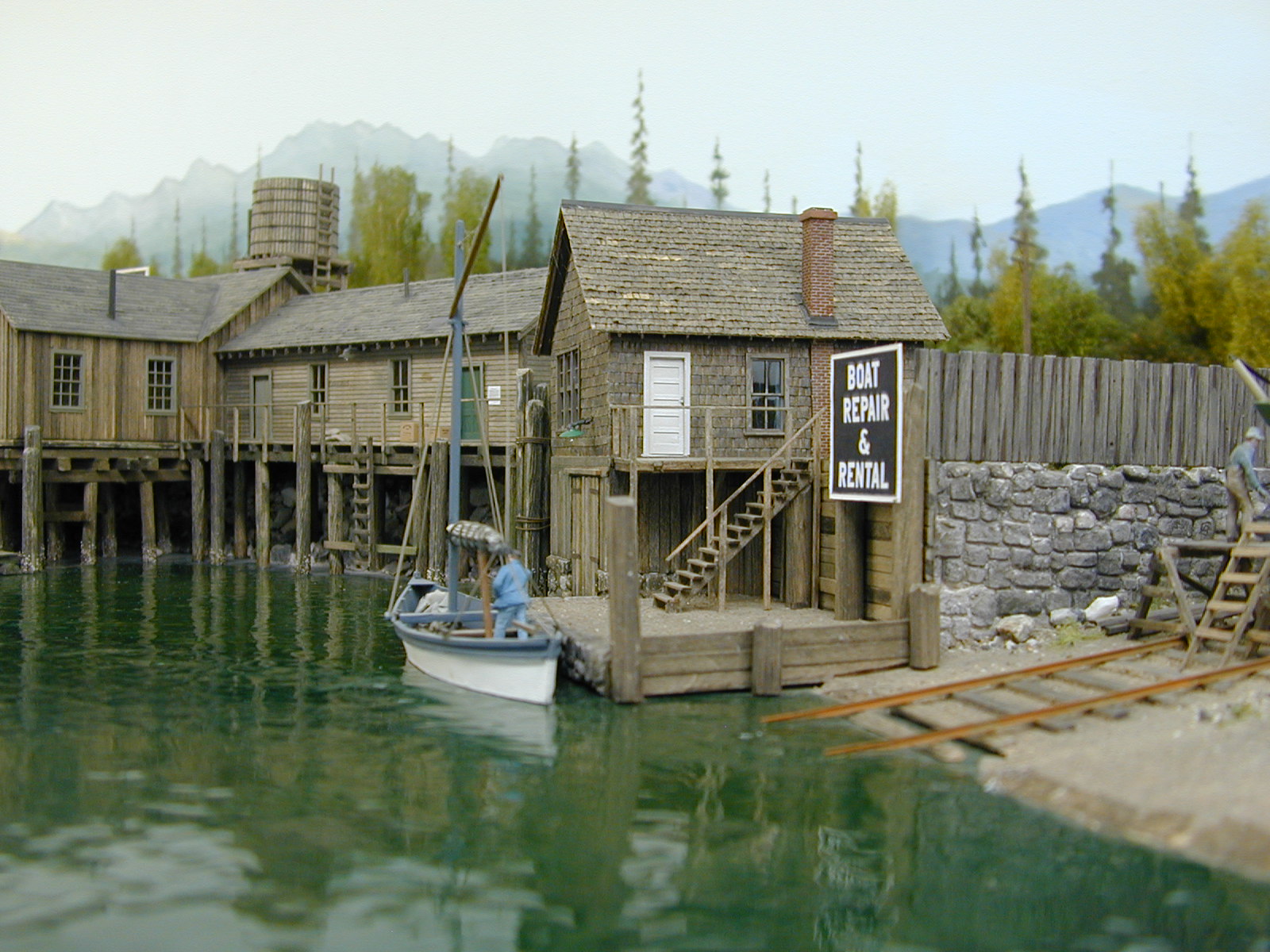
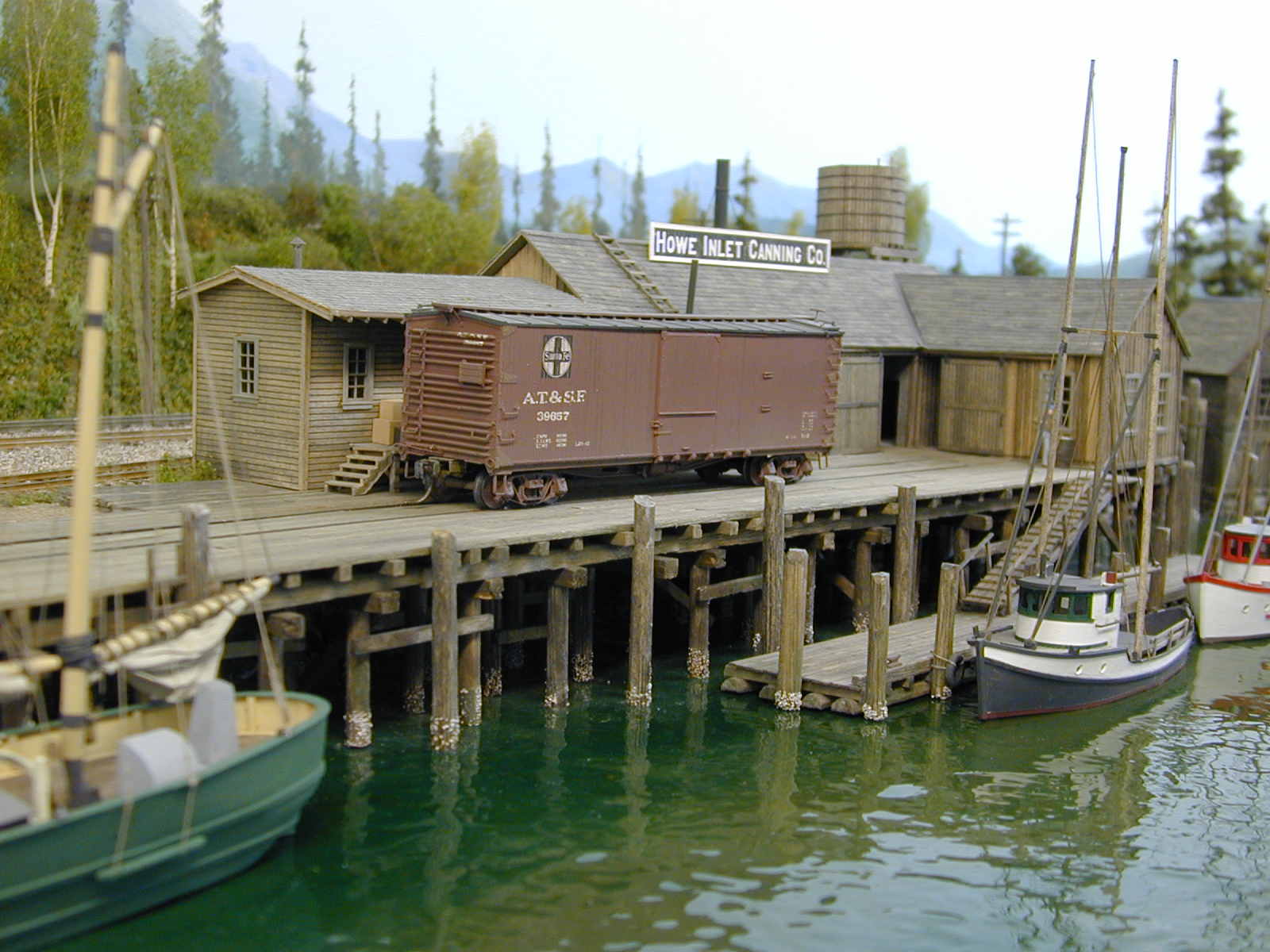
We are meeting this Thursday to share interests in different topics of model railroading.  One interest I know many modelers have is how to model waterfront scenes.

In preparing for a clinic I will give in Spokane at the PNR Convention this June, I found some shots taken in 2002 for inclusion in a Paul Scoles article for the 2004 NMRA Convention in Seattle.


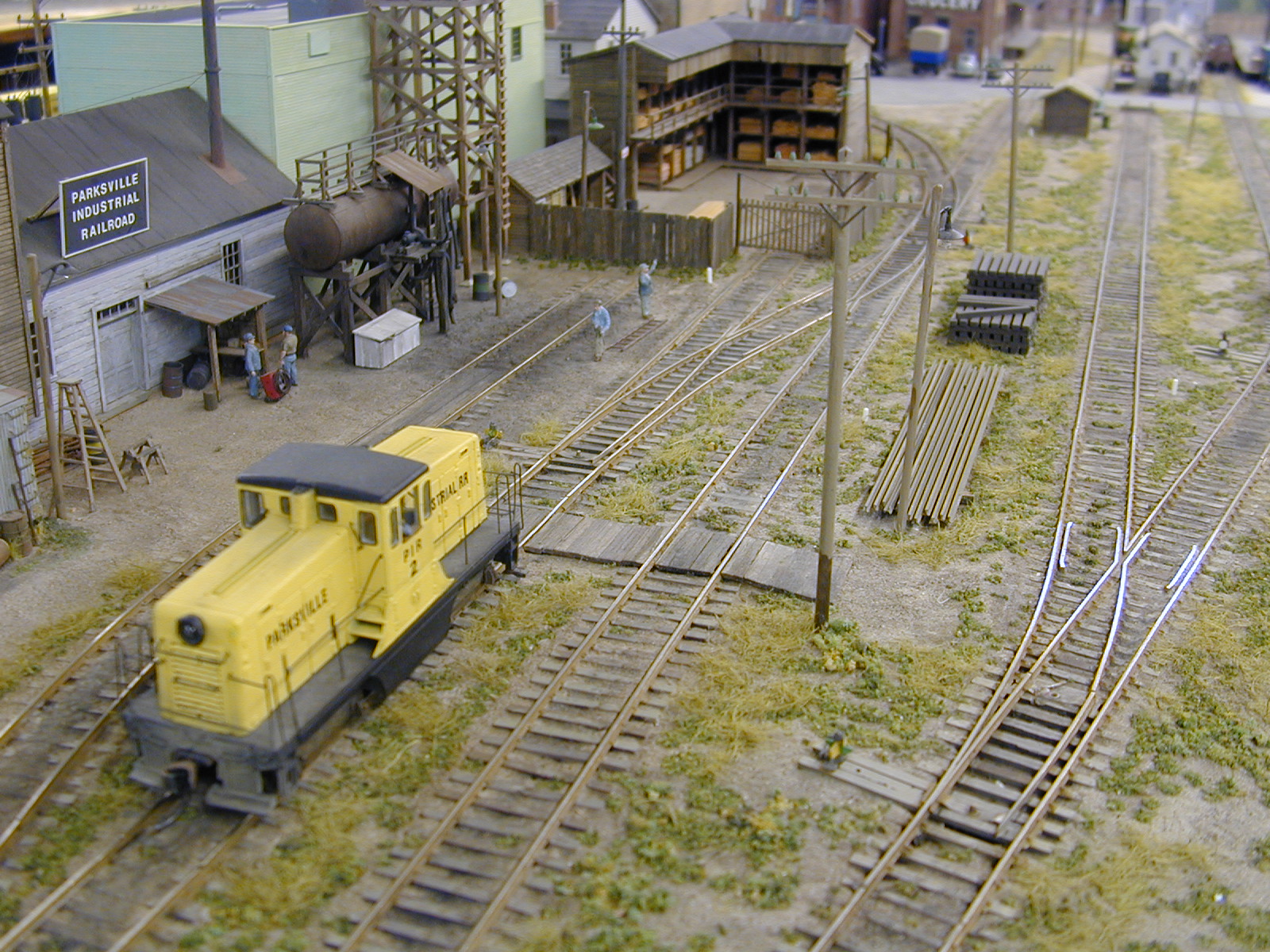
These pictures are of Jerry Kinney‘s beautiful layout in Cashmere.  The layout is long gone, but these deserve to be shared.  The scenes include beautiful waterfront structures as well as a very neat urban industrial area. I will share them Thursday.


Election of Directors and Assistant Superintendent


Russ Segner


A Nominating Committee headed by JJ Johnston has begun receiving nominations for two Director Positions on the 4D Board as well as nominations for Assistant Superintendent.

The terms of these positions are for two years commencing September 1, 2017. The Board holds six meetings during the year and usually meet at Mitzells Restaurant in Kent.

If you are interested in serving or wish to nominate someone, contact JJ Johnston at jj@jtwice.com or 425 985 9805. Full information on duties is available in the Members section in the 4D website.

The Ballot shall be distributed to the Membership in May by mail. To be counted, Ballots must be received by the Committee at the address printed on the ballot, postmarked by no later than June 1, and received by June 15. All ballots shall be tallied by June 20.

Burien Clinic March 23

Our new clinic in Burien will meet this Thursday at 6:30 at the Northwest Railroad Archives. Because this will be the third meeting, we are still getting acquainted. So, we share our various interests in model building, layouts and operation.

Bring a model to discuss or a project to describe. If you have questions about techniques or sources of information, there should be someone there with answers.

Location:

Pacific Northwest Railroad Archive
425 SW 153rd Street
Burien, WA 98166

Time: 6:30 to 8:30

I hope to see you there.

Russ