Grab Iron Posts

Equipment Stolen at Monroe Train Show

by Al Lowe

Be On the Lookout!

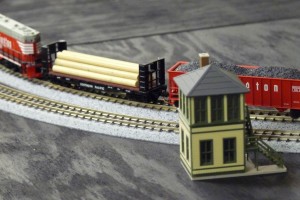
Several pieces of rolling stock were stolen off the 4dNTRAK group’s layout Saturday evening, February 5th during the UNW Model Train Show and Swap Meet in Monroe. Please alert the local hobby shops and share with your friends: be on the lookout for stolen equipment. A theft report has been filed with the Snohomish County Sheriff’s Office.

We lost:

  • Con-Cor DCC/DC Galloping Goose, Great Northern, worth well over $250.
  • Kato SD70MAC custom painted in Burlington Northern green, with MRC-1644 sound decoder, cost $190.
  • Kato GE C44-9W in BNSF silver warbonnet with Digitrax DN163K1B decoder. Value $115.
  • 6 Coal porter hoppers
  • 4 other locomotives, details to follow.

If you see or hear of anyone trying to fence property like this, please contact the police.

Editor for a Day!

by Jack Hamilton

Congratulations! You have just been appointed “Editor for a Day” of the NMRA Magazine. Well, not really, but you get to act like it anyway. During your assignment you get to revise, reformat, or recreate the magazine in any way you choose. Let out all those pent-up frustrations and “pet peeves” you’ve held for so long.

The question is: What would you change? How would you change it? What would the magazine look like after your change? Why would you make the change? (“Because I think it’s better” is an okay answer.)

Please send your input to kitsapmmr@wavecable.com.

Learn To Build A Garden Railroad

by JJ Johnston, photos by Ken Liesse

Eastside Get Together. Mark your calendars for next Thursday, February 17, at 7:30 pm. The legendary garden modeler Dr. Jim Easley will describe the steps to design and build a garden layout. His work with residents at the Emerald Heights retirement community is a model of taking a group of people with varying talents, working together to create a stunning achievement in garden railroading. Jim’s presentation will also include a time-lapse video of this marvelous layout from start to the golden spike finish.

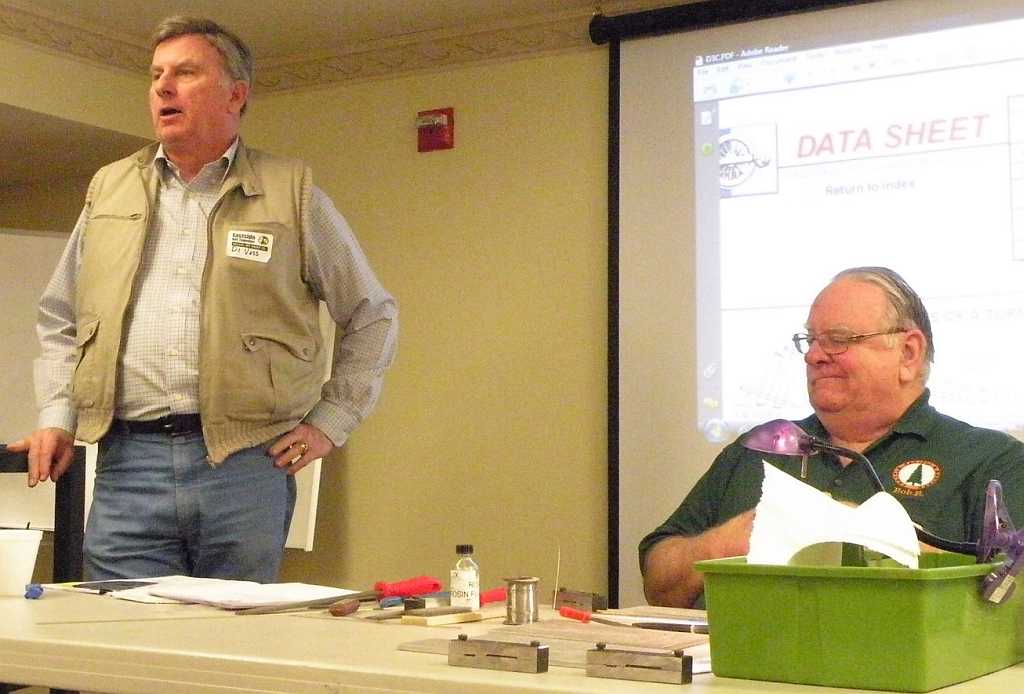
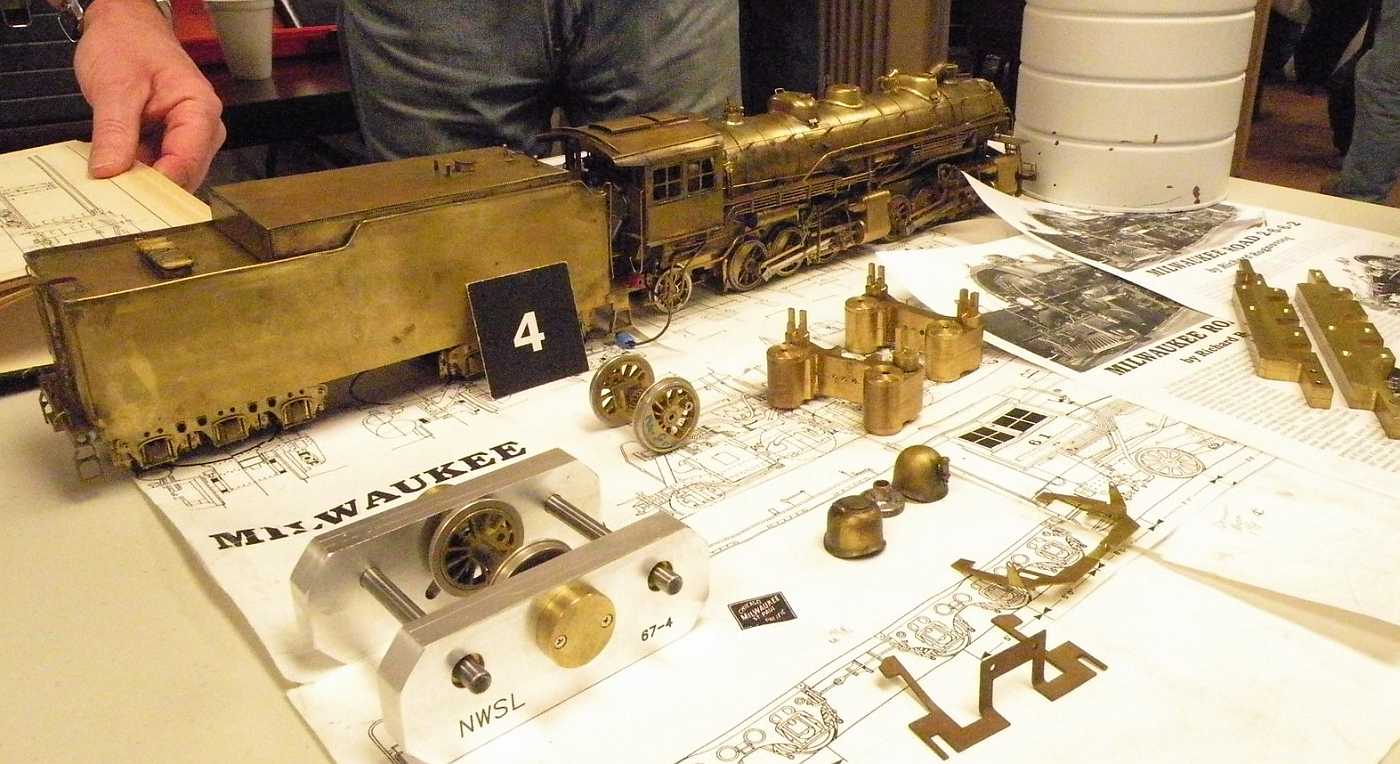
Thanks to Di Voss and Bob Beise for their informative January clinic on making turnouts with FastTrak jigs. Model of the Month was won by Jim Sabol and his almost all scratch built O scale 2-6-6-2. Due to the length of our program, door prizes were not awarded so this month we will have double door prizes. Plus the mart is always available for you to buy and sell railroad items, free coffee and fresh donuts. Join the fun.

4D HO Modular SIG Report on UNW show

By Bob Beise

The Seattle, Pacific & Eastern, (SP&E) or 4D HO Module Group had a 32’ X 48’ layout in the shape of a “U” at the UNW show this year. We had 8 different members bring modules for a total of 24 modules plus 10 modules and 8 corners of the SP&E. There were no long trains running this year, but we did have a real wide variety of trains running, everything from 10 car passenger trains (including Acela and Sounder) to freight trains. Some unusual freight loads were a Boeing 737 body on custom flatcars as well as a turnout in a gondola.

The set up went great as all modules showed up on Friday. Take down went real smooth too and all were out of the hall 1.5 hours after the show closed. I thank all of the people who brought modules and those who just came and helped. It was a fantastic show.

We welcome new members to join our group. If you are interested you can call Norm Curtis (chairman), (425) 743-9035 or me, Bob Beise (425) 488-2494. We meet just about every month for breakfast, usually the second Saturday. The place for breakfast changes as we alternate every other month from north to south to accommodate the wide range of our members homes.

Seattle-North Clinic – Right After the Groundhog – February 3, 2011

Photos and Article by Jeff Moorman

The day after you hear all about Punxsutawney Phil it will be time for the next Seattle-North clinic. So, mark your calendars for February 3 and consult the end of this article for directions. We will be continuing our experiments with T-TRAK, hearing about how another group has used these modules, and discussing just what sort of ‘train running’ we want to pursue.

First up at the January meeting was Jim B who wowed us with his mini-clinic on handbrakes. We learned that Ajax, Champion, Equipco, Jemco, Klasing, Miner, Superior, Universal, and Ureco are not names of new rap groups, but just some of the manufacturers of railroad handbrake equipment. Before the late 1920’s most of the railroad handbrake wheels were on vertical shafts. For brakemen standing on the roof and operating the wheel was extremely hazardous. Mounting the wheel on the car end via a horizontal shaft was an attempt to make things safer, since the brakeman could stand on the ladder, hold on with one hand, and operate the brake with the other.

All the manufacturers listed above (and others) vied to show their equipment was safer, easier to use, and more cost effective to install. This led to a bewildering assortment of brake wheel designs. Some manufactures also offered a ratchet type “wheel” where the brakeman pumped a lever back and forth. Finally in 1959 the AAR standardized the brake wheel, so we do not see near the variety of these wheels today.

Brake wheels are a fairly visible part of a freight car, especially in HO scale and larger. It is a good idea to look at an actual prototype car (or a photograph thereof) to make sure your model has the proper brake wheel. And, like many car components, the brake wheel can be replaced, updated, or changed over time. For more information refer to the article on handbrake equipment in the Railroad Prototype Cyclopedia, No. 10.

Plus, we all discovered that Jim B once had a job designing railroad freight cars – 12 inches to the foot scale. How cool is that?

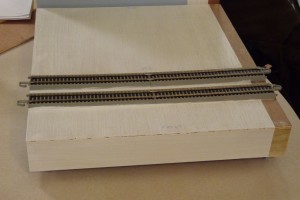
After the break I was time for show and tell. John had made good on his promise to build a demonstration T-TRAK module in HO scale. He could not find any Kato HO track, so did the example with Bachmann E-Z track. One problem he ran into was a warp in the plywood top  piece. We all thought a reinforcing brace under the top and between the two tracks would be helpful. [I have since learned this top warp is not uncommon and can even happen with N gauge modules. The secret is in carefully clamping the top to the sides and letting the glue dry thoroughly. Good quality wood is also of benefit and our brace idea doesn’t hurt either.] Three members of the group expressed a desire to work with T-TRAK modules in HO gauge.

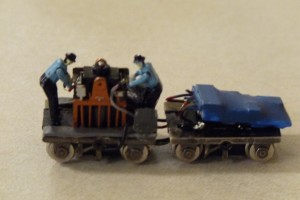
Joel brought along what he calls his “DCC’ized gandy dancer.” Joel started with two of the HO gauge Bachmann gandy dancer handcars. He stripped one and made it into a trailer for the other. The stripped car served as a platform to carry to DCC decoder which was wired to the motor in the lead car. Joel explained some of the electrical issues encountered as well as trying to solve the operating problem of too little weight.

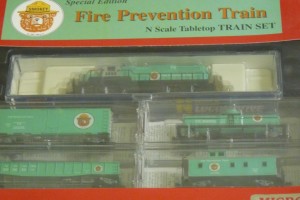
Rob J brought in two more of his seemingly endless collection of N gauge train sets. These were both from Con-Cor.  One was a military set and the other a Smokey the Bear Fire Prevention set.

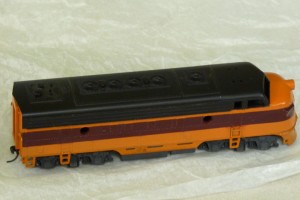
Chris F showed two more of his in-process HO projects. There was a box car with contrasting roof walk. Chris says he doesn’t know if this is prototypical, but he likes the look anyway. And there was a partially painted F7 which looked pretty good even missing the black stripe and lettering.

Bob R had some train pictures of a recent trip to Zimbabwe. In some he was riding the engine of a steam locomotive near Victoria Falls. I am pretty sure, that given enough time, Bob could talk his way into a cab ride on the space shuttle.

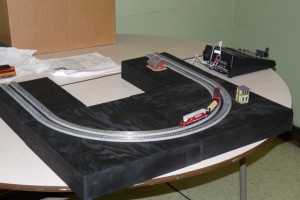
Dennis fulfilled our promise to run the first Seattle-North train on a T-TRAK module. Note that despite my intention to help, it was all Dennis’ doing. He brought two straight and two 90-degree corners to make a U-shaped layout. He brought the locomotive and cars to make up the first train. And he brought the power pack to run that first train.

One of the issues he ran into was the need to make the track spacing on all the modules precisely the same. Otherwise the modules will not mate. This is something we will need to pay attention to in the future.

The recent Pacific Science Center Model RR Show went well. As this is written we do not have the final attendance figures, but the place was pretty jammed at times. I’d like to personally thank all the Seattle-North attendees that participated in the show.

Our next meeting is February 3 and the one after that is March 3.

We meet at the Ronald United Methodist Church, 17839 Aurora Avenue North, Shoreline, WA. That is on the west side of Aurora (State Route 99) just north of 175th Street, between the Cadillac dealer and Deseret Industries. Note that there is still a lot of construction along this stretch of Aurora. Therefore, it might be best to be going southbound so you can make a right-hand turn into the church driveway immediately after passing the Deseret location.

Meetings are the first Thursday of each month, except July and August. Enter the lower level of the church from the parking lot at the rear. Doors open around 7:00 PM, announcements at 7:15, and the program starts about 7:30. Hope to see you there or at least sometime on down the line.

Happy Ground Hog’s Day

News from NMRA’s InfoNet

Gerry Leone, NMRA Communications Director

Thanks to generous donations of members, The NMRA Online Archives should open by March 1st. We’ve scanned and posted 10,000 photos, drawings, and plans, which will be available for download at a discount price by NMRA members and at full price by non-NMRA members. Watch NMRA Magazine for the Grand Opening announcement. And remember: the more you donate, the more we can scan!

The NMRA is planning to help Regions and Divisions promote National Model Railroad Month next November with materials downloadable from our website, like poster and flyer templates, press releases, etc. Watch NMRA Magazine for more details this summer.

Jim Zinser’s Division Business Car column is a great place to see how other Divisions and Regions promote themselves, raise money, and have fun with model railroading. Take a few moments every other month to read Jim’s column for ideas.

The winter Board Meeting is being held concurrently with the Budget and Operations meetings this year in Las Vegas at the Palace Station Hotel (about 5 miles from the airport). The Budget and Operations meetings, which are by invitation only, begin on Tuesday, February 22 at 9 a.m. The Board Meeting runs from 9 to 5 (or later) on Wednesday, February 23, and 9 to 5 (or later) on Thursday, February 24. All NMRA members are welcome to attend.

Check the Help Wanted ads in NMRA Magazine. We’ve filled several positions, thanks to generous volunteers, but we still need your help. Remember: we’re a volunteer organization always in need of able bodies. Here are the positions we’re looking for—if you fit the qualifications, email the address in the magazine.

  • Electronics engineers with experience in setting up control systems needed to take part in discussions and development of NMRANET. Current bus is designed using CAN. Time commitment: several hours per week.
  • IT staff volunteer with experience in Content Management Systems. Able to program in PHP and PostGreSQL/MySQL, and good experience in HTML and CSS. IIS and VB experience a plus. Time commitment: ~3 hours per week.

Tacoma Clinic

Al Babinsky / Photos by Ken Liesse

MMR Gene Swanson opened the clinic and wished everyone a Happy New Year. We welcomed five newcomers for a total of 54 modelers attending.

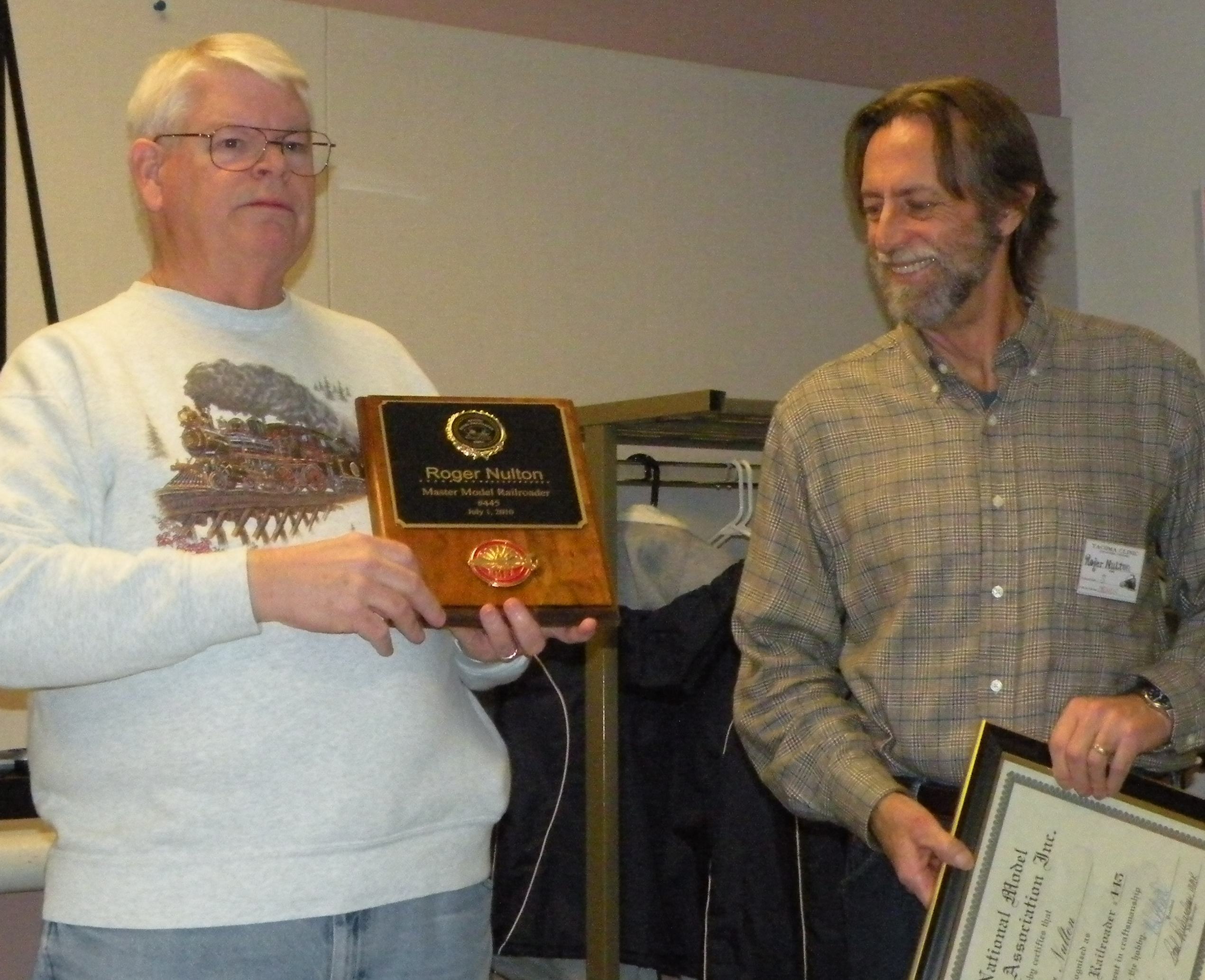
Walt Houston introduced Roger Nulton, new MMR #445. Jack Hamilton announced that the Columbia Model Railroad Club wanted to host the National Convention but did not have enough members to qualify and ask for volunteers to sign a petition so that they would have enough members for the qualification.

Jim Sabol announced that the National Railroad Historical Society would have a convention in this area in June. Learn more about their activities at cascaderails2011.com

Bill from Tacoma Trains presented What’s New at the Hobby Shop, which included many new and some not so new items. Under the new items was a Kato American Freedom Train, RPO car, Milwaukee Road RS3 and a number of boxcars.

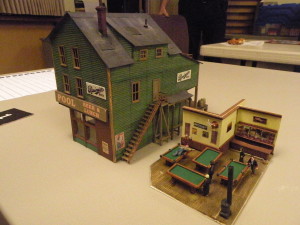
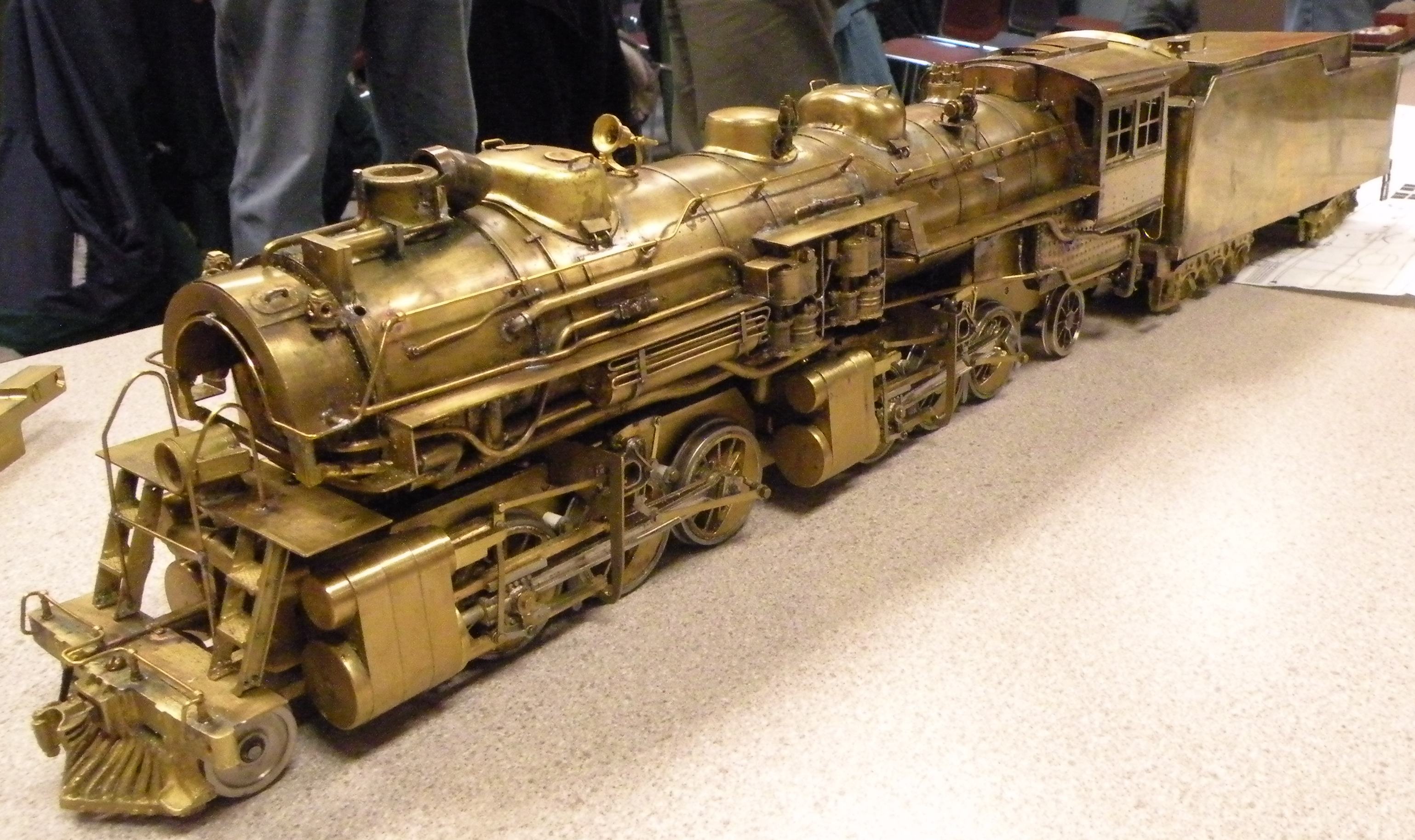
The Bring and Brag (Model of the Month) had a number of entries: crates and boxes for the inside of a freight house; a kit-bashed Rico Station with some inside detail; a Milwaukee Road Little Joe with sound and operating pantographs; scratchbuilt end-of-track bumpers; a work train built from Ambroid and Tichi kits; a scratchbuilt brass Milwaukee Road M3 2-6-6-2, and some car loads made from natural material. The Model of the Month winner was Jim Sabol’s brass locomotive.

Click for high-resolution image

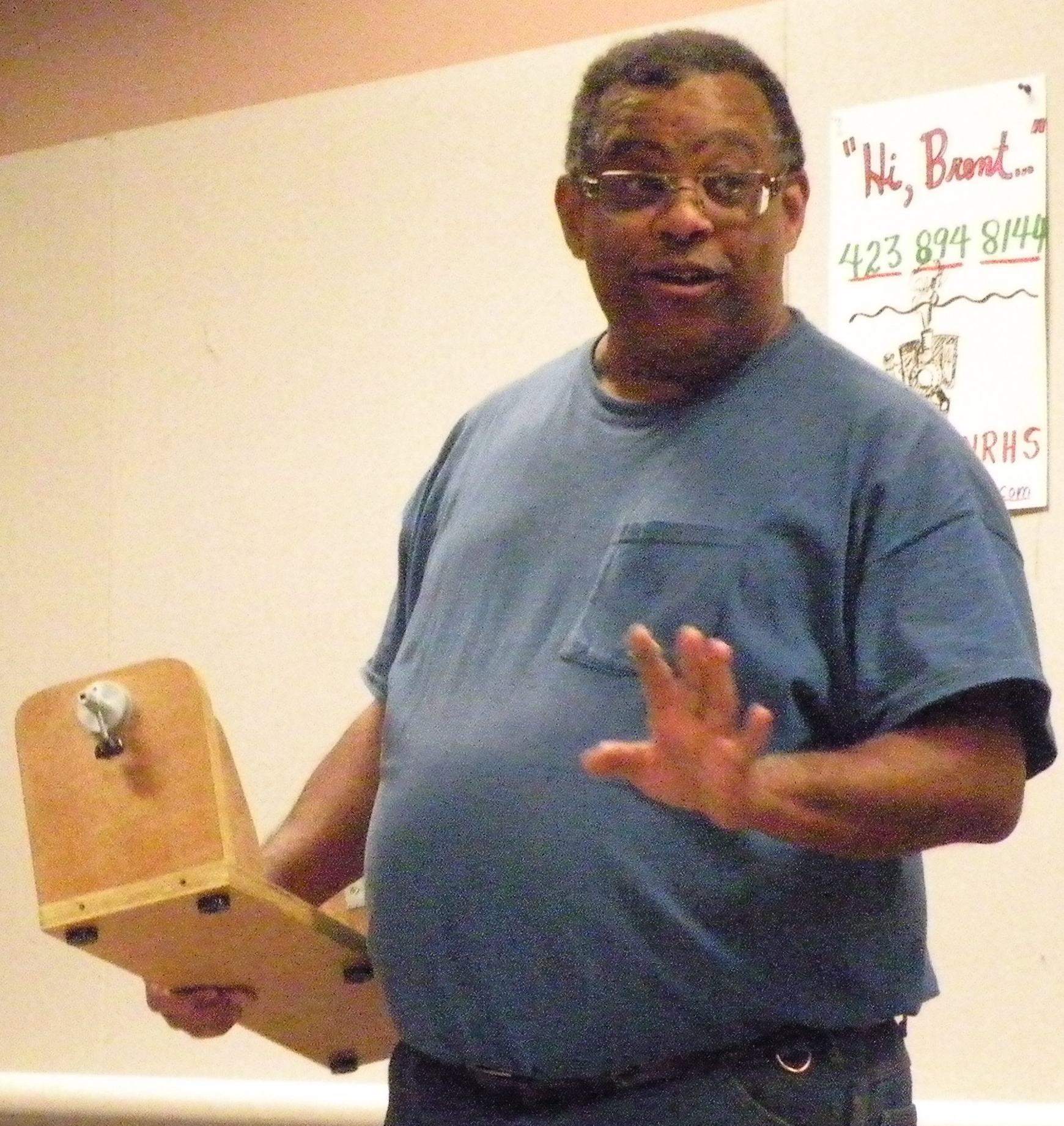
This month’s clinic was given by Charles Jackson of H&J Trains on how to make trees using his tree machine kit. The tree machine uses a precut length of soft wire and precut lengths of rope fibers. An electric drill on an adapter is used to twist the wire while the other end is held by Visegrips. Up to three trees can be made from a pair of wires. They look like bottlebrush trees and can be made into pines or other needle trees. He had catalogs available with a variety of items including various leaf trees, metal tree armatures, and even ferns in various sizes. Several local hobby shops carry some of his items. For more info, go to hjtrainstore.com

Next month’s clinic will be February 10th at our usual place: the Pierce County Library Admin. Bldg., corner of 112th St. and Waller Road at 7:30 PM. Hope to see you all there and bring a friend or newcomer.

Please note: the March 10th clinic will be at the Parkland-Spanaway Branch, on 138th Street at Pacific Avenue in Parkland, near Brookdale Lumber.

Skagit Valley and Whidbey Clinic

by Gordon Garnhart

There were 27 people gathered at the Summer Hill Retirement Community conference room on January 12th. Our mini swap meet brought a variety of items and some lively shopping ensued.

John White opened the meeting, calling our attention to a very worthwhile program called “Heartbeat, Serving Wounded Warriors”. It was started a few years ago by Janice Buckley of Snohomish, Washington, to provide support for the spouses and families of our troops in Iraq and Afghanistan. The scope of the effort was recently expanded to help wounded veterans cope with their long recovery periods in veterans’ hospitals. Plans are beginning to come together to furnish kits of railroad cars or structures and/or supplying them with simple tool kits to give them something interesting to do. The thought was also expressed that the kits do not necessarily need to be railroad oriented.  Performance R/C Hobbies, located on Fairhaven Avenue in Burlington, will be actively participating in this program by furnishing some of the kits and tools.

John also called attention to the excellent job that Al Frasch does with his monthly “Skagit Valley & Whidbey NMRA Clinic” newsletter. It is a fine communications tool and serves as a bonding agent for the group.

Steve Jaffrey presented a very good program explaining how to scratch build a dilapidated building. He talked about various kinds of foundations used for barns, sheds and houses 100 years ago. He described methods of framing, and ways to distort the structural components to represent sagging and deteriorating conditions. He showed various kinds of roofing materials and passed around many examples of all of these aspects of construction. Steve talked about various kinds of paints, stains and thinners, and demonstrated techniques to achieve a weathered or neglected appearance. His program was well received.

We will next meet on Wednesday, February 9h for a program presented by Max Maginness, MMR, entitled “New Zealand Railways”.

New Product from S&NW

Jim Bainbridge

Sound & Northwestern LLC has released The Rodessa: A Sears Catalog Home. This HO scale, multimedia kit is laser-cut from styrene, micro-plywood and Lazerboard, and includes cast resin details. The original Rodessa appeared in the Sear® Book of Modern Homes and Building Plans from 1919 to 1929. An advanced-level kit of over 180 parts, it is now available for $63.95 direct from the manufacturer at their new website, snwlines.com. S&NW also produces HO scale details. Watch for more new products coming soon.

Pacific Science Center Show, January 15-17

Frank Dekker

The Pacific Science Center Model Railroad Show will be January 15-17, 2011 (MLK weekend). Public show hours are 10 AM to 6PM each day. Attendance at the show is free to the public, with purchase of admission to Pacific Science Center. See the PSC website, www.pacsci.org, for details.

The 4th Division assists the PSC with organizing the show.

You can help us promote the show by posting copies of the show poster on public bulletin boards in your community. Download the poster pdf from the PSC show page on the 4d website: www.4dpnr.com. Check your printer settings to print the image as “fit to page” or similar.

You can help us at the show. Volunteers are needed to help with various support functions. One important function is helping supervise the various opportunities for children to operate trains. You get free admission at the exhibitor’s entrance, the pleasure of helping children learn to love trains, and use of the crew lounge. Please let us know soon when you can help. We will respond with specifics.