Grab Iron Posts

John White Retires as SV&W Clinic Chair

By Rich Thom / Photos by Al Frasch

John White recently handed over the reins as Clinic Chair of the Skagit Valley and Whidbey Clinic, an enthusiastic group of modelers and rail enthusiasts which meets monthly in Oak Harbor. John served as SV&W Chair for twelve continuous years, if not a record certainly an admirable span of leadership. Over these dozen years, our clinic gatherings have shown considerable growth not only in numbers but geographical span of attendees as well.

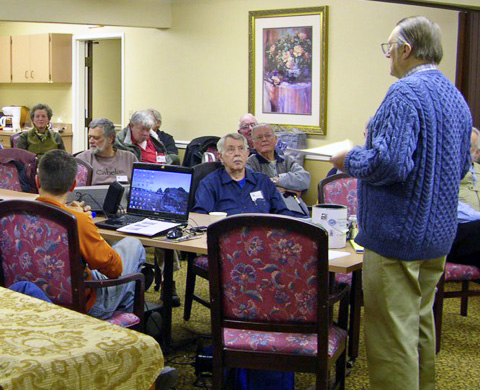
John White opens a meeting of the Skagit Valley and Whidbey Clinic

During John’s chairmanship, he organized over 100 clinics embracing a broad range of model railroading skills and techniques; railroad history and prototype railroading; “make and take” sessions; and of course layout visits. Swap table and “show and tell” nights alternate months during the year, and in recent years a popular annual modeling contest has been included. John and his wife, Valerie, have also encouraged additional group socializing by hosting a “Wassail” party each December in their Anacortes home, during which John’s fine On30 layout is fired up for operation, too.

During John’s watch, clinic attendance has steadily increased, requiring three ever-larger venues over the past eight years as we outgrew each room. Currently the SV&W Clinic meets in the Summer Hill Retirement Facility in Oak Harbor. From the 2004/5 to the current 2011/12 season, during which John kept attendance statistics, average attendance nearly doubled from 17 to 30, with a peak (reached just this March) of 37. We may soon need a new meeting room! Clinic attendees come from a relatively wide area: all of Whidbey and Fidalgo Islands; Mt. Vernon and Sedro-Woolley to the east; and Bellingham to the north. The “Skagit Valley and Whidbey” name was the shortest we could devise, but certainly isn’t inclusive. Guest clinic presenters have come from all parts of the Puget Sound region.

For those of whom have not heard the story (John was the Guest Speaker at the September 2010 PNR Convention Banquet), John, now retired, was responsible for introduction of concrete ties into use by North American railroads. He was a principal in establishing three plants in the U.S. for manufacture of these ties.

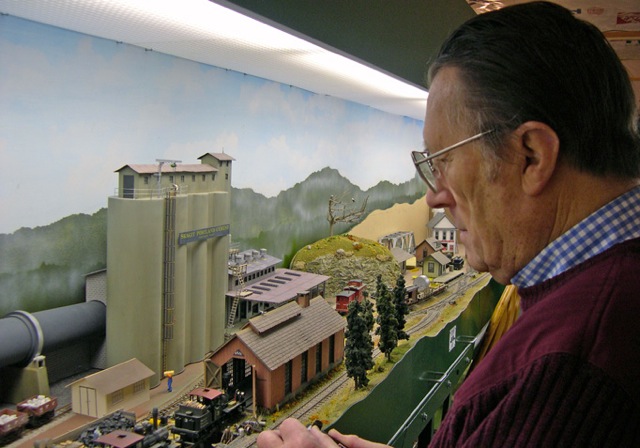
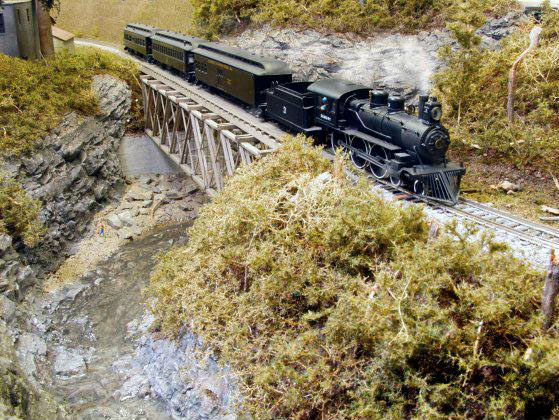
John White working the town of Concrete on his On30 Skagit Valley Eastern

John is also an outstanding modeler. Beginning first in OO-scale with British prototypes, he shifted his focus to the Great Northern in HO-scale. Ultimately he abandoned both for On30. John’s present layout, the Skagit Valley Eastern (SVE), fills most of a 14ft. x 51ft. room.  The SVE, set in the late 1920’s, is loosely based on the Skagit River Railroad built to haul men, material, food, equipment and a lot of cement to various dam projects on the Upper Skagit River.

The SV&W Clinic meets ten times a year on the second Wednesday of each month, September through June. Two volunteers have stepped up to continue John’s work: Rich Blake as the new Clinic Chair; and Susan Gonzales as Program Organizer. Follow the SV&W Clinic’s activities by reading the Grab Iron reports by our NMRA Liaison and Reporter, Gordon Garnhart.

Seattle-North is Touring Cuba May 3rd

By Jeff Moorman, Photos By Jeff Moorman

Please come join us this Thursday (May 3) when our clinic topic will be railroading in Cuba. Last month Bobj returned from a trip to the island. As he was one of the guides on a railroad tour, he was privy to all sorts of good information which he will share with us.

Also the folks from the upcoming National Narrow Gauge Convention will be stopping by to make a presentation. This convention is being held September 12-15 in Bellevue. If you have never been to a National Narrow Gauge event, you are in for a treat. There is really some fantastic modeling being displayed and the techniques are applicable most anywhere. Think about it – there is no such thing as a narrow gauge tree.

Last month’s clinic covered scratch building turnouts with Stu R. And when we say scratch, we mean scratch. Stu goes so far as cutting his own wood ties. He also has made his own set of angle gauges for the turnout sizes he needs. Stu says he worked out the geometry by studying prototype books on track laying and using CADRail to lay out templates.

Stu started with a primer on hand laying track. His technique is pretty conventional. First he lays the ties and makes sure they are level. He coats the bottom of the rail with contact cement and clamps it down (or uses heavy weights) until it dries. After that he uses a few spikes to make sure everything stays put. He does one rail at a time. Stu has several handmade jigs used for getting tie spacing correct in different situations, like regular track, bridge decks, and under turnouts.

Unfortunately my notes are not detailed enough to explain exactly how Stu builds the turnouts. I do recall that when he does something with a flangeway, he fills the whole assembly with solder. Then he uses a section of hacksaw blade to “cut” the flangeway in the solder. This appears easier than techniques I have seen that try keep that area clear throughout construction. And it seems to result in a very robust assembly.

Stu's Tools (at least some of them)

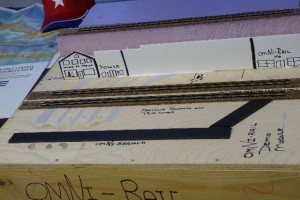
Rob J brought an OmNi-Rail mockup, which is a new N gauge modular standard. He talked a little about the standard and why some folks think it is needed. The mockup was available for further scrutiny during show and tell.

OmNi-Rail Module Mockup

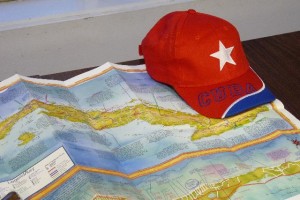
Bobj had a few mementos from Cuba on display. Of course we will learn more about them at May’s meeting. John B brought some of his hand built turnouts (in HO). He had a fascinating way of holding the points in gauge using a styrene throwbar with a notched spreader glued on top. He said he first learned about this method at a clinic some years ago.

From Bobj's Cuba Trip

In talking to John and Stu I learned you cannot always expect a perfect turnout. From time to time one of your efforts just will not function properly and you should expect this will occur. The best solution is to just build another one.

We meet at the Ronald United Methodist Church, 17839 Aurora Avenue North, Shoreline, WA. That is on the west side of Aurora (State Route 99) between 175th and 185th Streets and more specifically, between the Cadillac dealer on the south and Deseret Industries to the north. You can no longer make cross-traffic turns on Aurora, so you need to be going southbound (so you can make a right-hand turn into the church driveway immediately after passing the Deseret location).

Meetings are the first Thursday of each month, except July and August. In June we usually do a tour. For regular meetings enter the lower level of the church from the parking lot at the rear. Doors open around 7:00 PM and the program starts about 7:30.

Remember the next meeting is May 3.

Hope to see you there or at least sometime on down the line.

Tacoma Clinic April Meeting

Al Babinsky

MMR Gene Swanson opened the clinic on time as always to a great group of modelers including two newcomers. Several announcements were made about upcoming conventions; the 4D Spring met will be in Issaquah, June 3-4. A reminder of the PCR PNR combined convention in Medford, OR. Walt Huston announced that the Tacoma Clinic layout would be in May. The TNW will hold their annual show on May 19-20. The Kitsap live steamers started operating on Saturday the 14th of April.

What’s new at the hobby shop was presented by Bill Deutscher from Tacoma Trains with a variety of items from Woodland Scenics, Atlas, Microtrains, and DPM in scales from Z to O.

Doug and Leo sent their cans around for the coffee fund and our food drive. Leo reported that at this point we have collected 561.00 Dollars for the food drive.

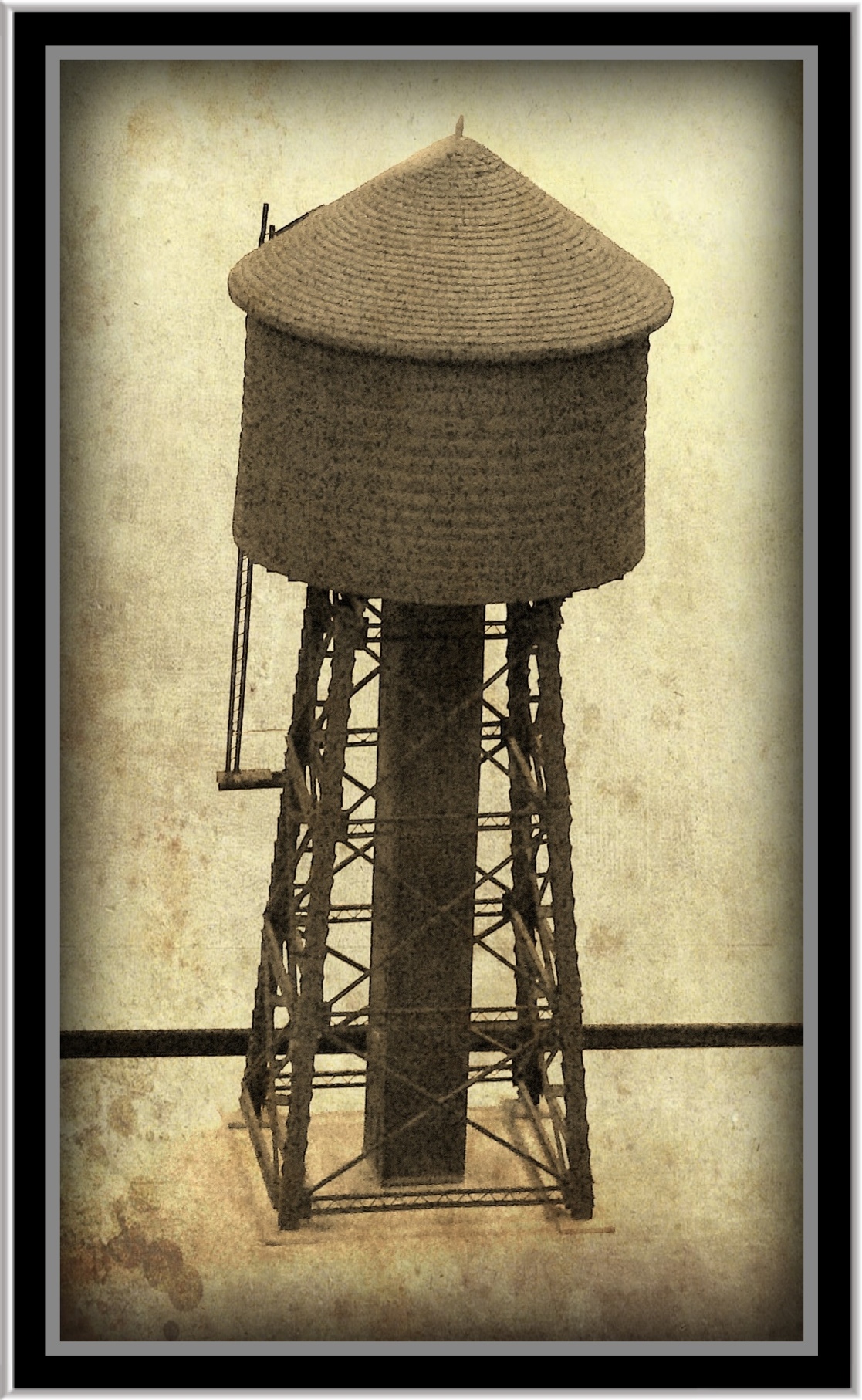
Model of the Month Winner
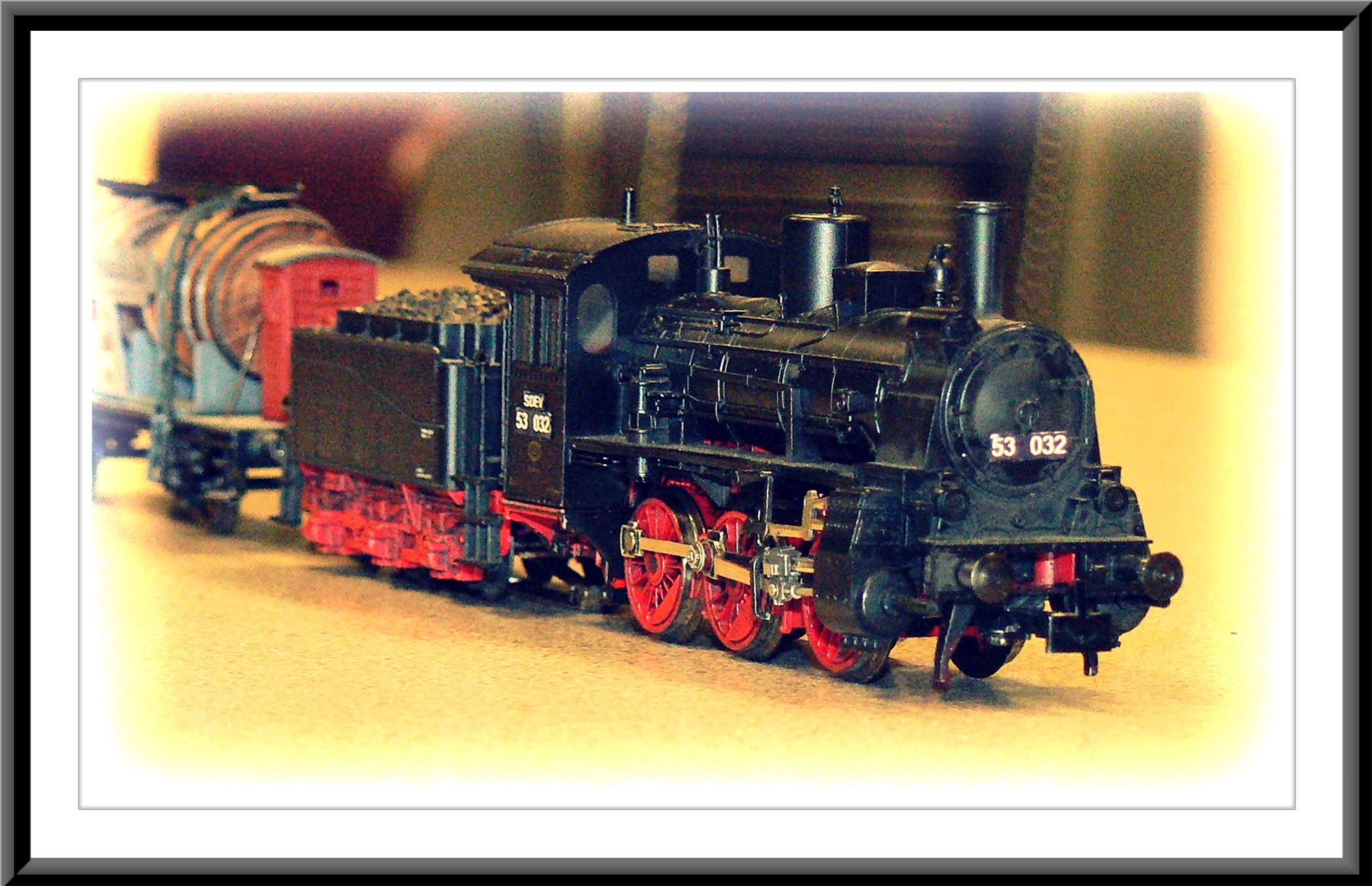
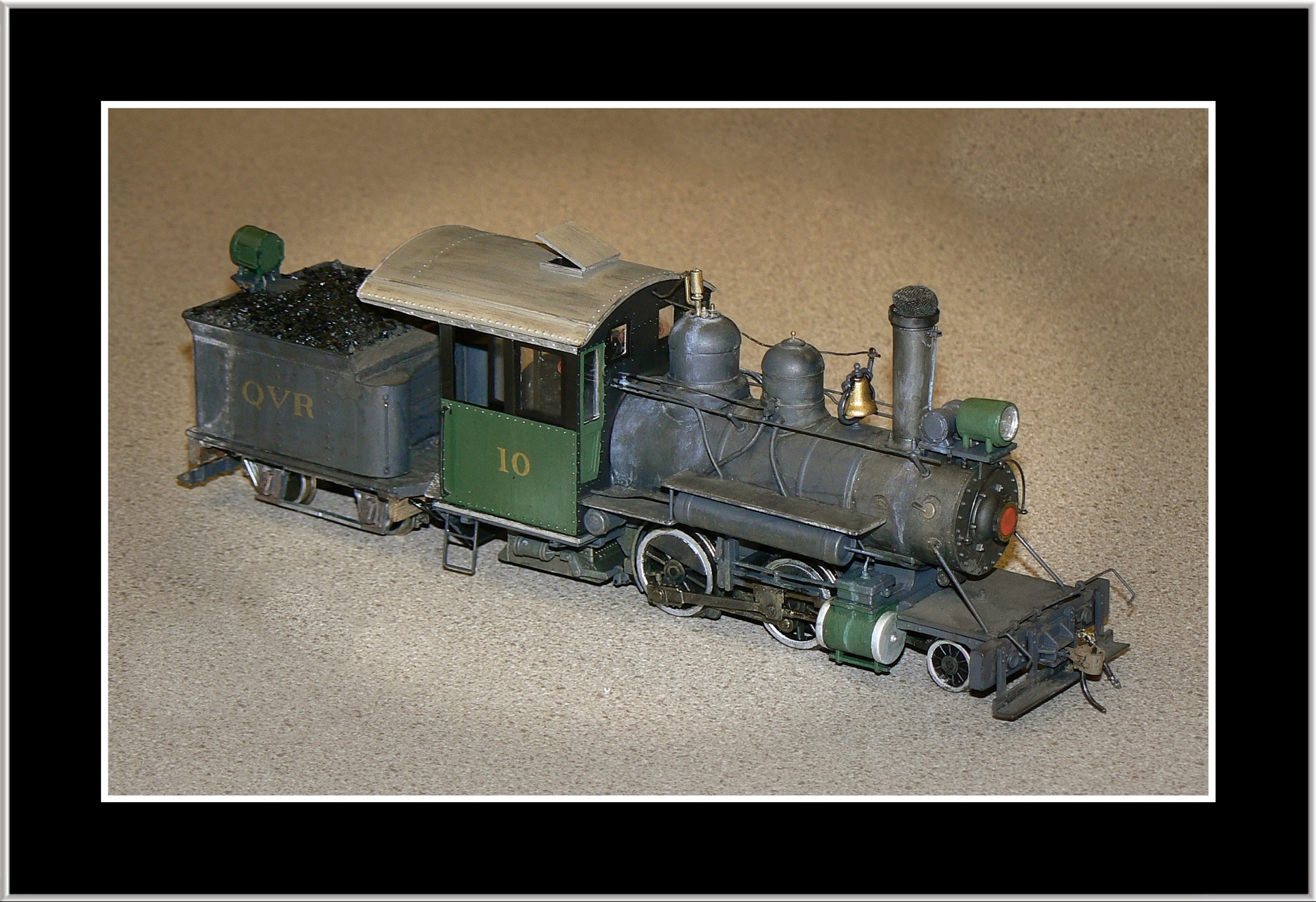
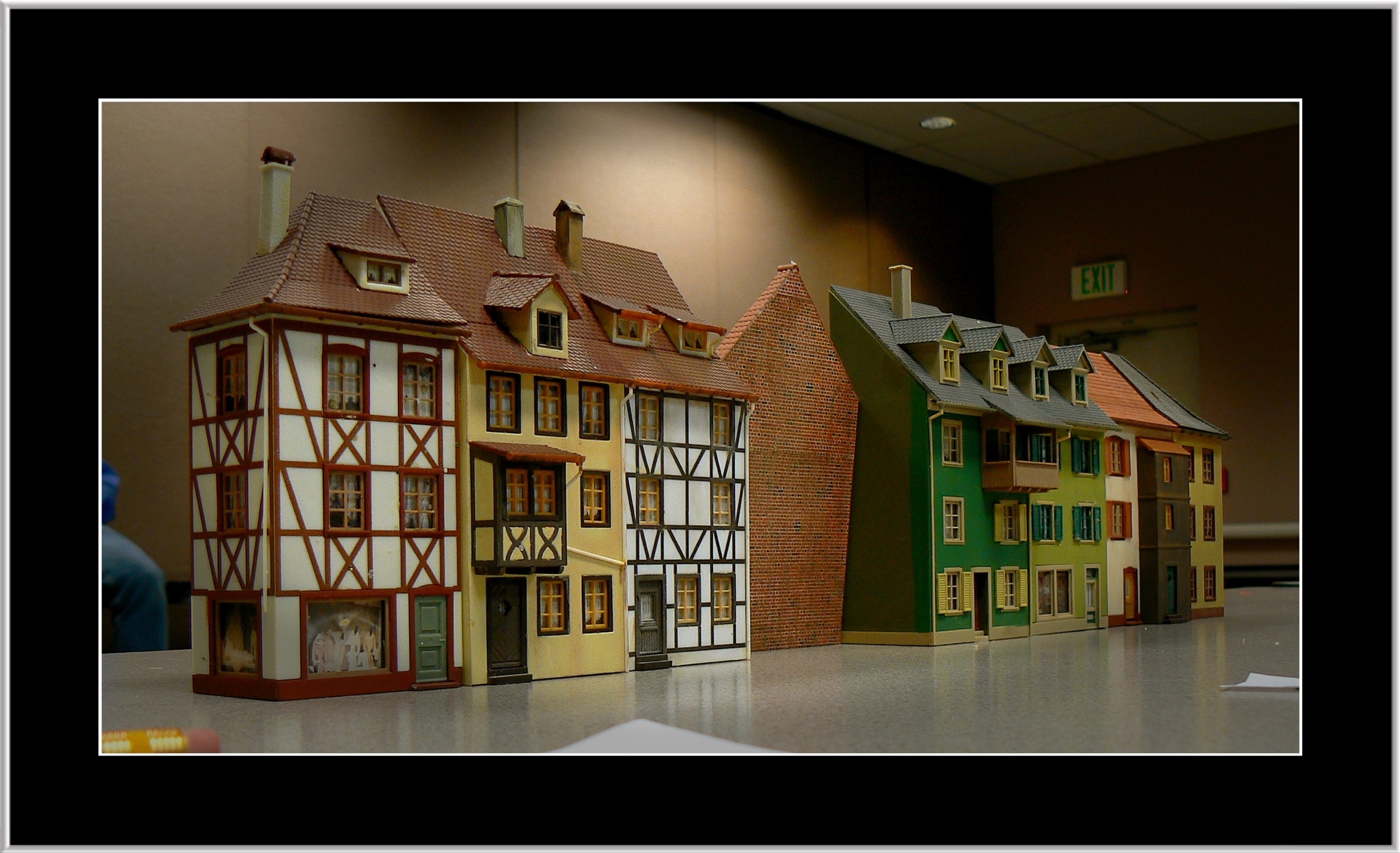
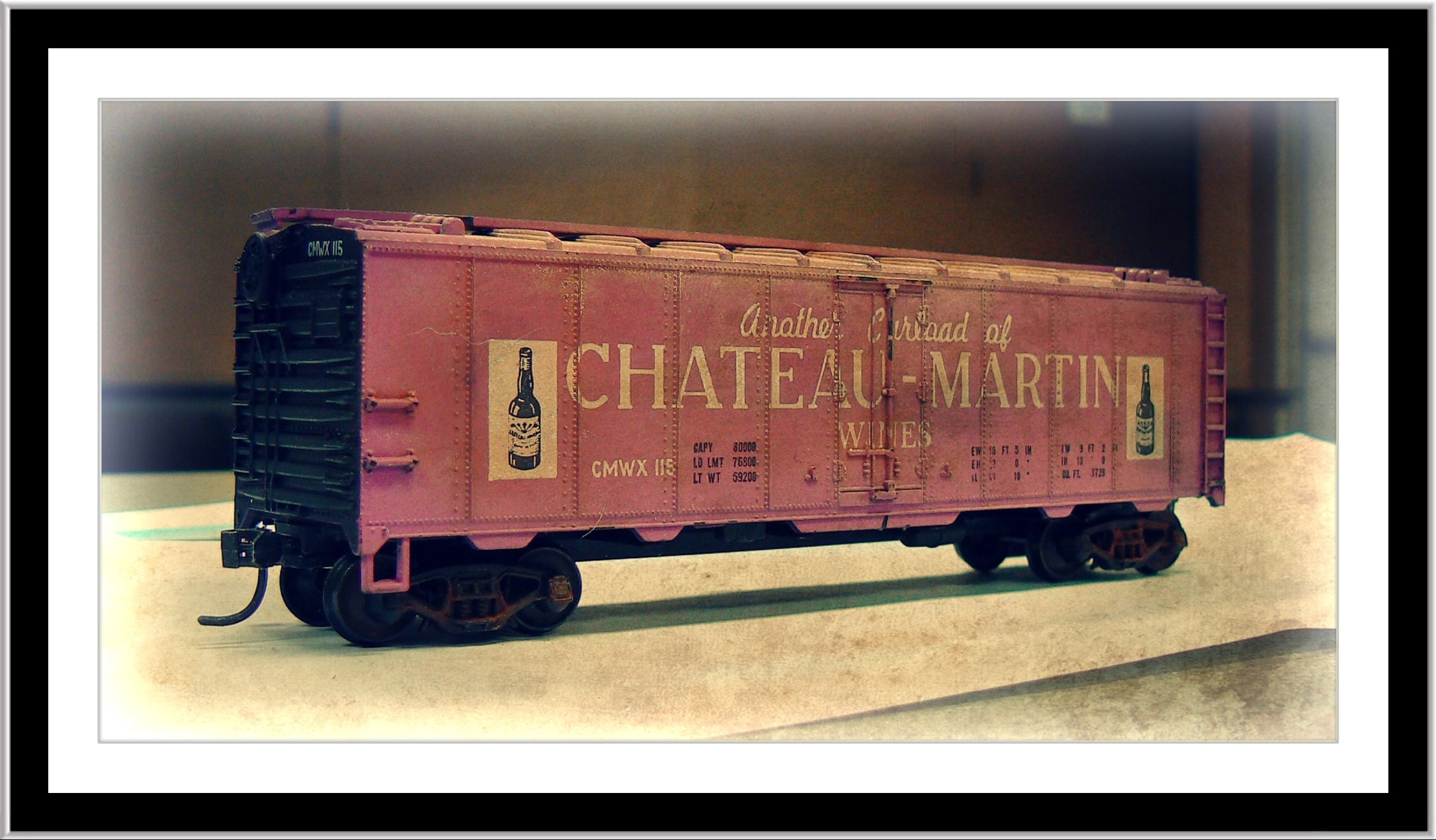
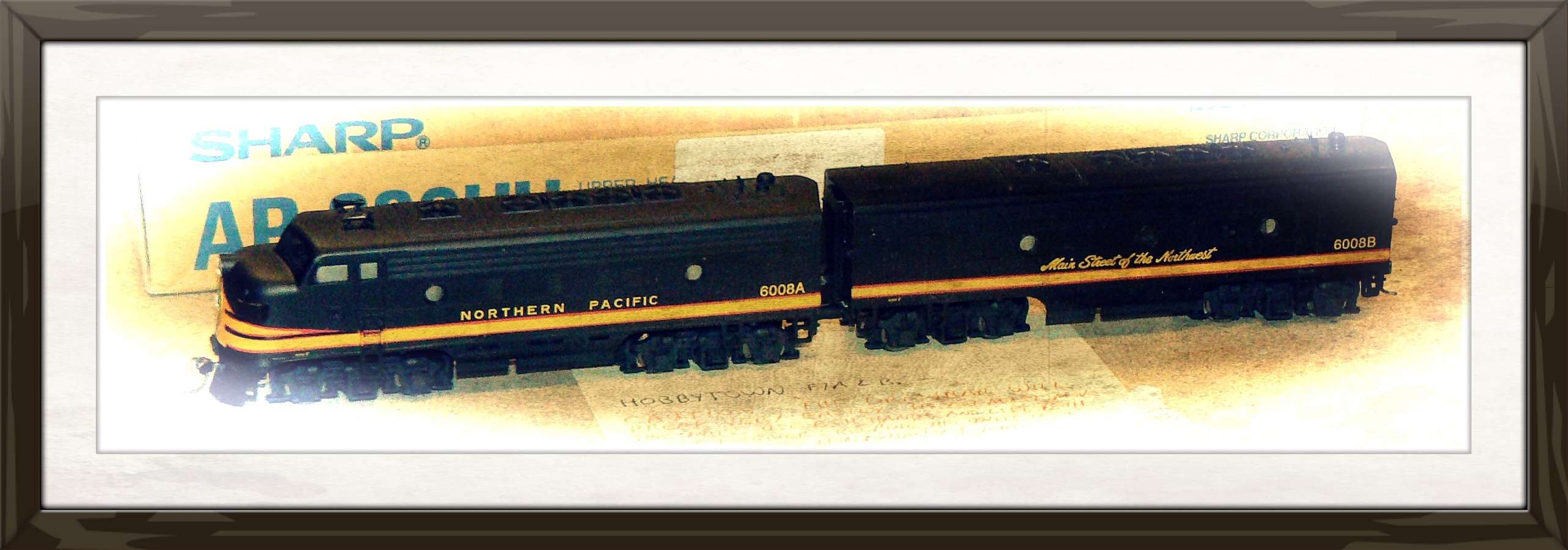
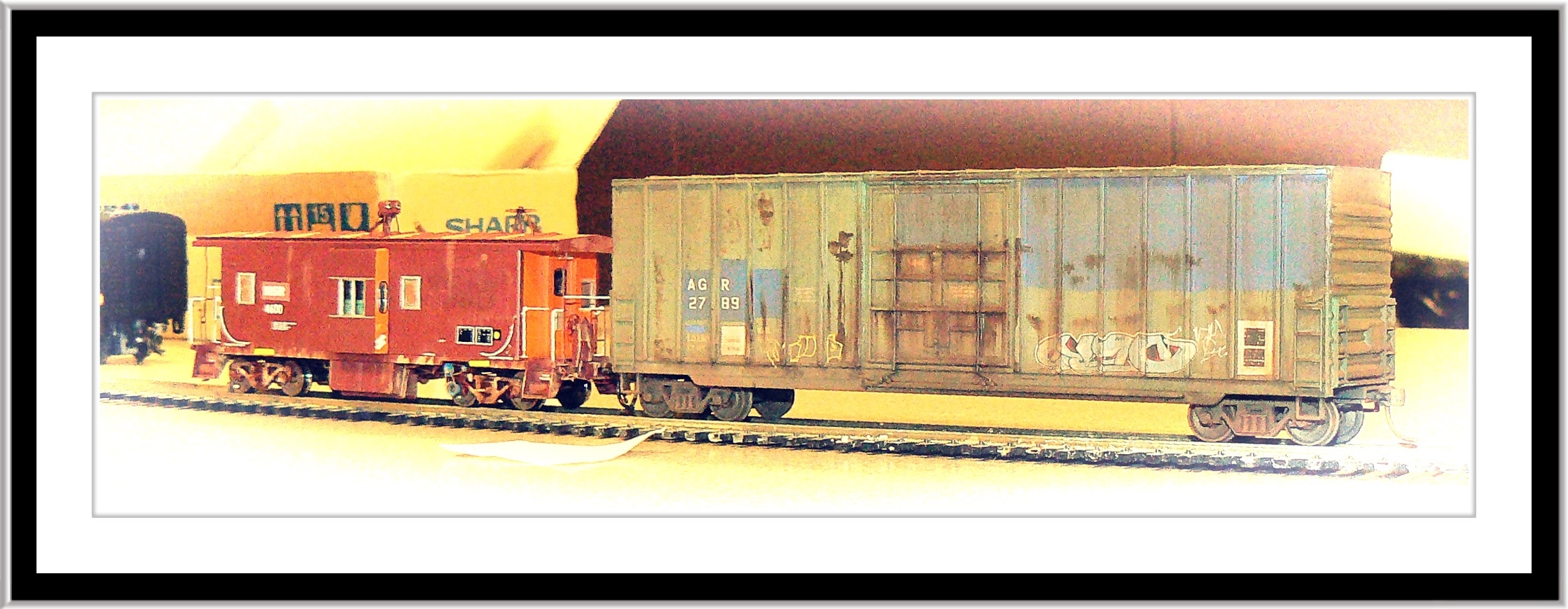
The Model of the Month contest had a number of nice models, a F-7 AB unit with the B unit powered by drive shaft from the A unit, An Athearn Genesis caboose and a 50’ boxcar heavy weathering and graffiti decals, a diorama with a Cornerstone building “Granma B café”, a TNW box car body with TNW logo, German locomotive with  wine vat cars of various designs, a water tank from the Wenatchee Appleyard, and trestle from Micro Engineering that was modified into a curved trestle. The Model of the Month winner was the Watertank.

The clinic for this month was given by Jim Sabol and was titled freight yard design. Jim started out with a section of track that had a siding on a board about four feet long which he called a model rail road layout. After explaining his theory he expanded on paper the design into a very complex design of a freight yard. A great clinic on yard design for operations.

Next month’s clinic will be May 10 at our usual location in the Pierce County Library Admin. Bldg. the corner of 112th Street and Waller Rd.


NMRA’s InfoNet News for April

Gerry Leone, Communications Director

Fundraising has begun for the Magic of Scale Model Railroading gallery at the California State Railroad Museum in Sacramento, CA. As your members will probably recall, this gallery will introduce the Museum’s 600,000 annual visitors to the hobby, as well as give them a sense of its history. One of the highlights of the gallery will be actual portions of the finest model railroads ever built. The Museum has donated the space rent-free to the NMRA for the purpose of promoting the hobby.  It’s estimated that the cost to build the exhibit will be approximately $750,000, and no NMRA dues or monies will be used. Instead, it will be entirely funded by donations. To date, over $100,000 has been raised, and an anonymous donor has agreed to match donations, up to $250,000. Anyone who would like to donate should send his tax-deductable donation to NMRA Headquarters at 4121 Cromwell Road., Chattanooga, TN  37421-2119, and mark it “Gallery donation.”

In the February edition of the InfoNet News, we reported the agreement of cooperation between the NMRA and the www.Hasea.com Model Railroad Association of China. This July we’ll be seeing the first fruits of that “Hands Across The Ocean” agreement as a group of teenage Chinese modelers and railfans visits California with the purpose of seeing layouts, prototype trains, and the California State Railway Museum. Several Pacific Coast Region members are helping to organize this 2-week event.

Grand Rails 2012, the upcoming NMRA national convention, has announced their commemorative convention car. Grand Rapids, Michigan, was once known as The Furniture Capital of the World, and appropriately the model was inspired by a postcard photograph of a turn-of-the-last-century furniture manufacturer’s wood-sided boxcar. This replica, produced by Accurail, comes complete with a Grand Rails 2012 logo “poster” which can be applied by the modeler. Visit www.gr2012.org to see a shot of the prototype. Grand Rails 2012 has also posted a preliminary clinic schedule for the convention at their website. Clinicians include: NMRA Worldwide Director Tony Koester, Jim Six, Jim Sacco, and clinics by the Layout Design Sig.

Grand Rails 2012 is looking for volunteers who’d be willing to donate an hour or two of their time at the convention doing things like contest room security, helping with registration check-in, silent auction set-up and tear-down, and bus loading. If you’re interested and have an hour or two you’d like to donate, contact Mark Baldwin, Vice Chair of Volunteers. Just use the “Contact Us” link on the Grand Rails 2012 website at www.gr2012.org.

Skagit Valley and Whidbey Clinic

Gordon Garnhart

There were 28 people gathered in the conference room at the Summer Hill Retirement Facility on Wednesday, April 11th for a very interesting and enjoyable meeting. The session was opened, for the first time, by Rich Blake, who presented John White with a beautifully decorated sheet cake, commemorating his 12 years of very capable leadership.

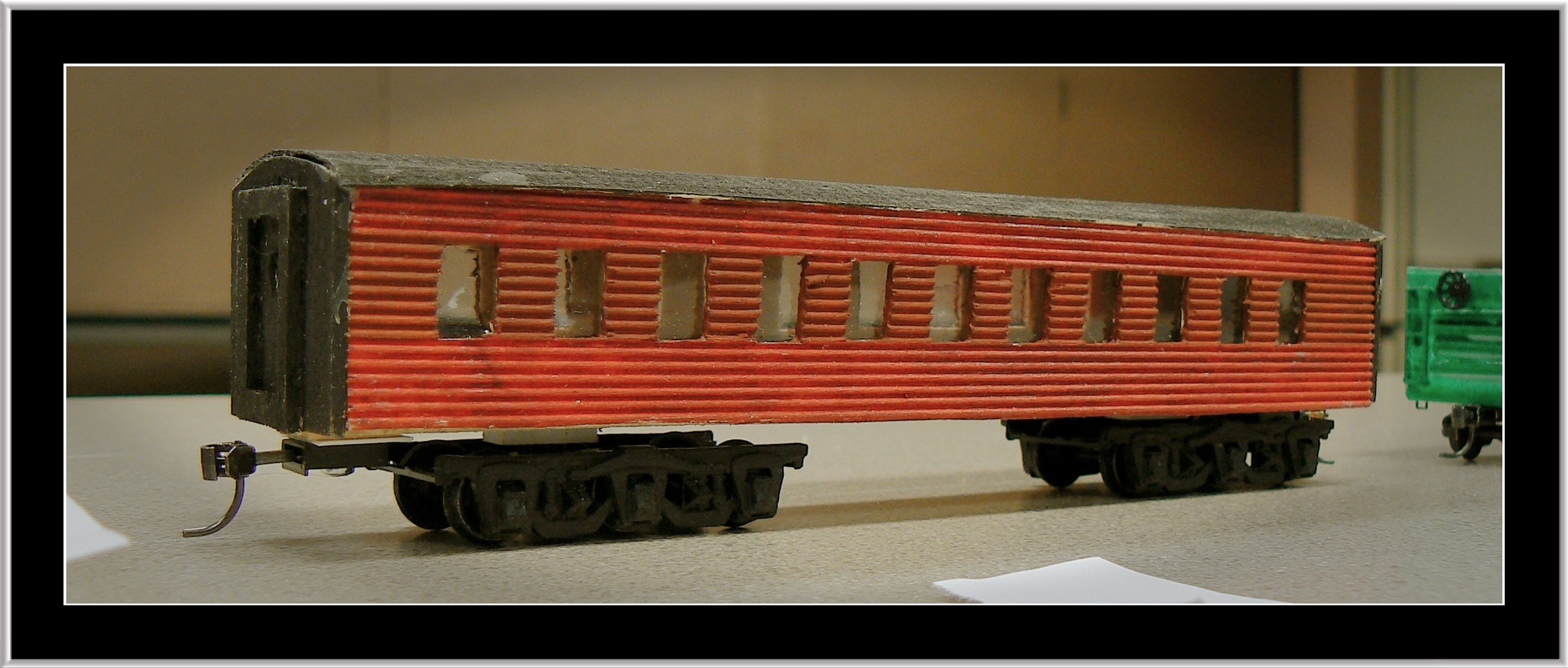
A feature of the evening was the judging, by Didrik Voss, of the entrants in the Rolling Stock Competition. This contest, shepherded by Jack Tingstad, which was first announced last September, attracted enthusiastic participation, and some very impressive entries. In the category of Craftsman Kit, first prize went to Tom Hawkins, and second prize was won by Doug Greenfield. In the category of Kit or Kit Bashed, Gordon Jones took first prize, with Susan Gonzales and Jim Tartas taking second and third respectively. The lead prize in Ready to Run was won by Rich Blake, with Thurlow Powell taking second.

In the Scratchbuilt category, Steve Jaffray’s entry took first prize and Rich Blake won second. The People’s Choice Award went to Steve Jaffray. And finally, the prize for best entry in the Built Prior to 2011 category went to Terry Kandzor. And the Honorable Mention Award was won by Al Frasch. All winners received a certificate and a small monetary award.

A scene from Di Voss' layout.

Didrik Voss also entertained the group with a very interesting and informative slide presentation entitled, “The Reality and the Model of the Everett & Monte Cristo Railway.” Di discussed his prototype modeling of the Everett & Monte Cristo Railway. The Everett & Monte Cristo Railway in Di’s basement is a prototype of a short line constructed in 1893 from the City of Everett 55 miles east to Monte Cristo for the purpose of removing gold from the Cascade Mountains. This short line was underwritten by John D. Rockefeller. It was standard gauge and connected to the Northern Pacific in Hartford, Washington. The line also provided a route to transport the large trees in the Cascade Mountains for the construction of buildings and other structures along the west coast. Most of the buildings on the layout are scratchbuilt or extensively kitbashed — from the 10-hammer stamp mill in Monte Cristo to the smelter in Everett.

Didrik is a Master Model Railroader and is currently serving as the Manager, Standards & Conformance Dept. for the NMRA. In the past he has been a Director and also Editor of the Grab Iron in the 4th Division. He lives in Mill Creek, with his wife Mary Kay. His layout has been featured in the Gazette (2001) and Model Railroad Craftsman (June 2004).

The next meeting, at 7:00 PM on Wednesday, May 9th, will feature Barry Anderson whose topic will be “How to Drive a Steam Engine.” We hope to see you there.

Special BOD Meeting Called

Ken Liesse

There will be a special BOD meeting immediately preceding the Eastside Get-Together on Thursday, April 19. The meeting will begin at 7:30pm. All 4D members are invited to attend this meeting. The purpose of the meeting will be to discuss 4D’s possible co-sponsorship of the Narrow Gauge Convention in September. Representatives from the convention will be on hand to answer questions.

Seattle-North Change of Meeting Room (April 5 only)

By Jeff Moorman

This coming Thursday (April 5) there is a big church supper scheduled, so our regular meeting room will be unavailable.

We are going to use the “Fireplace Room” instead. You enter by going up the the main entrance stairs from the parking lot. Then turn left once you are inside. This change is for the April 5 meeting only.

So, if you get to the meeting and find it crowded with lots of new people, lots of food, and no trains; you are in the wrong room.

Olympia Layout Tour is April 14

Scott Buckley

The Olympia Model Railroad Layout Tour is scheduled for Saturday, April 14th. Nine layouts will be open to visitors, including:

  • Jerry Barnes’ On30 scale Southern Idaho Narrow Gauge RR
  • The Olympic Model Railroad Society’s HO scale layout
  • Dave Rakestraw’s HO scale PNW Railroad
  • Chuck Ricketts’ On30 scale Sherwood, Shelton and Sarazen
  • Greg Wright’s 1:32n20 Consolidated Republic Mining Co.
  • Brian Ferris’s HO scale Port Townsend & Southern
  • Jim Younkins’ N scale Mud Bay & Southern Railway
  • Scott Buckley’s HO scale Tehama Valley Railroad
  • Ryan Bate’s HO scale McCloud River Railroad (first time participant)

This is your chance to see a variety of layouts in various scale/gauge combinations representing a wide variety of prototypical interests. A few of the layouts are in the early stages of construction, but all are operational. As with previous years, a few of the layouts will be open early, while a few will stay open later, so visitors may see as many as possible.

If you are interested in visiting, please contact me at sbuckley54@comcast.net and I will send you an email with layout descriptions, hours of operation, layout addresses, and a map. Those of you who have already contacted don’t need to do so again. I will beginning sending this info beginning next Saturday.

Please note: this is a semi-invitational event. While we want to make the tour available to as many interested people as possible, for security reasons we can’t allow maps to our homes to get out to those with ulterior motives. Please feel free to bring friends and family members. You may also forward this message to people who you personally know.

Seattle-North is Talking about Building Turnouts on April 5th

By Jeff Moorman / Photos by Jeff Moorman

Please come join us this Thursday (April 5) when our clinic topic will be scratch building turnouts in N scale. The basic techniques are applicable to all scales, so if you can build them in N you can build them in any size. If you have seen Stu R’s turnouts before, then you know these make for good looking track. Stu will be showing us how he does it.

If you were there last month, when he showed us how he uses Cadrail, then you might have gotten a hint of how Stu starts the turnout process. Cadrail can do a lot more than just pretty, scale layout drawings. But, before we talk about some of those other things, here’s what I took away from the demo of layout drawing:

  • Like any drawing software, there is a learning curve. If you just want to whip out a quick drawing (without bothering to learn much about the product) then you should probably stick to paper and pencil.
  • Once you learn it, it is pretty easy to make changes to an existing plan. The parts that don’t change do not need to be redrawn and you can easily save multiple versions.
  • Doing a plan with something like Cadrail seems to lessen the chance that you will cram too much track onto too small of a space. When you draw by hand it is easy to “cheat” on the dimensions (especially for turnouts and turn radii) and then you have a devil of a time physically building and operating the layout.

And here are some other things Stu showed us can be done by Cadrail:

  • You can simulate running a train on a layout diagram to check out how the design works and whether the track segments (i.e. pieces of the drawing) are properly connected and aligned.
  • You can do scale drawings of buildings, rolling stock, trestles, and etc. You can even do a scale drawing of a turnout – hint, hint.
  • You can import a photo with a known dimension and then use Cadrail to measure all the other items in the photo and use that information to construct a scale drawing.

John B brought in some photos of the small logging layout he is building, so we could see what he is doing. It was interesting to see his paper mock-ups of a sawmill and some buildings; also to see some of the buildings under construction.

Dennis T brought an Olympia Beer plug door reefer and a Sante Fe ballast car, both in N scale. He had acquired these on a vacation trip to San Diego. He also had an On3 flanger which he had just cleaned up after getting it some time ago at a clinic mart.

Here are a couple of pictures of the dioramas David C brought to the February clinic and that I wrote about last month:

Feb Clinic - Dioramas from David C

Feb Clinic – Dioramas from David C

Feb Clinic - Diorama by David C

Feb Clinic - Diorama by David C

We meet at the Ronald United Methodist Church, 17839 Aurora Avenue North, Shoreline, WA. That is on the west side of Aurora (State Route 99) between 175th and 185th Streets and more specifically, between the Cadillac dealer on the south and Deseret Industries to the north. You can no longer make cross-traffic turns on Aurora, so you need to be going southbound (so you can make a right-hand turn into the church driveway immediately after passing the Deseret location).

Meetings are the first Thursday of each month, except July and August. In June we usually do a tour. For regular meetings enter the lower level of the church from the parking lot at the rear. Doors open around 7:00 PM and the program starts about 7:30.

Remember the next meeting is April 5 and the one after that is May 3. Hope to see you there or at least sometime on down the line.

Mothers Ride Free

Sue Van Gerpen, Northwest Railway Museum

Mothers Ride Free on Mother’s Day (and the day before!)

The Northwest Railway Museum invites mothers of all ages to enjoy a free ride aboard our antique train, when accompanied by a paying child of any age. Passengers may board in Snoqualmie or North Bend for the 70-minute round trip. Passengers may get off at the halfway point, shop, eat lunch, or take a stroll and then return on any later train. Trains depart every 75 minutes beginning at 11:01 AM from the Snoqualmie Depot at 38625 SE King Street and at 11:31 AM from the North Bend Depot at 205 McClellan Street. Roundtrip fares are $10 (children 2-12), $15 (children 13-61), and $12 (children 62+). For more information, visit www.trainmuseum.org or call 425-888-3030.

Celebrate National Train Day May 12

National Train Day returns to the Snoqualmie Depot on May 12. Enjoy a dose of history while celebrating Mom. See historic Snoqualmie on a beautiful May day, visit the restored 1890 Snoqualmie Depot, ride a vintage train past the top of Snoqualmie Falls and celebrate all things train. It’s Amtrak’s 41st anniversary and a great day to celebrate!

Visitors to the museum experience the excitement of a working railroad while learning about the important role railroads played in shaping the character of the Pacific Northwest. The depot and bookstore are open to the public 10–5 daily.