Grab Iron Posts

February 2014 Skagit Valley/Whidbey Clinic

 Article and Photos by Al Carter

Chairman Rich Blake opened the meeting promptly at 7:00 and mentioned he and Susan Gonzales are soliciting ideas for clinic topics for the 2014-2015 season.  Al Carter gave an update on the upcoming PSX-2014 PNR Convention.  The evening’s program was another “two-fer” – two of our finest clinicians gave outstanding talks on Backdrops (Jack Tingstad) and Scenery (Tom Hawkins).

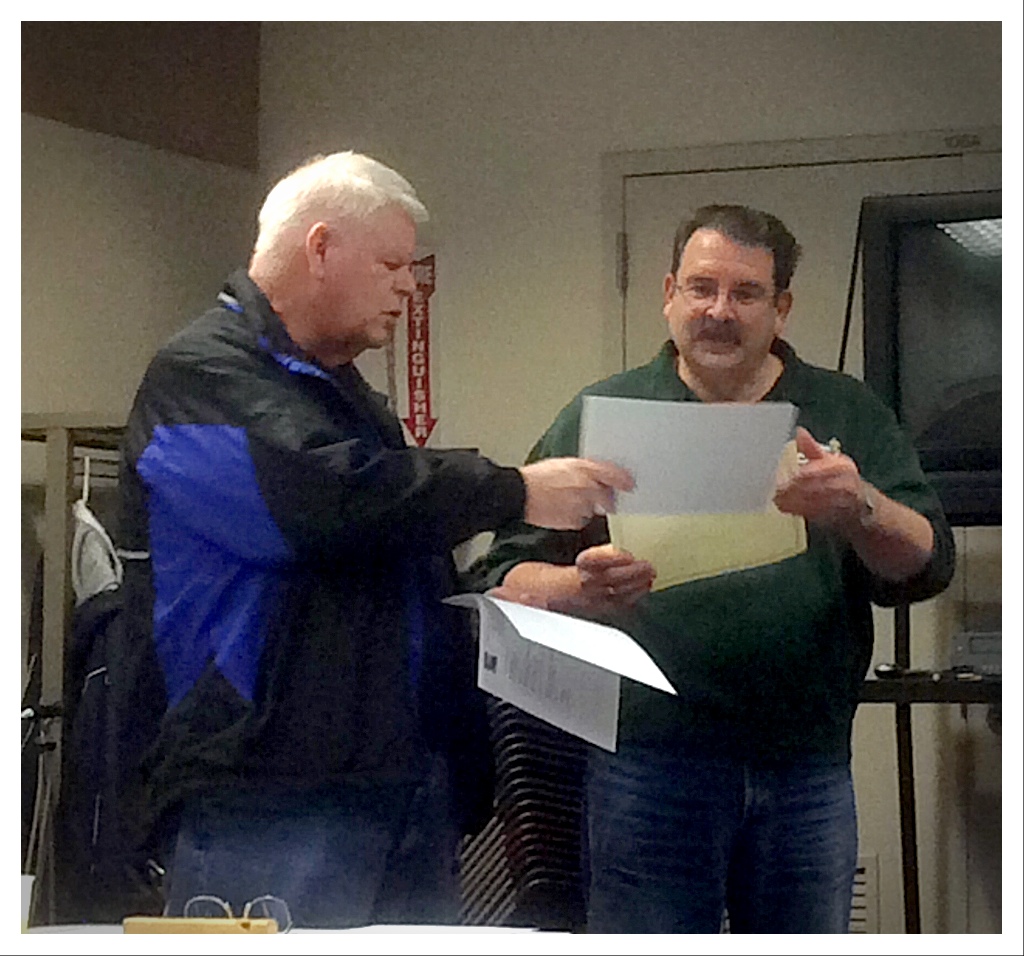
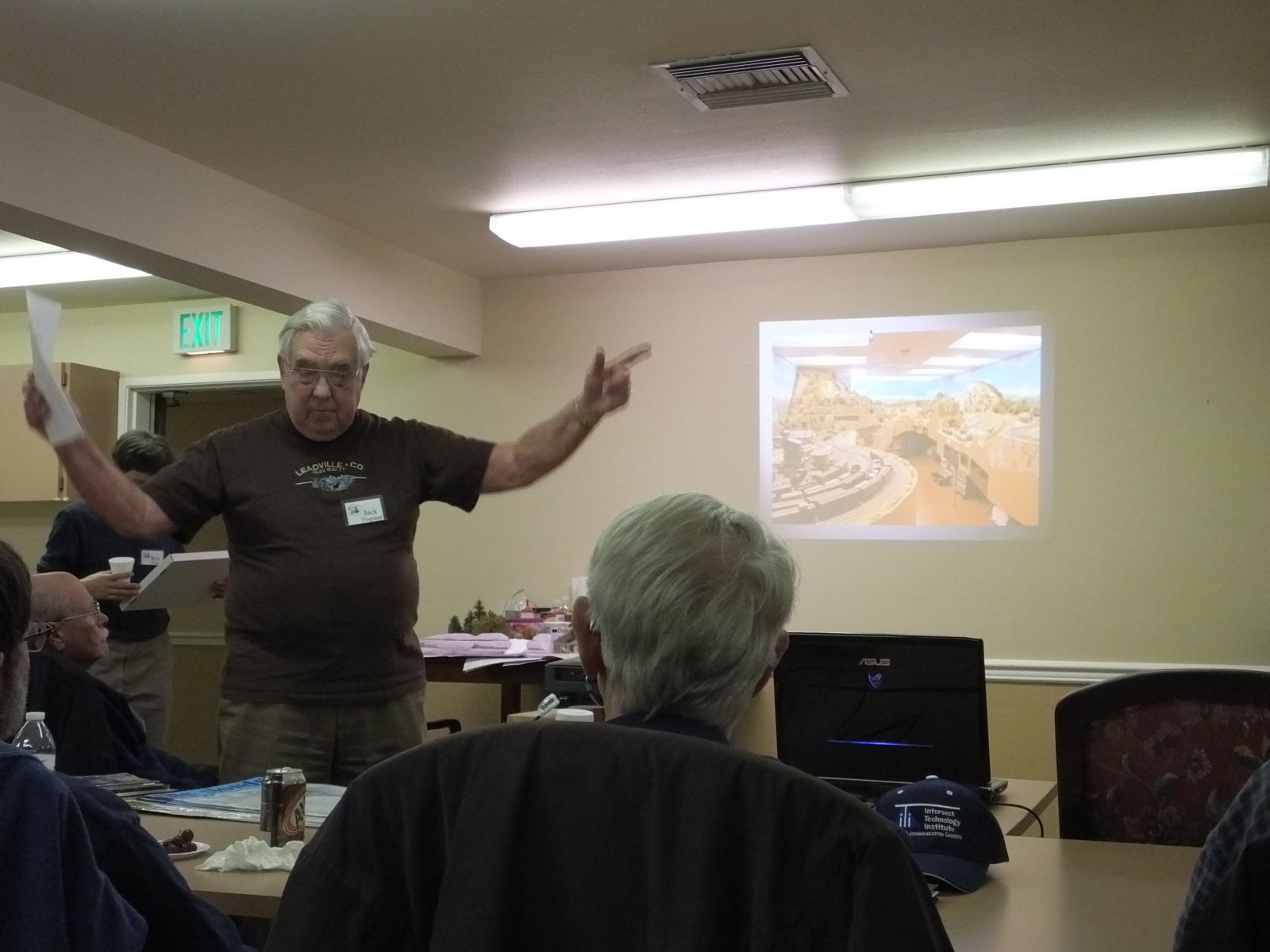
No, Jack is not leading the choir, but is making a point in his backdrop clinic

No, Jack is not leading the choir, but is making a point in his backdrop clinic

Jack started off with a remark that backdrops should not be the focal point of a layout, but rather, they should compliment the three dimensional scenery and add depth to scenes.  Jack used tempered hardboard (Masonite) as his “palette” and painted it a blend of sky blue colors, darker towards the top and lighter towards the bottom.

New London Industries makes stencils for spray painting backdrop elements, including clouds, mountains, hills, trees (and even a city skyline), and Jack very successfully employed all but the city skyline stencil on his exquisite Cloud City & Western HO layout.  These stencils are available on line; Jack mentioned that Fifer Hobby carries them.

Spray paint (rattle cans) are the medium of choice with the stencils, and the cans are a lot easier to use if you use a spray can handle, available at paint stores.  Tip:  Use carburetor cleaner to clean out those clogged nozzles!

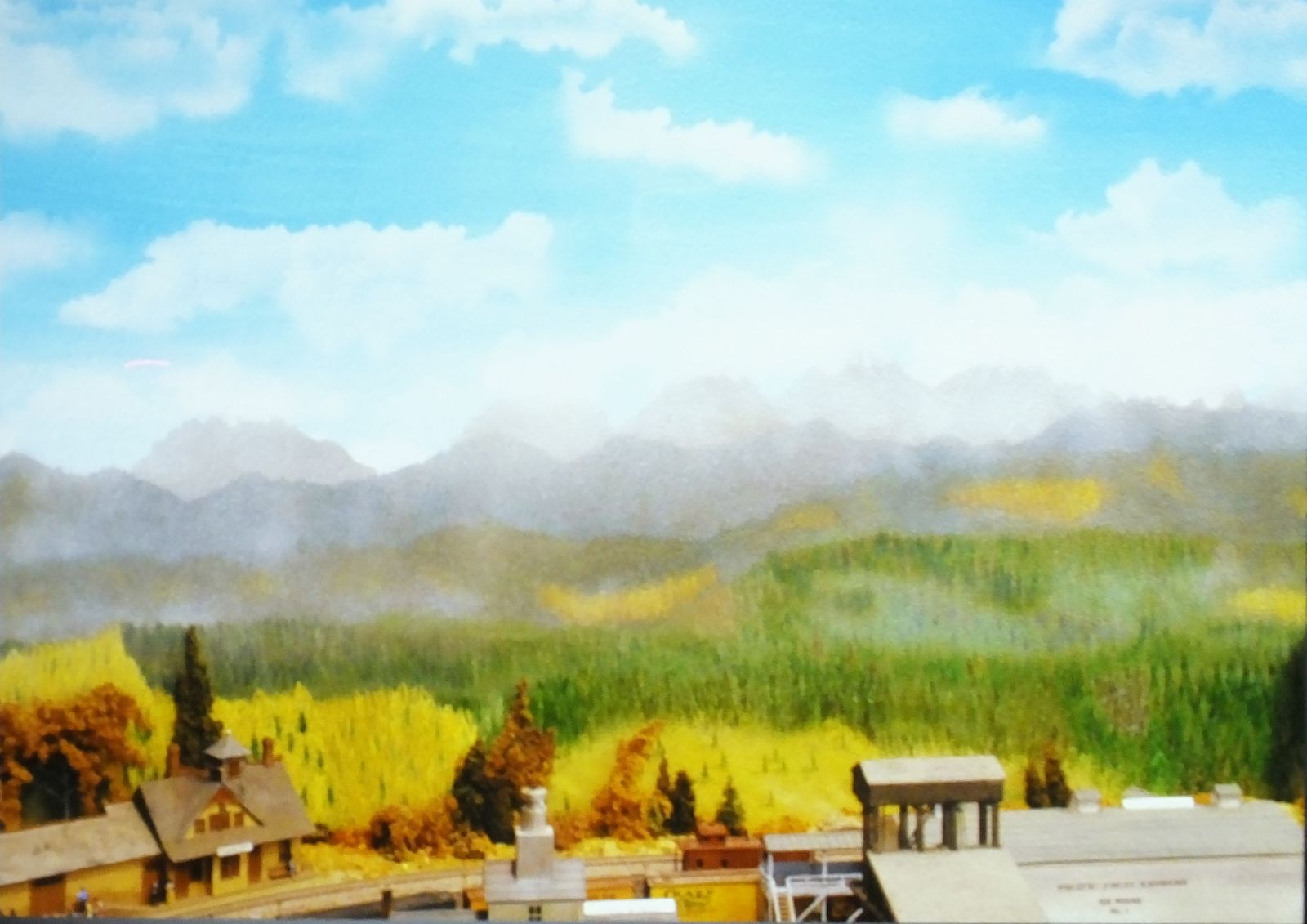
Part of the outstanding backdrop on the Cloud City & Western layout of Jack Tingstad.  Note the seemingly distant hills

Part of the outstanding backdrop on the Cloud City & Western layout of Jack Tingstad. Note the seemingly distant hills

After each “layer” of scenery is sprayed on the backdrop (starting from the distant mountains/hills, and working closer to the viewer), Jack sprays a fine mist of white or light gray paint to sort of add some haze to the scene.  It really adds some depth to the backdrop, and sort of pushes the distant mountains further away from the viewer.

Jack uses tube acrylics when painting some foreground scenery, such as trees, and remarked that “fan brushes” are absolutely a requirement for painting trees, especially evergreen trees.

Also essential is the use of reference material before you start slinging paint on your pristine blue backdrop – images on the internet, as well as calendar photos, are a great resource.

Back to clouds, Jack remarked that “there are no bad clouds” – you can’t really screw up a cloud – just look skyward at the huge variety of clouds we so frequently see in our neck of the woods!

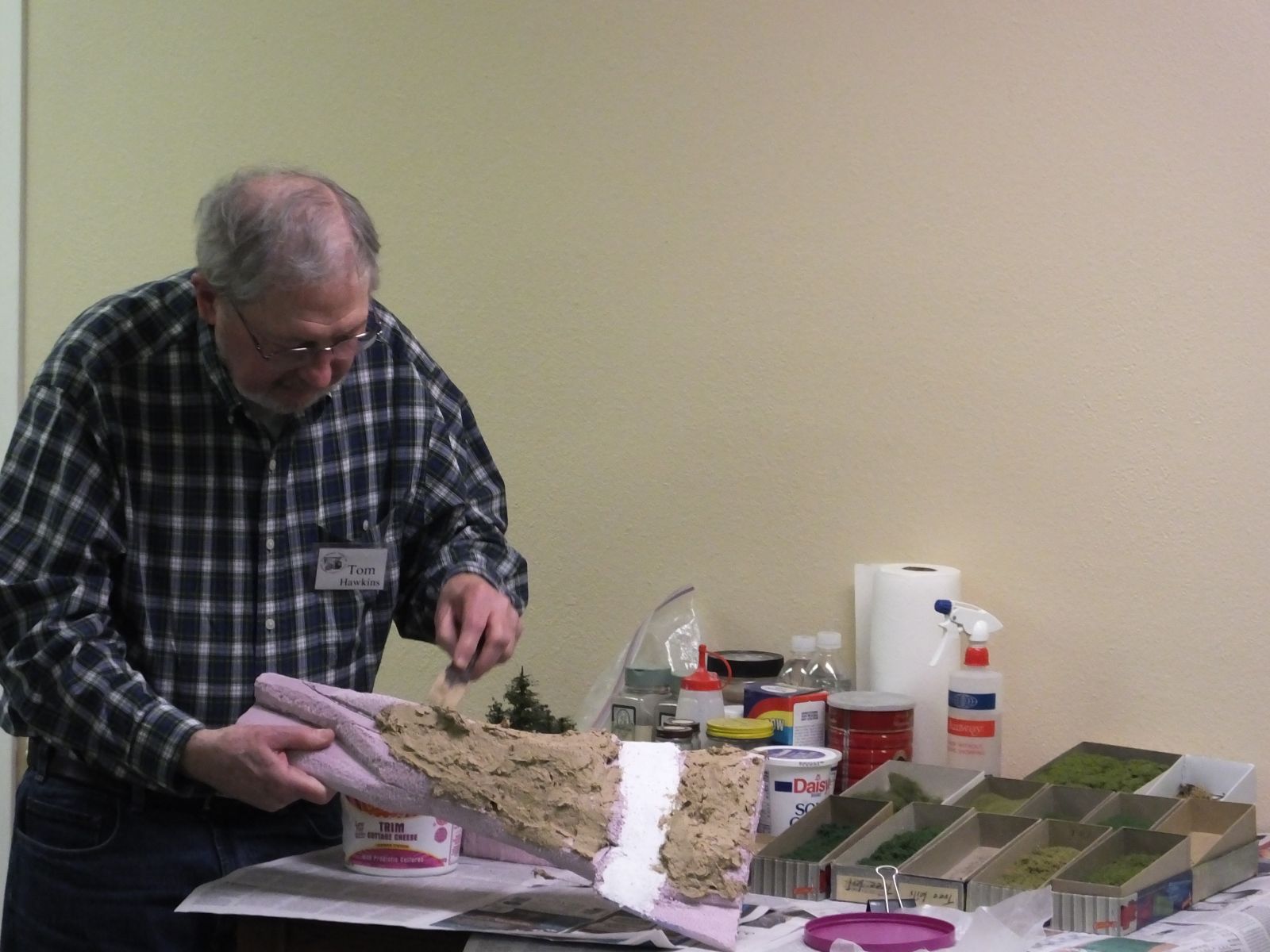
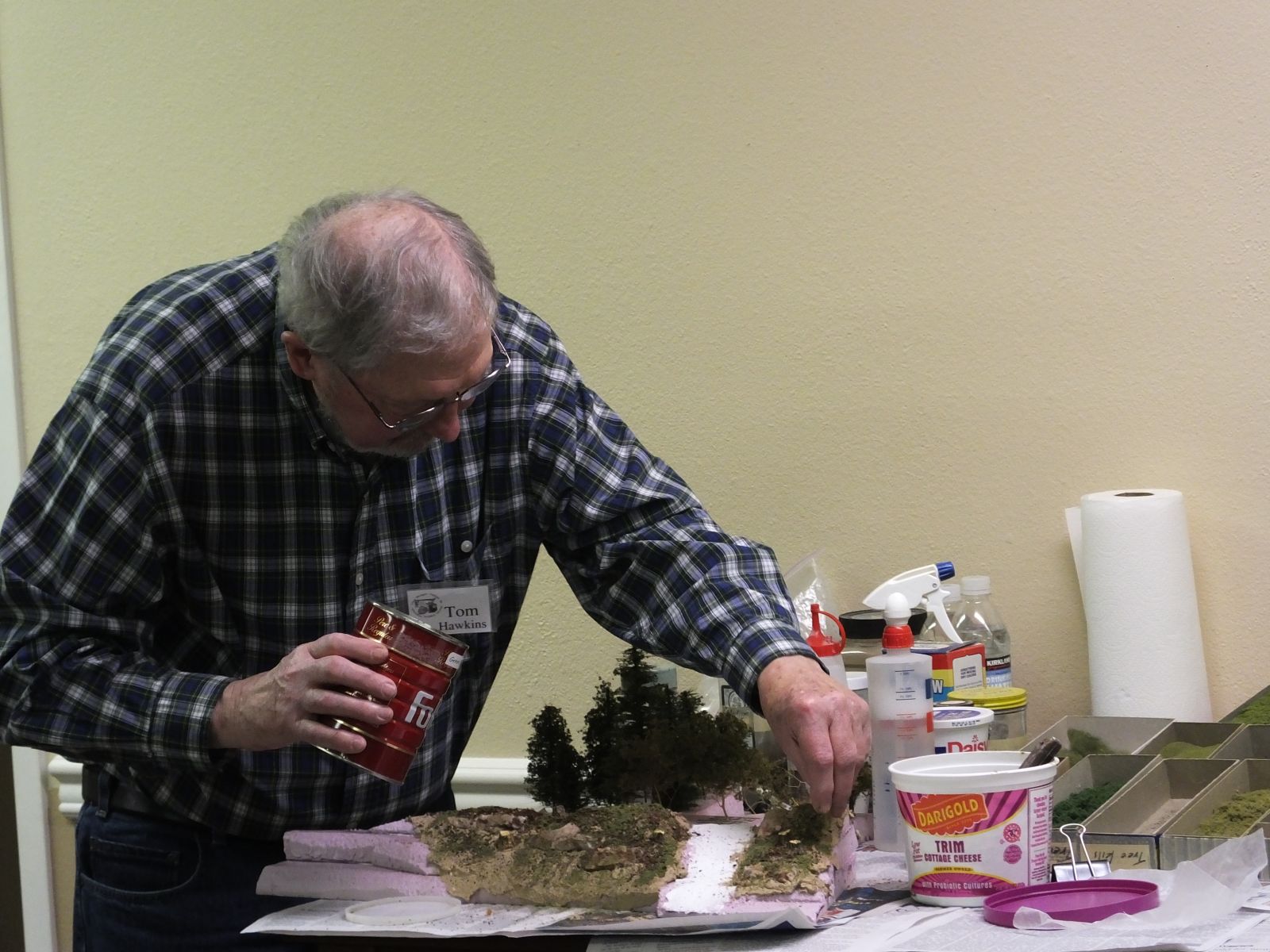
Tom Hawkins spreading Ground Goop on a demonstration diorama base

Tom Hawkins spreading Ground Goop on a demonstration diorama base

Tom  took over the stage next, and took us through all the steps necessary to complete a nicely scenicked hillside.  Tom, who is famous locally because he won third place in the Model Railroader layout planning contest in October, 2012, had pre-built a small scenic base out of pink Styrofoam, 1” thick pieces glued together in several layers sloping towards the rear.

Tom is a proponent of “Ground Goop”, which is a concoction that can be troweled on to a base to add texture and fill in gaps, etc.  This method has been around for decades and has proven it’s worth and popularity.  The recipe is 1 cup Celluclay, 1 cup Sculptamold (both available on-line or at craft stores), 1 cup brown or tan latex paint, and 1/3 cup Elmer’s white glue (and 1 capful of Lysol to act as a mold deterrent if you are going to store unused, mixed goop for a while).  It will keep, properly covered, for several days or even weeks.

Tom Hawkins adding ground cover over Ground Goop

Tom Hawkins adding ground cover over Ground Goop

Tom trowels it into place, then sprinkles non-sanded tan or brown grout over the wet goop to add texture.  He follows up with a variety of ground cover, including ground up leaves from his yard, tea leaves, and commercially available products.

Planting trees in Ground Goop is easy as the goop base provides a stable material to poke holes in for tree trunks (unlike hardshell hydrocal, which is thin and brittle and doesn’t support tree trunks well).

Both Jack’s and Tom’s presentations were outstanding and I heard more than one individual say he/she was anxious to get home and try these techniques out.

Next month, on March 12, Stathi Pappas, the Chief Maintenance Officer for the Mount Rainier Scenic Railway, will be our guest clinician, talking about operations on the railroad and restoring steam locomotives.  Be sure mark your calendars!


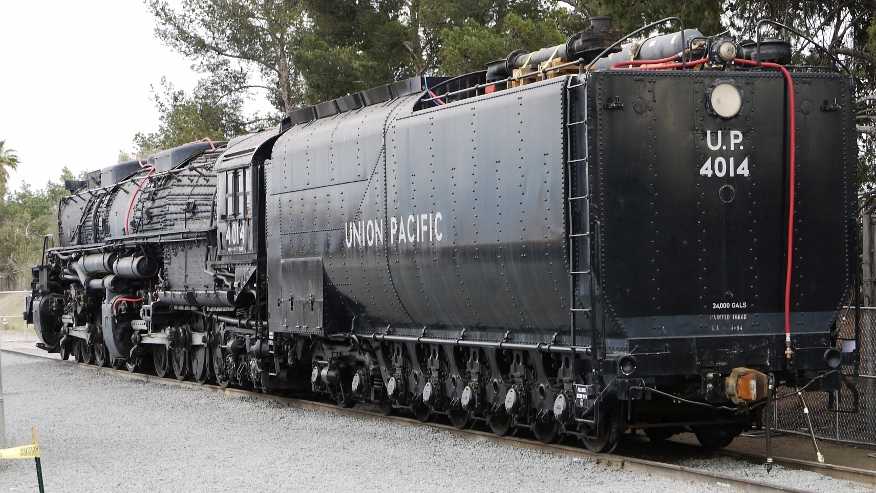
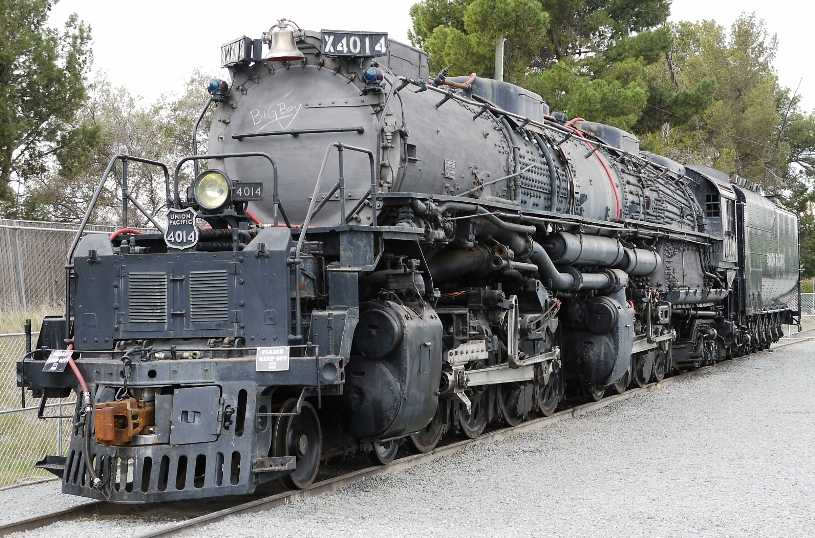
UP 4014 Big Boy on the Move

Rich Blake / Photos courtesy of Jerry Blake

I just received a report from my contact in SoCal (code name: “Dad”) that the Union Pacific Big Boy 4014 has been moved from its previous resting place at the L.A. County Fairgrounds in Pomona to the UP yard in Colton, CA. This is the first step in the final goal to relocate the locomotive to UP’s Cheyenne shops for complete restoration to full operational status.

If you haven’t been following this, now is the time. They will be hauling this behemoth over CajonPass pretty soon, so there could be some exciting moments for railfans. You can keep up-to-date on this incredible project here.

There is a good “foamer” video on the loco’s movement so far on YouTube.

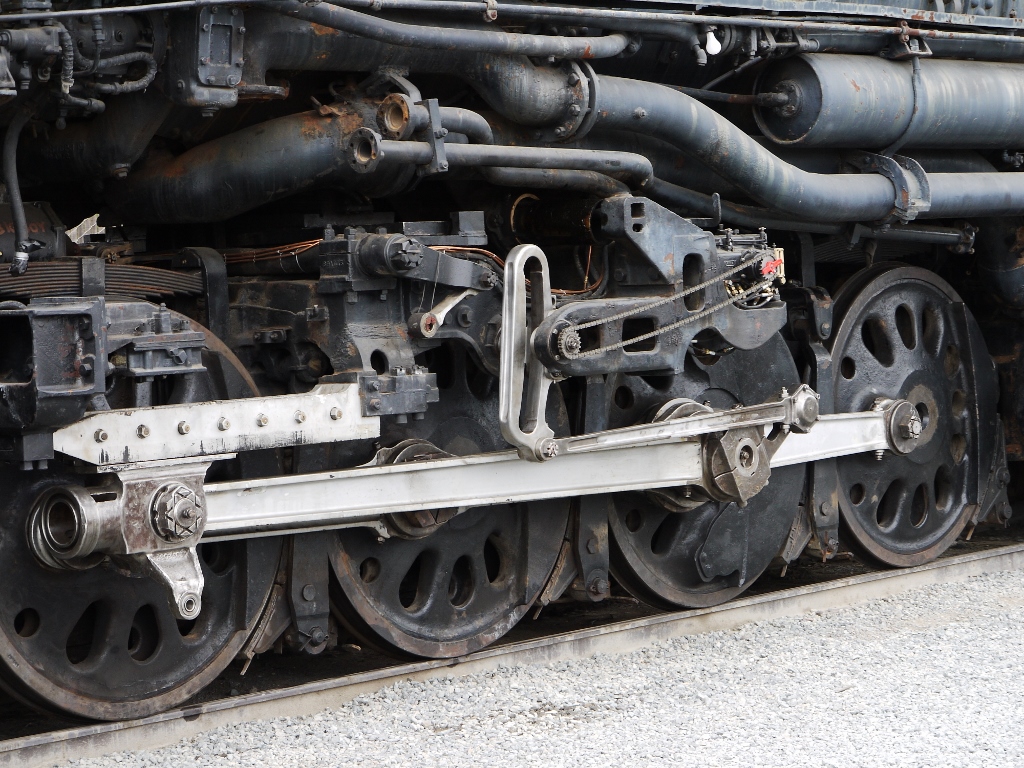
Notice in the photos the chain drive for the lubricator, removed piston shafts and much of the “fiddly bits” of the valve gear. Some interesting stuff is temporarily mounted on top of the tender. I would guess those external hoses are for brake control bypass.
P1090105

P1090095
P109009

4D Seeking Nominations

Michael Highsmith, Asst. Super. & Nominating Committee Chair

It is time again for nominations for positions within the 4D PNR Board. The open positions are:

  • Superintendent – 2-year term commencing in August 2014
  • Director 1 – 2-year term commencing in August 2014
  • Director 2 – 1-year term commencing in August 2014 (filling open vacancy for balance of term)

Nominations are open until February 28, 2014. Email your nominations to me or the other committee members, Scott Buckley or Jeff Moorman. Please include your name, the position you are seeking, and a 250-300 word candidate statement. Ballots will be sent to members in good standing by April 15.

Should you have questions, please feel free to email me or call 253-381-3636. Thank you in advance for your time and consideration.

Eastside Get-Together Report for January 16

JJ Johnston

The illustrious Eastside Get-Together chair, JJ Johnston, welcomed 29 attendees to this first gathering of 2014. He had the usual introduction/recognition of his “VIPs” attending (officers and committee chairs of the 4th Division and MMRs. He then gave an update on the distribution of the Christmas collection to the church. The monies were divided between two ladies in need of help with their rent and other expenses. He read thank you notes from each of them.

Announcements included David Yadock on the Pacific Science Center show this weekend and the continuing need for volunteers to help out with the unloading/loading at the beginning and end of the show plus relief for other volunteers during the show; Russ Segner on the upcoming PNR convention at the Tacoma LaQuinta hotel from June 18 – 21, get registered, select your tours, and work on those contest models; Roger Ferris on an upcoming giant sale of 12 estates, PFM collection and many of Jim Noonan’s cars and engines as well as his layout!

The “Model of the Month” had two entries: Russ Segner displaying several pieces of wood (for identification purposes) from the Snoqualmie museum (also part of his later presentation) and Di Voss displaying a bottle of “Bull Frog Snot” which he explained he was trying on one of his locomotives to get better traction (report next month). Russ ultimately “won” the “contest” (?).

After the usual break, Russ Segner did a presentation showing the reconstruction work being done on one of the passenger cars at the Snoqualmie museum. In this case it was a Barney and Smith Day Coach #210. He got interested in working on the reconstruction just prior to the National Narrow Gauge convention in 2012 after a visit to the museum  He said there are about 8 volunteers working on the car on a regular basis but there’s a lot more restoration work to be done and the museum would be happy to welcome additional volunteers. Russ had a power point presentation with many photos to show indicating what the car looked like before restoration started and the progress since then. Unfortunately, the computer with the presentation and the projector did not want to cooperate with each other very well, so all the photos couldn’t be seen.  Russ promises to redo the presentation at a later date. However, what was shown provided a great look at what can be done in restoring old equipment to usable condition.

Come join us February 20 for our next Get-Together with a special clinic to be presented by Lee Marsh of Issaquah discussing how he designed and built his fabulous GN Cascade Division layout. A photo of his layout recently appeared in “Trackside Photos” in Model Railroader magazine.


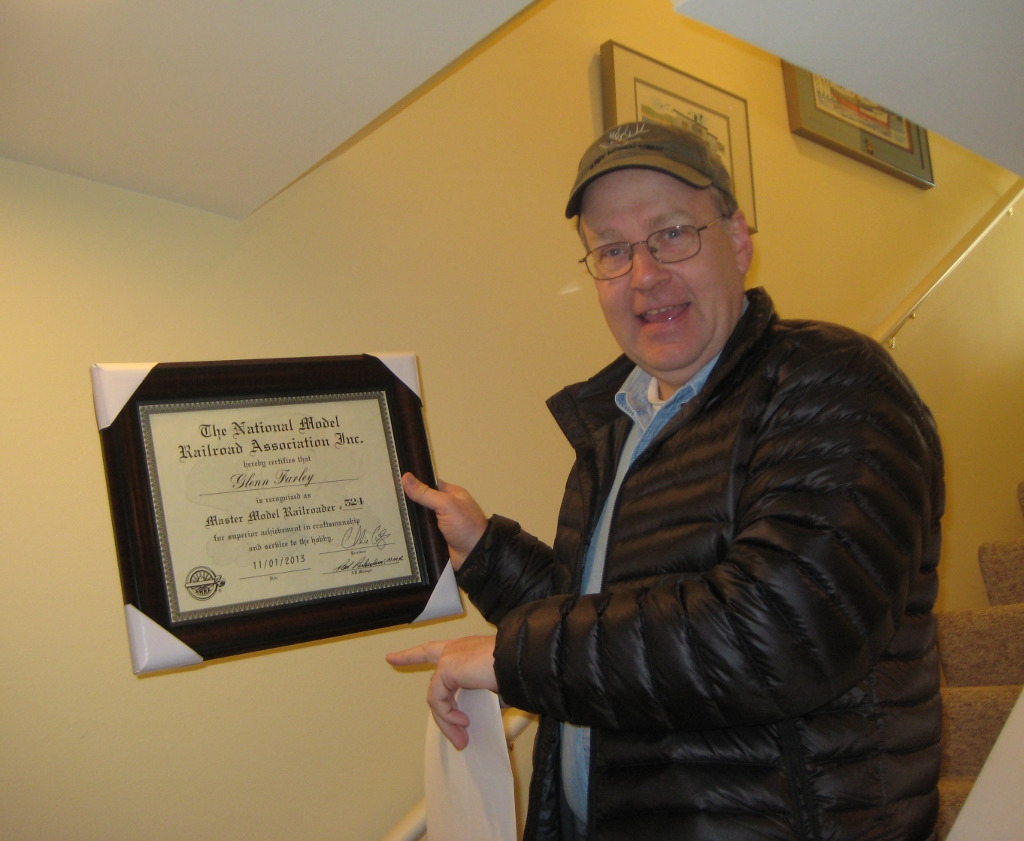
Glenn Farley Presented with MMR Plaque

Russ Segner

Glenn Farley was presented with his Master Model Railroader plaque this week at an open house of fellow MMR, Dave Woodrell. Glenn models in On3, but has won many awards for his modeling in HO, including a Best of Show at a NMRA Convention for a scratch built HO steam locomotive.

His home On3 layout includes a complete Gunnison roundhouse which he created in collaboration with Clint Crow.

Glenn will present clinics on working with brass and illustrate his techniques at our upcoming PNR Convention this June. Congratulations, Glenn.

IMG_2197 (1024x841)

Seattle-North Clinic Gets Civil – February 6, 2014

By Jeff Moorman

Please join us for our next meeting on Thursday, February 6, 2014. Our guest speaker will be a railroad engineer. Not an engine driver, but a civil engineer who works on local 12 inch to the foot scale railroad projects. I have also been told he is an excellent railroad photographer and we may see some of his work, if there is time.

As I write this another Pacific Science Center Model Railroad Show has been completed. As near as we can tell, this was the 40th such show and if you were there to help on Saturday, you might have gotten a piece of the delicious anniversary cake. My personal thanks to all the Seattle-North Clinic attendees who came to the show to volunteer, especially Bobj, Dennis T, Norm C, Michael, and anyone whose name I missed.

I apologize for not getting a notice in the Grab Iron about our January clinic. I could not get the blog to upload my submission. And it was not just me as others had the same problem. As luck would have it, it did not clear up until after the clinic. So, I’ll include that write-up towards the end of this column

The missing notice and some wicked colds (flu?) going around thinned our ranks for the January meeting. The latter even got our guest speaker. Regardless the evening turned out rather interesting, which is often the case when you get a few experienced model railroaders together.

Roger F had brought several HO gauge locomotives that he was thinning from his collection. Much of the evening went like this:

  1. Roger would say a few words about a particular locomotive and sometimes how he acquired it.
  2. Folks around the table would chime in with what they knew about that locomotive, the railroad it ran on, and/or the model’s manufacturer.
  3. Cycle back to the first step above for the next locomotive.

Roger is an eclectic collector and so was the discussion. All the old dogs learned a new thing or two during the course of the discussions.

For January’s show and tell Dennis T brought along an N scale model of an electric locomotive. It was painted for the Pennsy, but likely had European origins, which no one could precisely identify. But that was not what made it so interesting. Dennis had re-motored it by cannibalizing a motor from a more recent diesel model.

Now for what happened at December’s meeting. Our own Dennis T discussed the installation of DCC decoders. This was not how to plug a decoder into a DCC-ready locomotive, but how to install one in an older locomotive that wasn’t designed for one. And, as if that wasn’t difficult enough, he did it in N scale.

Dennis started with the premise that a successful decoder installation starts with finding the right decoder. He outlined a 6-step process for this:

  1. The right fit – you have to find a decoder that will fit within the locomotive, whether in an existing space or space you “carve” out for it.
  2. The right current draw – the decoder needs to be able to handle the current the motor will need. Older motors may draw significantly more current than newer ones. However, the more current a decoder must handle, the larger the decoder must be. You may have to do a little testing on your locomotive first to see what it draws.
  3. Motor control – this is not so much a function of the decoder, but an analysis of whether or not you can electrically isolate the motor from the frame and run power from the tracks to the decoder and then to the motor.
  4. Lighting functions – so you need to do more than just control the headlights. If so, you need a decoder designed to handle more than the basics.
  5. Sound – sound adds another element of realism, but it takes room to install the speaker, which must be in a sealed enclosure to work property. The bigger the speaker, the better the sound. According to Dennis, the sound you get from an N scale speaker is not worth the effort to shoehorn it into a space not made for it.
  6. Use you resources – there is a ton of information on the web regarding DCC, decoders, and decoder installation. Do your homework. Very likely it will prevent you from making a mistake (or two, or three).

Dennis then walked through a typical decoder installation, using examples he had done. He said not to be intimidated, if you need to remove some of the locomotive weight to make room for the decoder or the wiring. You can do it with simple files and a motor tool. Just remove the weight from the chassis and “whittle” it away slowly and carefully.

Dennis ended with a couple of tips. One was to try and test as you go. For example, if it doesn’t run after everything is put together, how do you know the issue was not caused by putting the shell back on the locomotive? And, you did remember to test everything thoroughly before you took it apart to add the decoder, right? Another tip was to make sure to insulate all the wiring, using Teflon tape or heat shrink tubing.
Dec13 Dennis T Decoder Tools

Everyone was reminded of the need for volunteers to help with the upcoming Pacific Science Center Model Railroad Show on the 18th, 19th, and 20th of January, 2014. This will be the fortieth such show and so some may take it for granted. But don’t forget it helps fund the activities of the Fourth Division, including this clinic.

For show and tell Chris F brought another HO passenger car he had acquired. Chris explained he was not just trying to paint these in UP colors, but to paint Milwaukee Road cars in UP colors as used on certain long haul passenger trains. This month he brought an observation car factory painted for the UP. His plan had been to remove the UP lettering, leaving the UP colors, and apply Milwaukee lettering. He was able to carefully remove the lettering, but in doing so discovered that the underlying paint job wasn’t up to his standards, so will now need to be repainted – exactly what he was trying not to do.

Bob R brought several commercial trucks in HO scale. These were simple toy trucks he had reworked to make more prototypical and, therefore, more useful on a model railroad layout. Bob thought that mud flaps were one addition that really made all these trucks more realistic. Another key “upgrade” was to weather the cargo area of dump and flatbeds. Other additions included mirrors, air filters, and painted on lights.
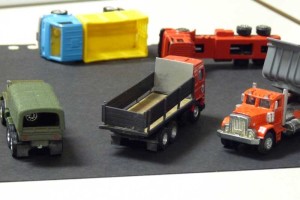
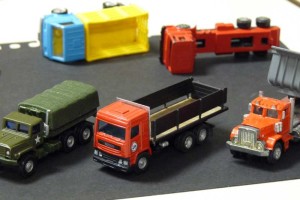
Dec 13 Bob R HO Trucks

Dec13 Bob R HO Trucks 2

We meet at the Ronald United Methodist Church, 17839 Aurora Avenue North, Shoreline, WA. That is on the west side of Aurora (State Route 99) between 175th and 185th Streets and more specifically, between the Cadillac dealer on the south and Deseret Industries to the north. Going southbound on Aurora, make a right-hand turn into the church driveway immediately after passing the Deseret location. The parking lot is at the rear of the church. For regular meetings enter the lower, left side of the church from the rear lot.

Meetings are the first Thursday of each month, September through June. However in June we often do something different, like a layout tour. Doors open around 7:00 PM and the program starts at 7:30.

Remember the next meeting is February 6. The meeting after that is March 6. Hope to see you there or at least sometime on down the line.
2014 Olympia Layout Tour Scheduled

Scott Buckley

Be sure to mark your calendars for Saturday, April 5 for the 11th Annual Olympia Model Railroad Layout Tour.

There will be at least ten layouts on the tour. Various scale and gauge combinations will be represented, including N, HO, On30 and 3/8n20. Some of the layouts have been featured in national publications and some have been on national convention tours. Most of the layouts are in various stages of construction, which will give you the opportunity to see each builder’s construction methods.

As with previous years, a few layouts will open early and a few will stay open late to give you the opportunity to see as many layouts as possible.

We hope you will take the opportunity to visit our layouts. As I say every year, there aren’t many chances to see so many layouts in one day without attending a convention.

Additional information will be provided in early March. Meanwhile, if you have any questions, please contact Scott Buckley.

Skagit Valley/Whidbey Clinic January Report

 Article and Photos by Al Carter

Clinic chairman Rich “Frenchie” Blake (nickname in recognition of his jaunty new beret) called the January 2014 Skagit Valley/Whidbey Clinic meeting to order shortly after 7:00pm. Several announcements followed:

  • “Operating Day” is coming up February 22nd. Folks will have the opportunity to operate on one of five layouts (Jack Tingstad, Al Frasch, Dick Haines, Phil & Susan Gonzales, or Tom Hawkins). Rich will be sending out an e-mail to all with details.
  • Rich reminded people that if they have a Sno-Isle Regional Library Card they can access a lot of publications for free, such as Model Railroader, etc.
  • Rich reminded us to support Suzie, at Performance RC Hobbies in Burlington, as she always goes the extra mile to help us out and will order just about anything.
  • Don’t forget the upcoming United Northwest Model Railroad Club’s annual swap meet at the Monroe Fairgrounds on February 1 and 2. The Pacific Northwest On30 Modular Layout will be set up – come and see Rich’s (and other’s) latest work.
  • The Pacific Northwest Modeling Congress is coming up on March 1st in Elsie, Oregon. Some terrific modelers show up at this annual one day event, which is well worth attending. Click here for more information.

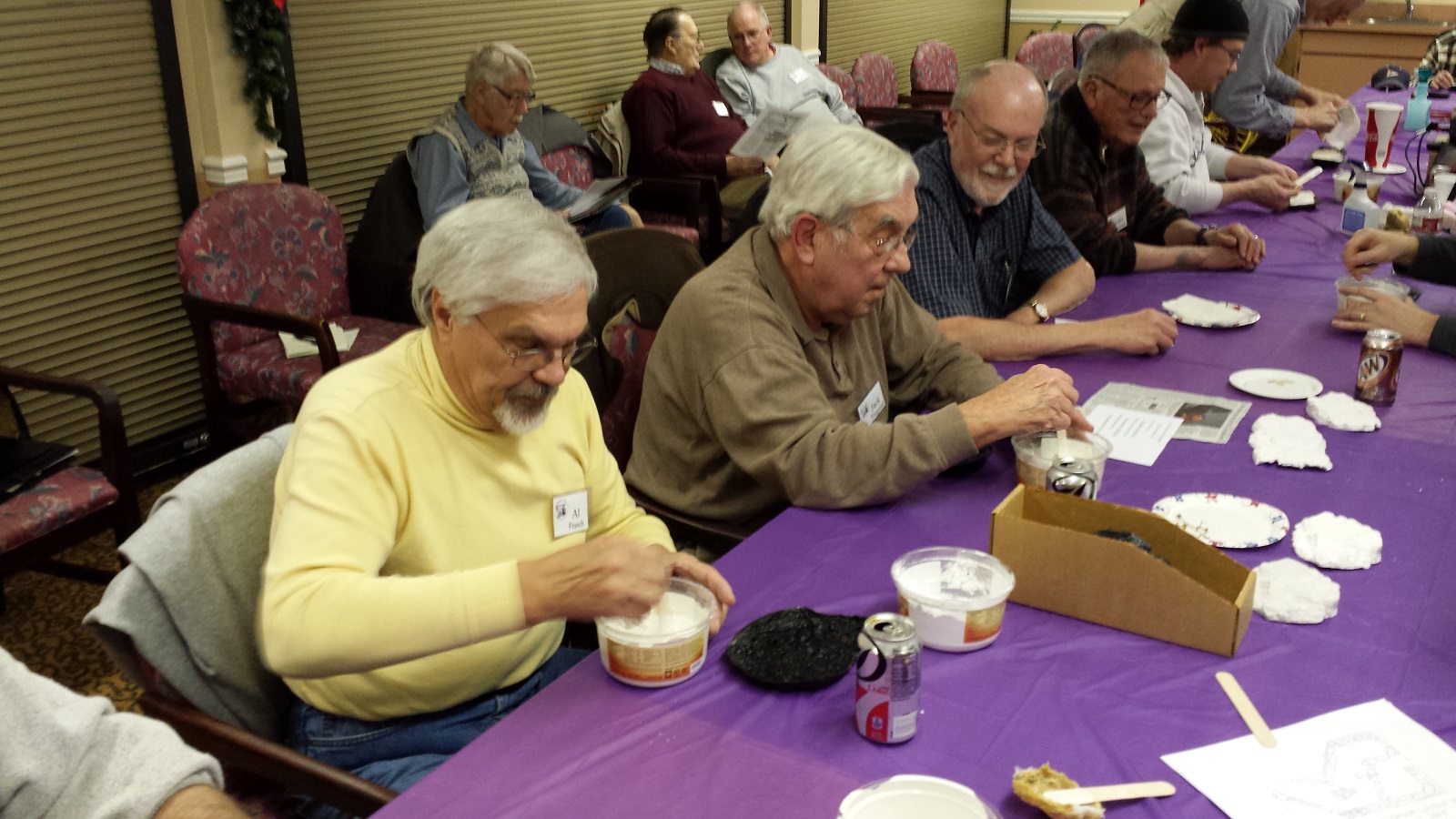
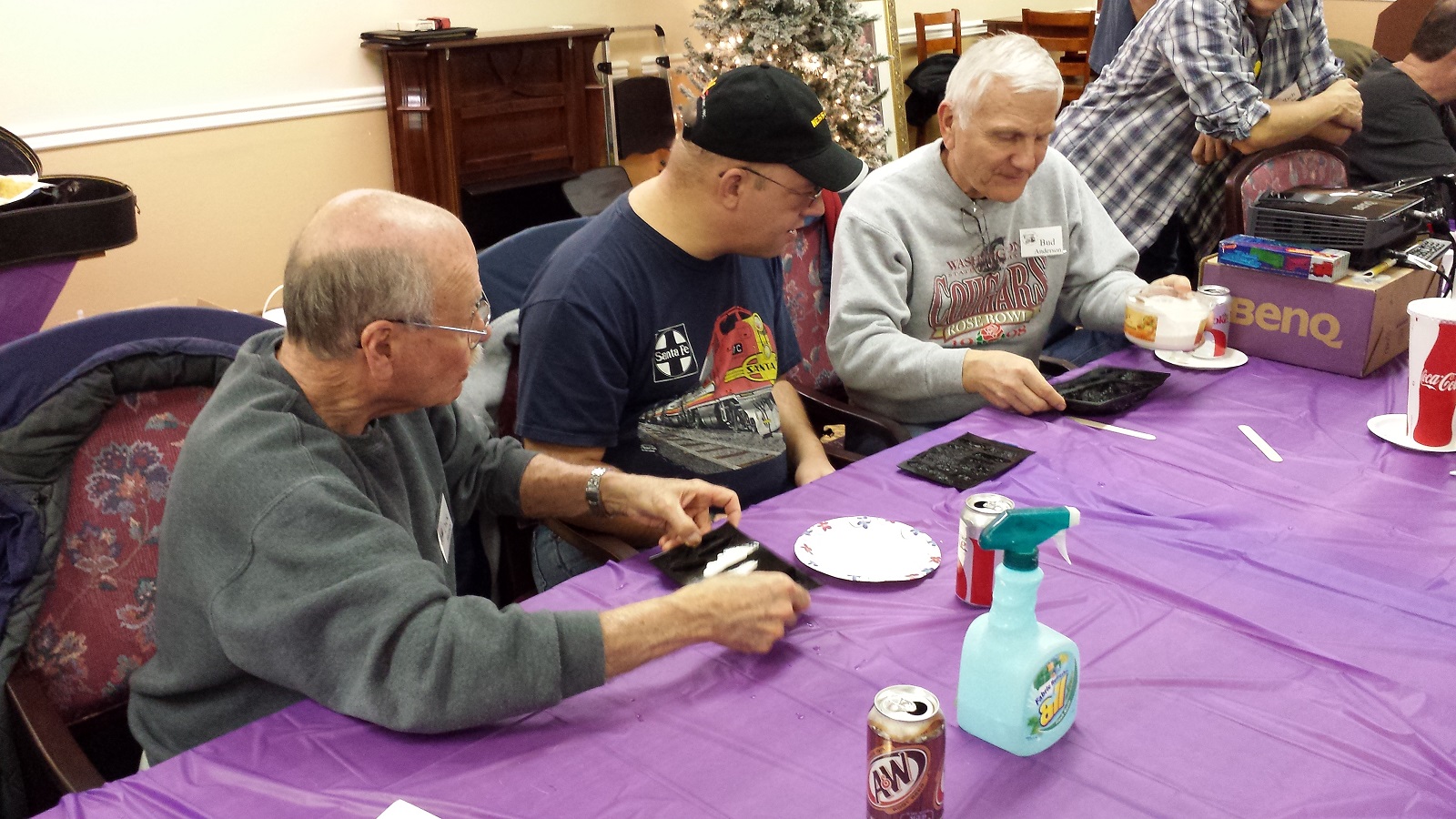
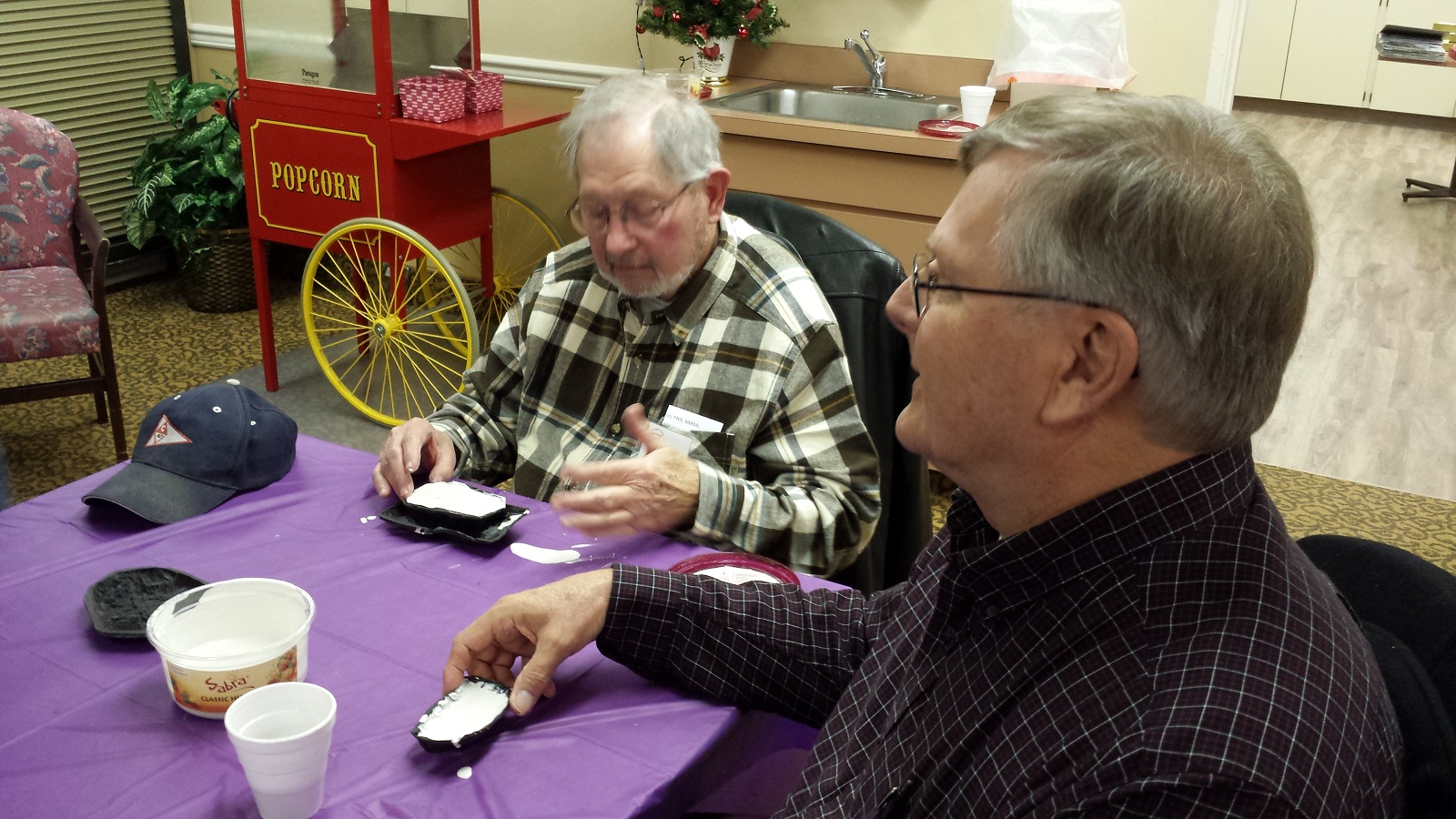
The featured clinic for the evening was “Be A Rock Star” and was a two part clinic. The first part was presented by Phil and Susan (“Janis Joplin”) Gonzales and was a hands on, make and take clinic on making cast plaster rocks. Phil and Susan provided a bunch of molds, plastic tubs, stir sticks, and some plaster, and participants got busy and mixed and poured plaster into molds. A number of participants had never actually made rock castings before this opportunity.

Al Frasch and Jack Tingstad dutifully stir their hydrocal mixture as Rich Thom supervises

Al Frasch and Jack Tingstad dutifully stir their hydrocal mixture as Rich Thom supervises

The second part of the clinic was presented by Jim Tartas, who has become an expert on using the Joel Bragdon rock casting system called Geodesic Foam. Joel is a geologist, artist, and sculptor so he has a great background for this business (that he has been in for well over 30 years). Jim showed slides of how he used the system to build up some enormous rock mountains on his home layout. Joel sells a huge variety of rubber molds; one that Jim used was several feet across!

Dick Haines, Curt Johnson, Bud Anderson 1Jim discussed how he deviated somewhat from Joel’s standard process, due to Jim’s chemical sensitivities and found that Joel was quite helpful via several phone calls.  The resin that Joel sells is a 2-part process that is water-based, which reduces sensitivity issues.

Jim also showed how he colored his castings using first dry tempera paint powders, then tempera paint washes, and the results were fantastic!

Jim finished the evening by showing a DVD that features Joel working on Tom Miller’s huge “F” scale indoor layout, which required an enormous amount of rock castings. Joel and Tom demonstrated all the steps to go through when using Joel’s system and this process certainly can cover a lot of square feet in short order! Much, much faster than using smaller, commercially available rock molds such as those available from Woodland Scenics.

Tom Hawkins and Terry Kandzor hold their just-poured molds upright.

Tom Hawkins and Terry Kandzor hold their just-poured molds upright.

I’d like to add that even if you prefer the plaster or hydrocal method of casting rocks, Joel’s rock molds are superior (and much bigger) and are easy to use. I purchased several large molds a number of years ago and they have held up well and produce some excellent rock castings.

For more information or to order Joel’s products, click here.

For the February 2014 clinic, we have a “two-fer” program lined up: Two great clinicians. First up is Tom Hawkins discussing his scenery methods, and then Jack Tingstad will talk about backdrops (this part is a reschedule from last season). And, as mentioned, earlier, don’t forget our Operating Day on February 22nd.

Our future clinic schedule includes:

  • March 12, Steam Locomotives by Stathi Pappas (CMO of Mount Rainier Scenic Rwy)
  • April 9, Two Views From Above featuring Roof Detailing by Al Carter and Removable Mountain Construction by Norm Myers
  • May 14, Vehicle Lighting by Nick Muff
  • June 11, Airbrush Painting by Rich Blake (to be held at the Gonzales residence in Oak Harbor)

Don’t forget to bring your no longer needed items for our swap mart prior to the clinic, and don’t forget that all are welcome at the pre-clinic dinner at San Remo’s Restaurant on Midway Blvd in Oak Harbor at about 5:00 pm.

Segner speaks at Eastside Get Together Thursday

JJ Johnston

REMINDER:

There will be an Eastside Get Together, this Thursday, Jan 16, at 7:30 p.m., at the Bellevue Foursquare Church.

We will have a special presentation by Russ Segner. Our 4D Superintendent will reveal the amazing progress from start to finish in the reconstruction of SPS day coach #218. Russ has worked extensively on this project at our local Northwest Railway Museum in Snoqualmie. With over 50 photographs, Russ will take us through the 6½ years of this historical car restoration. Come see local history being preserved in our backyard.

All the usual other stuff will happen, too. See you this Thursday. Happy New Year!

Tacoma Clinic

Al Babinsky, Photos by Chip

MMR Gene Swanson opened the on time as always with 38 modelers including 3 newcomers attending.

Under announcements Mike Highsmith talked about welcoming new NMRA members to the 4D. One of the things that he was doing was to call or e-mail them and thank them for joining. He also informed them about clinics and other programs in the areas where they lived. In the spirit of this idea the Tacoma Clinic, under Wain Miller’s guidance, started a program in which the clinic attendees would introduce themselves and their layout and add phone numbers and e-mail so that they could be contacted by another member to arrange a visit. Al Babinsky volunteered to be the first to introduce himself and his layout. This will be about a 10 minute talk each clinic and a folder will be available with all the information given by the layout owners.

The TNW will have their swap-meet May 31 – June1.

What’s new at the hobby shop presented by Tacoma Train had a number of goodies from ready to use service station in O scale by Woodland Scenics, rolling stock, locomotives, vehicles in HO, N, and O scale. Of local interest would be the Sounder version of an FP59 and the Sounder passenger cars.
tacoma clinic photo

In the Bring and Brag (model of the month) category we had numerous entries; Chris Clancy with 2-6-0 weathered and decalled OSL (Oregon Short Line) a heavily weathered Milwaukee Road boxcar and a tank car, Dennis Reeves with an Eagle River Mine a laser kit weathered with cosmetic eye shadow colors, Dale Kraus with a tunnel made from Faller stone paper along with a Roco 0-6-0 narrow gauge loco and short passenger car, Walt Huston with a couple of covered hoppers one weathered and the other as is out of the box, Peter with a Chooch model kit of a mining machinery building and John Miller with an English loco that seemed to need a recharge on the magnet. The winner of this month was Dennis Reeves with the N scale Eagle River Mine.

This month’s clinic was on DCC programming with JMRI and SPROG and presented by Al Babinsky. As sometimes happens MR. Murphy presented his ugly head and made things difficult. Al could not do the actual programming but proceeded to go through with programming steps on the computer which was connected to the overhead projector so that the others could see what he was doing. He also had a handout for the group with the information on the how and where to download the program and obtain the SPROG. He also showed an app for the smart phone called Engine Driver that allowed the smart phone to act as a throttle and run the locomotive.

Now I want to apologize for that mishap at the clinic and tell you that I did not follow my own instruction and forgot to check a couple of items. I didn’t check to see which COM port the SPROG was using and in the program I didn’t check that the programmer was in PAGED mode.

Next month clinic will be given by Jim Sabol and is called Seven easy steps to soldering; the date is February 13th at 7:30 PM at the Pierce County Library Admin. Bldg. the corner of 112Th Street and Waller Road. We hope to see you there and bring a friend, modeler or your better half.