Grab Iron Posts

1:1 Model Railroading for “The Lone Ranger”

Al Lowe

Like many of you, I saw the film The Lone Ranger last year but assumed the train sequences were computer generated. Wrong!

The director, Gore Verbinski, built a five mile oval of track and multiple engines, rail cars, and stations! Plus, they built railcar sets on semi-trucks and drove them on existing highways.

Watch the video below to see the incredible effort and craft that went into it. Too bad the plot wasn’t as believable. (If you can, be sure to watch in high-def.)

John Novotny Passes

Al Lowe

JohnNovotnyJohn Novotny battled a year-long bout with cancer and passed on May 13, 2014 in Tacoma. He is survived by his wife, Jeannine, of 44 years; children, John, Lisa and Scott; and six grandchildren.

John grew up in Flint, Michigan and moved to Tacoma in 1982. He was a loving husband, father, grandfather and a great friend to many. He was very generous with his time and resources. John loved people and impacted many lives. He is greatly missed!

John was secure in his faith in Jesus Christ and was a long-time member of Abundant Life Fellowship in Tacoma. A celebration of his life will be held there at 5917 S Thompson St. on Saturday, May 31, at 11:00 AM. In lieu of flowers, John requested donations be made to the Salvation Army.

Eastside Reminder

JJ Johnston

Let us all take a moment to remember our legendary modeler, Paul Scoles, MMR, who passed away Friday morning following a difficult surgery. Paul has been a trusted friend and a generous mentor to many of us. As you may know, Paul presented several clinics at our Eastside group and has allowed us to visit his amazing Sn3 home layout on several occasions.

This Thursday, May 15, is our last scheduled meeting until September. Our guest presenter this Thursday will be noted modeler and Inside Gateway famous hobby store owner, Steve Depolo. Known for his extensive modeling talents and his scenery expertise, Steve will share the stunning methods he uses to age and weather models.

Of course we will offer the Model of the Month Showcase, bring stuff to sell or buy at the best known RR Mart around, coffee and donuts organized by CJ Turner, welcome by Ambassador Clay Hanson and the video library may also be available for rentals. We start at 7:30 in the BellevueFoursquareChurch so be there early to make sure you get an apple fritter.

PS: Following last month’s clinic on coal loads presented by our favorite newsperson, Glenn Farley, Lee Marsh (our presenter from the previous month) posted this photo of his coal load he modeled using Glenn’s techniques. Sweet!

See ya Thursday.

Lee Marsh's coal load

Lee Marsh’s coal load

Paul Scoles passes

Paul Scoles

Paul Scoles

Al Lowe

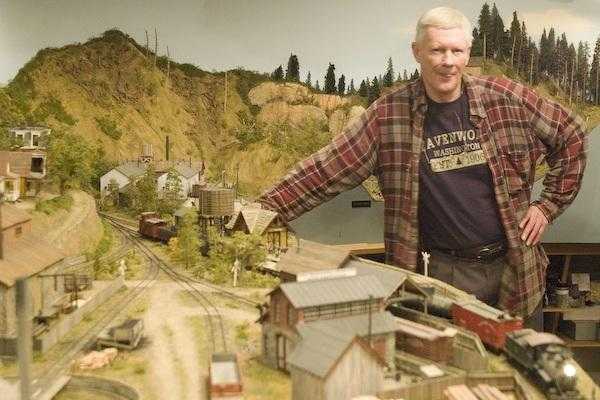
Paul Scoles, one of the Fourth Division’s internationally known model railroaders, passed away Friday morning, May 9, 2014 of complications from back surgery.

His Sn3 Pelican Bay Railway & Navigation Company layout has been featured in numerous magazines. He created a series of videos and books about scenery and operations. He was a Vietnam veteran who continued to suffer from shrapnel wounds in his legs.

Paul cared passionately about model railroading as an art form and was one of the great talents of our hobby. He was a man of dignity and humor — both of which could be seen on his layout.

His obituary is here.

Add your remembrances to the comments section below.

Attention: Train Junkies!

David Yadock

Need a steam train ride fix? Getting jittery from not experiencing 12-inch-to-the-foot railroading?

The PNR2014 Convention is the answer to your problems!

Although Steamfest 2014 has been postponed, you still have the opportunity to hop aboard the PNR2014 Convention for some train rides.

First, you’ll have a great steam ride on the Mt. Rainier Scenic Railroad, including a behind the scenes tour of the backshop and a great picnic lunch! This will be a special Conventioneer-Only ride, a real red carpet treatment especially for our convention attendees.

Next up is a tour and ride at Tacoma Rail. Get behind the scenes at a real working railroad in action. Again, this will be a Convention Only tour of this railroad. You will be able to see and ask the pertinent questions. Experience real railroading firsthand at Tacoma Rail.

Last up (and the icing on the cake) will be Northwest Train Museum at Snoqualmie. This tour will include a train ride to North Bend and a behind the scenes tour of their facilities. You’ll see what goes into rebuilding passenger cars of the bygone era. You’ll be able to closely examine all the cars and locomotives that the Northwest Train Museum has to offer.

Now is the time to hop on board and get your ticket to ride. Complete information and online sign-up at pnr2014.com.

Click now! Don’t be left waiting at the station!

Seattle-North Clinic – Next Meeting is May 1, 2014

By Jeff Moorman

Please join us for our next meeting on Thursday, May 1, 2014. We are scheduled to have a discussion with a retired railroader whose experience ran the gamut from roundhouse laborer to road foreman. He has some great stories.

Last meeting I previewed a clinic, titled “Vision and the Aging Model Railroader”, which I’ll be doing at PSX2014 in June. It basically covered the effects of aging on the eyes, how those effects might impact model railroading, and what can be done to mitigate them.

Here is a high level summary of the key points:

  • This clinic is not “medical” advice
  • Make sure you see your eye care professional regularly
  • As we get older our eyes:
    • Have trouble focusing closely
    • Let in less light
    • Adapt more slowly to changes in the environment
    • Tire more easily
    • To deal with these changes we should:
      • Practice the 20-20-20 rule – once every 20 minutes focus on something at least 20 feet away for 20 seconds
      • Increase intensity of light
      • Use cooler [higher K] light sources that render color accurately
      • Make judicious use of magnification


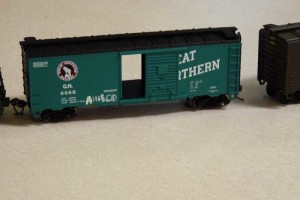
For show and tell 7-year old Allison J brought along some freight cars she had built with the help of her Grandfather. Here’s a picture of one.  Notice her name in graffiti on the side.

Allison's Boxcar

Allison’s Boxcar

We meet at the Ronald United Methodist Church, 17839 Aurora Avenue North, Shoreline, WA. That is on the west side of Aurora (State Route 99) between 175th and 185th Streets and more specifically, between the Cadillac dealer on the south and Deseret Industries to the north. Going southbound on Aurora, make a right-hand turn into the church driveway immediately after passing the Deseret location. The parking lot is at the rear of the church. For regular meetings enter the lower, left side of the church from the rear lot.


Meetings are the first Thursday of each month, September through June. However in June we often do something different, like a layout tour. Doors open around 7:00 PM and the program starts at 7:30.

Remember the next meeting is May 1. Hope to see you there or at least sometime on down the line.

Eastside Get Together April Meeting

Ed Liesse / Photos by Ed & Lee Marsh

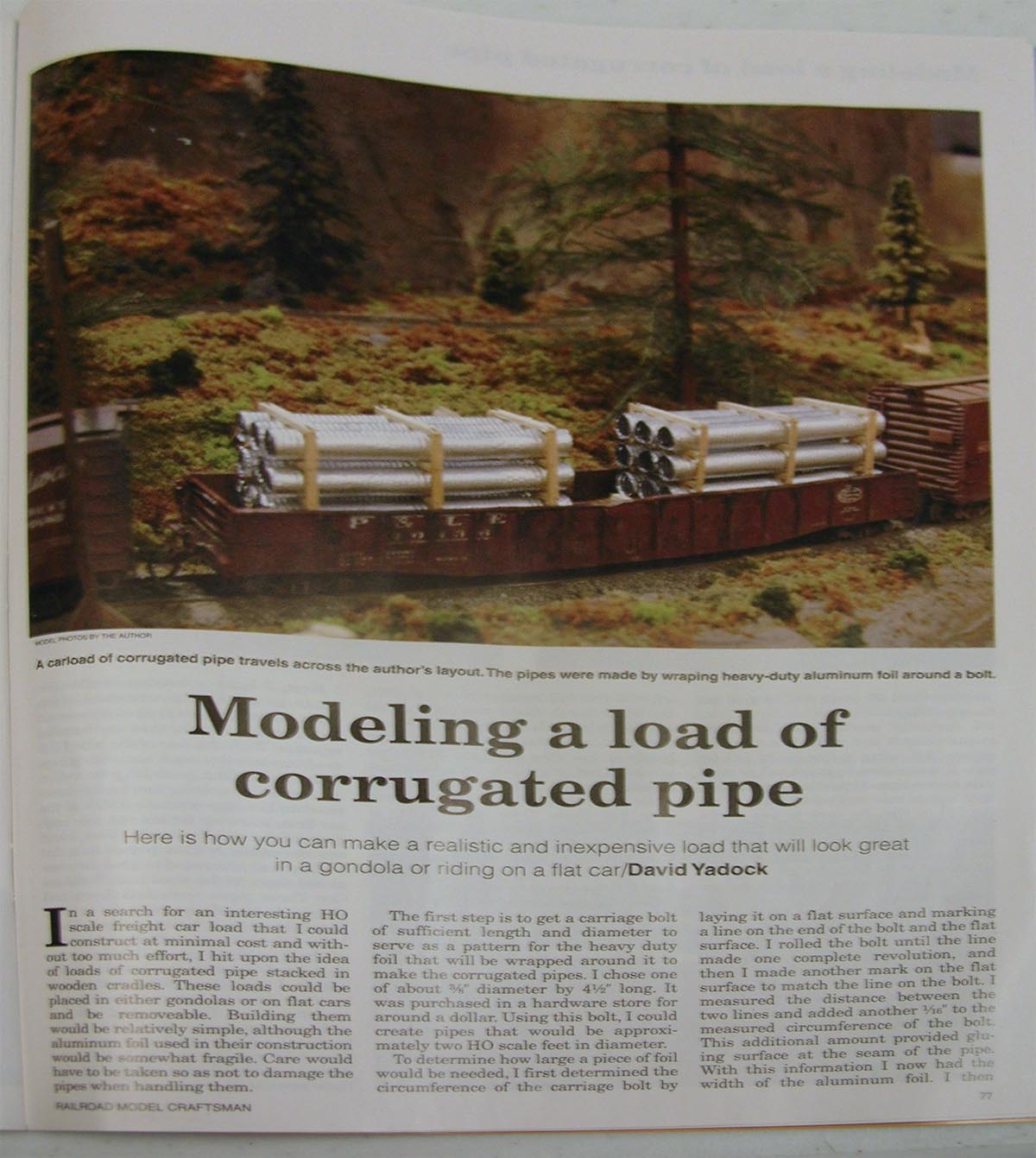
Our “Beloved Host” JJ Johnston welcomed everyone to the Eastside Get-Together and, following the script for our meetings, introduced the members of the 4D Board of Directors and the MMRs in attendance. He then mentioned a new product from Chooch Enterprises, a peel-and-stick flexible cribbing wall similar to the flexible stone walls introduced a few years ago and thanked Mike O’Connell for personally bringing some as door prizes. JJ also mentioned the article by our own David Yadock in the April issue of Railroad Model Craftsman on “Modeling a Load of Corrugated Pipe.” David shared this very model with us a couple of months ago.

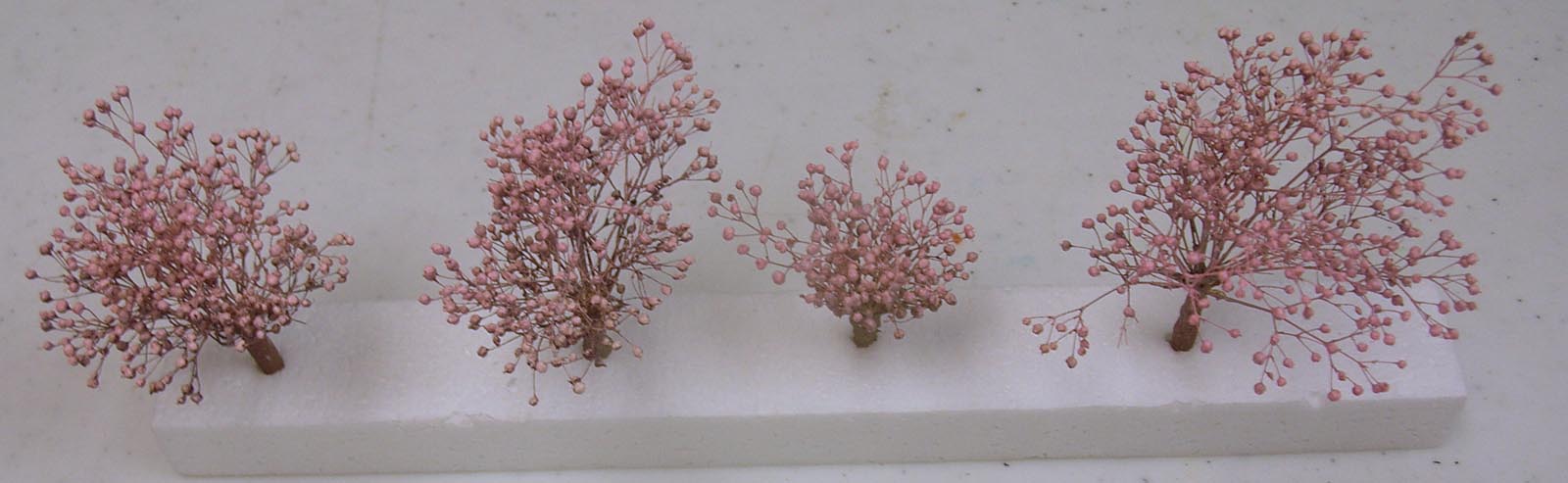
Ken Liesse's cherry trees

Ken Liesse’s cherry trees (Click to enlarge)

Announcements included Ken Liesse telling about Tacoma Trains celebrating 20 years in business this coming weekend with a big sale; Russ Segner commenting on the 4D Ballot being in the mail and be sure to vote and reminding those attendees not yet registered that the PNR Convention is drawing near (June 18 – 21) with several fine prototype tours available as well as clinics, layout tours and other activities; Rob Jones said the SPROG’s are back in stock at Eastside Trains and brought a number of items available for purchase with an additional 10% off the price; Alex Brikoff talked about new projects in development under the Education Committee and needing volunteers to help carry them out; and Di Voss mentioned that a group of 4D members in Alaska are putting together a bid to hold a NMRA Convention up there, possibly 2019.

David Yadock's RMC article

David Yadock’s RMC article

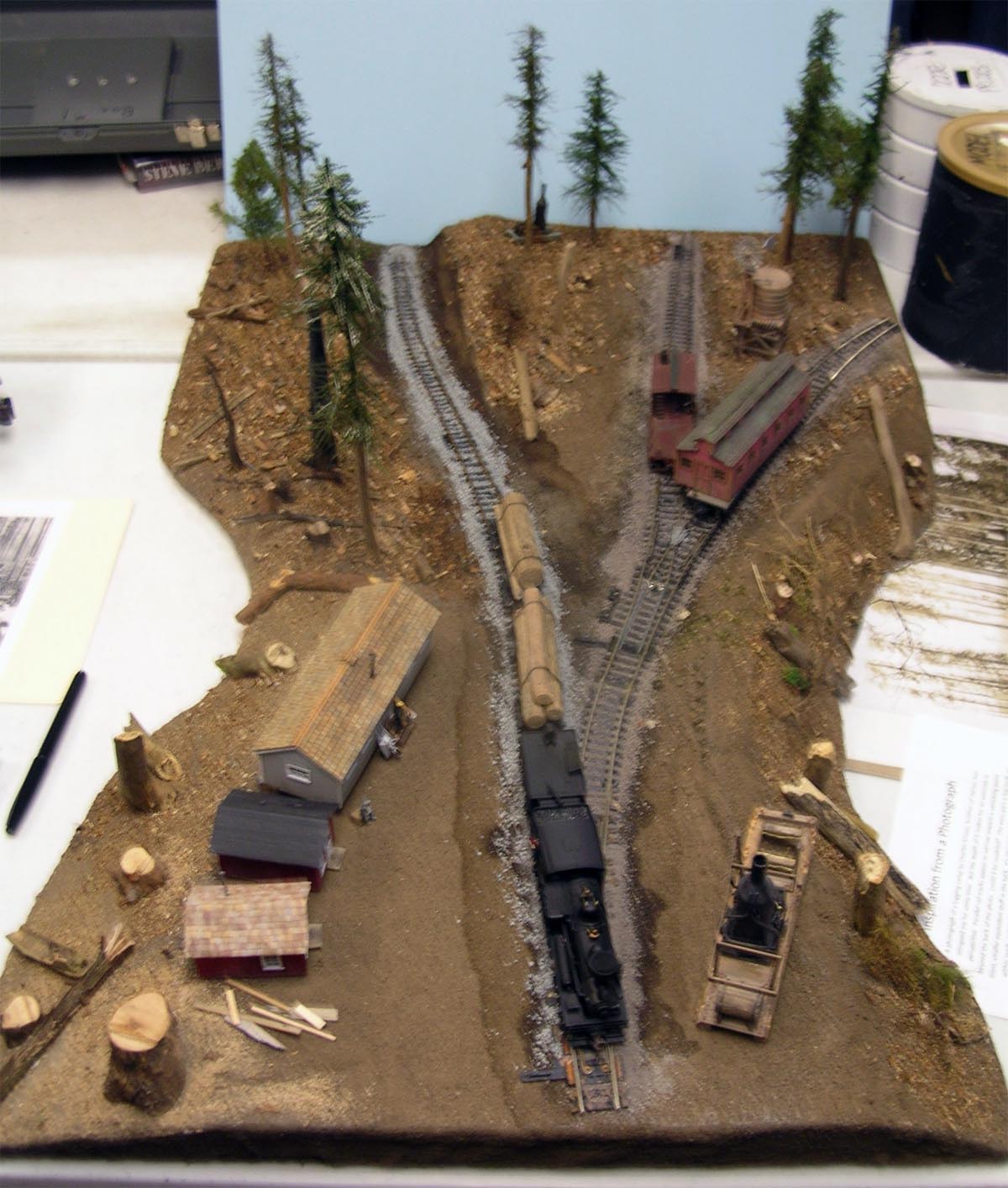
The Model of the Month had three entries plus several display items. Ken Liesse brought in several cherry trees he built using what he called the “Jack Hamilton Method,” using dried flowers from Michael’s as the base; David Yadock had his RMC article; and Bob Rorabaugh had a diorama inspired by a photograph showing the vanishing rails and other materials reaching toward a vanishing point on the horizon (you really had to see it to understand the concept!).

Bob was the eventual winner of the Model of the Month. The display items were: Russ Segner’s photographs showing the tram that ran from Newcastle down to Lake Washington bringing coal to the docks and one showing the narrow gauge railroad that ran to Renton; and, John Morrison’s large 2-8-2 modified locomotive that he painted since he last showed it several meetings back.

Bob Rorabaugh's vanishing point diorama

Bob Rorabaugh’s vanishing point diorama

After our usual short break for refreshments and looking over the “goodies” Rob brought, we regathered for a presentation by Lee Marsh on Helicon Focus Lite, a computer program that makes your photography look marvelous! As you all know, trying to take a photo of a stationary train by standing at the front of the train and shooting toward the end, it’s impossible to keep a nice sharp focus over the full length.

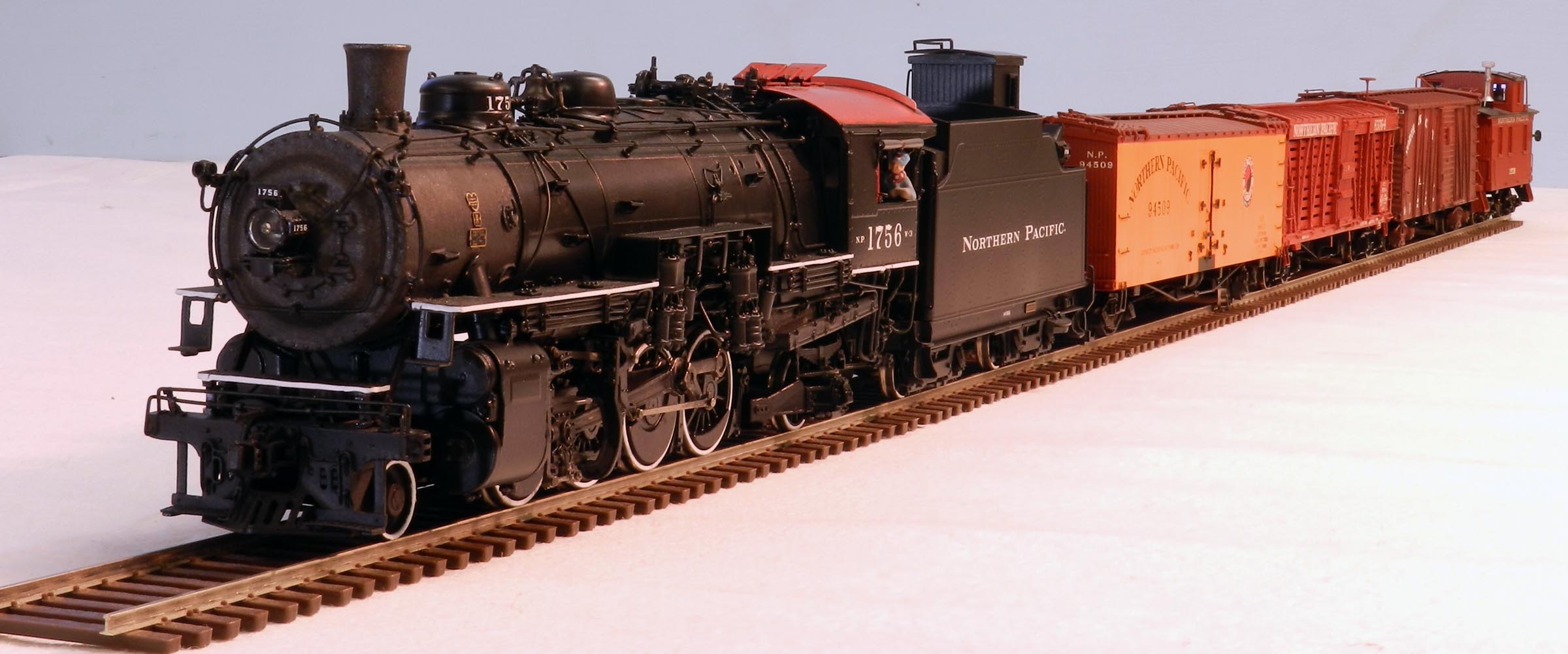
Lee Marsh's Helicon Focus demo

Lee Marsh’s Helicon Focus demo (Click to enlarge)

Lee set up a display train on a table to demonstrate how this program solves that problem. You do need a manual digital camera, a tripod and a cable shutter release or timed release of the shutter. You don’t want the camera to move once you have it set for the angle you want on the subject. You then select the f-stop and exposure time you want and then take a series of photos with a different focus point for each shot. Lee took 12 photos of the train on display to demonstrate. You then transfer the photos to your computer, run the program and watch the screen “assemble” the twelve photos into one photo that’s completely in focus! It was fascinating to watch the Helicon Focus program do its thing, and all in a matter of seconds!

Bob Rorabaugh's diorama after Lee Marsh's Helicon Scan (click to enlarge)

Bob Rorabaugh’s diorama after Lee Marsh’s Helicon Scan (click to enlarge)

You can probably get a better explanation of this whole presentation from Model Railroad Photography – April 2014, provided by Lee Marsh. Lee also used Bob Rorabaugh’s diorama as another example. If you enjoy taking photos, this was a clinic that, in effect, kept you on the edge of your seat watching the presentation and anticipating the outcome!

The next Eastside Get-Together will be on May 15. The clinic will be presented by Inside Gateway hobby store owner Steve Depolo and the subject of weathering. Come join us!

Mail in your 4D ballot!

Michael Highsmith, Election Committee Chair

So far, we have received more than 125 ballots, but that’s barely 25% of what we mailed. You can do better! Please take a moment, mark your ballot, and send it in. Ballots are due May 10th, so you still have plenty of time. But get them in soon to avoid confusion over whether your vote counts. Thank you for your time and consideration.

April 2014 Skagit Valley/Whidbey Clinic

Article and Photos by Al Carter

Clinic Chairperson Rich Blake called the April 2014 meeting to order shortly after 7:00 pm with 40 members in attendance. Three new visitors joined us: Roger Johnson (HO) from Sedro Woolley,Wes Wilson (HO) from Oak Harbor, and Scott Barney (HO) also from Oak Harbor. Welcome!

Rich appealed to the audience for someone to step up and take over the job as snack coordinator, as Phil and Susan Gonzales have provided us with goodies for 7 years now and have decided they need a break. Thanks, Phil and Susan! Rich also asked the group for ideas for clinic topics for next season (September 2014 – June 2015), and the idea of an alternate meeting place once or twice a year was discussed. Another note: we average about 29 people per clinic, which is up considerably from an average of 5 per clinic in the year 2000.

The evenings clinic was actually a “Two-Fer” – two clinics on the agenda. First off, Norm Myers showed us how he has made several removable tunnels from his layout. Norm had to design these for access to some hard to reach areas of his layout. He starts out by making a gridwork form for the tunnel, out of Gatorboard, which is like foamcore, but will not bend or warp. He cuts it up and hot-glues it to the basic shape he wants, then covers the formwork with plaster cloth and finishes it up with the usual scenery methods. The result is a very lightweight and very strong mountain/tunnel that can easily be lifted off the layout. Norm brought several of his creations; one was near 5 feet long!

Rich Blake and Norm Myers easily moving one of Norm's removable mountains.

Rich Blake and Norm Myers easily moving one of Norm’s removable mountains.

Norm makes tunnel liners out of ¼” hardware cloth, which bends easily to the shape of the tunnel interior. The interior, or underside, of the mountain/tunnel is painted black, so it looks like the tunnel might be quite long.

Norm also regaled us with a tour of his layout. Norm has built 2 viaduct arch bridges out of pink foam, which were gorgeous. He also showed photos of a lot of buildings he has kit-bashed into building flats. Hmmm…  We’re seeing the possibility of another clinic or two here… Norm?

The second part of the “Two Fer” clinic was on roof top detail and materials by Al Carter. It was noted that although some layouts are made at eye level, most are lower and we therefore look down upon our layouts and our miniature structures. That brings the rooftop of the structure into more of a prominent view, and in many cases, these miniature roofs are quite neglected. It seems as if the default method of finishing a roof is to paint it black and stick a chimney on it.

Roofs are models, too. If we as modelers can spend a lot of time detailing the interior of a building (which is often hard to see even with interior lighting), we should be able to give a little more attention to our roofs. Besides chimneys, unless you are modeling in the “outhouse era”, your building probably should have some plumbing vents sticking up over the bathroom and kitchen areas. Very small tubing will work, or even just some brass or styrene rod painted black.

Air conditioners and HVAC systems are another detail that could/should be added, depending on the structure size and use. There are commercial castings available for this use, but also, one can make such details out of other items. For example, Walther’s 933-2120 Coke Containers sure look to me like they could be a rooftop HVAC unit. Same for Chooch Enterprises #7287 Tote Bins for Barium Oxide – perfect HVAC units. Of course, these need various piping and ductwork to make them look like they are in use, and a simple way to make ductwork is to save those styrene sprues from your model kits, file them to shape, and install. Also, not all rooftop “stuff” is painted silver.  White, light green, blue, tan, and grays are also common colors, even back into the 1950’s.

Roofs are not always black! Maybe back in the 1950s and prior, roofs were black when new roofing was applied, but even that doesn’t stay black very long. Some simple weathering if you are modeling in those early years will do wonders to add some variety to a roof. From the 1960s onward, different colored roofing materials became common, both residential and commercial. This helps us add some variety to our towns by varying the color of the roofs.

Al Carter showing a corrugated roof made from thin paper

Al Carter showing a corrugated roof made from thin paper

There is a huge variety of roofing material available to us modelers these days, including products from Rusty Stumps, Builders In Scale, Wild West Models, to name but a few. However, one can easily make rolled roofing from common materials such as ½” masking tape, newsprint, floral tape, etc, painted appropriately (not black!  Well, not all black…). My personal favorite method is to use toilet tissue (Cottonelle brand) cut into 3’ sized strips and laid over wet paint (gray, green), then finished with another light coat of paint, then weathered. It is important to note here to use toilet paper that does not have a pattern embossed in it. And for a “membrane” roof on a factory, try gift wrap tissue paper (the kind you find a new shirt wrapped in), glued down, then finished with a few applications of A&I (alcohol and India ink). Crumple the tissue paper first, then smooth it out before gluing down.

Finally, for those of you who use the internet, check out: CGTEXTURES.COM – this site has a huge variety of images of textures, including a bunch of roof textures. This site requires that you register (name and password; no credit card or any other stuff), and you can download any images you may want and save to your computer (there is a 15mb download limit per day). This goes beyond roofs, too, as they have images of concrete, roads, walls, metal, etc. This is a tremendous resource for us modelers.

These are but a few of the ways to improve our model roofs, and I’ve only scratched the surface on methods and products available. The important part is to break away from the “normal” and show some variety on your roofs. Experiment, and keep your eye open for other ideas for rooftop detail.

Next month’s clinic (May 14) features Dr. Nick Muff showing us how he adds working headlights and taillights to his fleet of HO vehicles, a clinic not to be missed!

Want to Learn Timetable and Train Order Ops?

Tom Enloe

Tom Enloe has been running Time Table and Train Order operating sessions for over eight years on his Pacific Northwestern layout. During this time, the PNW has hosted sessions on the 2nd Saturday monthly where operators from all around the PNR Fourth Division have gathered to enjoy an afternoon of fun, putting the layout through its paces. The PNW has hosted ops sessions for the PNR Cascadian International 2010 regional convention and operators from around the country for Soundrail 2012 and Soundrail 2014. It is planned to operate as part of the Portland 2015 NMRA national convention.

Recent completion of the Cherry Valley timber and mining line, and the relocation of a couple of regular operators, have created opportunities for new operators to join the current crew. A crew of 18 is needed to fully exercise the railroad. With that in mind, Tom is soliciting new operators to be added to the call list for ops sessions.

Come and Learn! Tom and his regular crew have always placed a strong emphasis on teaching and coaching folks in the various facets of operation, in particular, Timetable and Train Order. To this end, Tom and his crew have created three trainee positions for those with no TT&TO experience, or who aren’t yet comfortable with their operating skills. Trainees will be accompanied by an assigned coach during their first session(s) to coach them on TT&TO and the PNW itself.

If you are interested or have questions, contact Tom at 425-788-1291, TomEnloe@Aol.com or Steve Haas at 425-441-8541, Steve.Haas@comcast.net.