Grab Iron Posts

Bremerton Northern Model Railroad Club Annual Swap Meet On June 20

Bill Hupé

The Bremerton Northern Model Railroad Club (a 100% NMRA club) will be having their Annual Swap Meet on June 20, 2015. The location is West Side Improvement Club, 4109 West “E” Street, Bremerton, Washington. The swap meet will be from 9 am to 3 pm. General admission is $5, children under 12 are free. For more information contact me (Bill Hupé) at whopay@tscnet.com or 360-621-5041. To acquire a table please contact Dan Reilly at dereilly@comcast.net or 360-286-5088.

Seattle-North on March 5, 2015 – Operation on Small Layouts

By Jeff Moorman

Next Clinic:

Our next clinic meeting is this Thursday, March 5. The topic will be exploring how to put some interest into running on very small layouts. So, if you are tired of going in circles (or back and forth a couple of feet, or swapping the same couple of cars through the same turnout), this may be for you.

Note that the church where we hold our clinics continues its extensive remodeling. Our temporary third floor room is not going to be available this week so when you show up, prepare to be flexible.


Prior Clinic:

Last month the planned video on the building of a local layout was a no-show. Instead we watched an entertaining video on UP Challenger 3985.

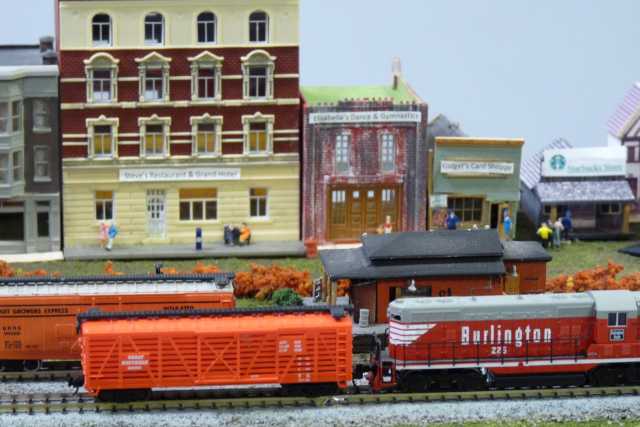
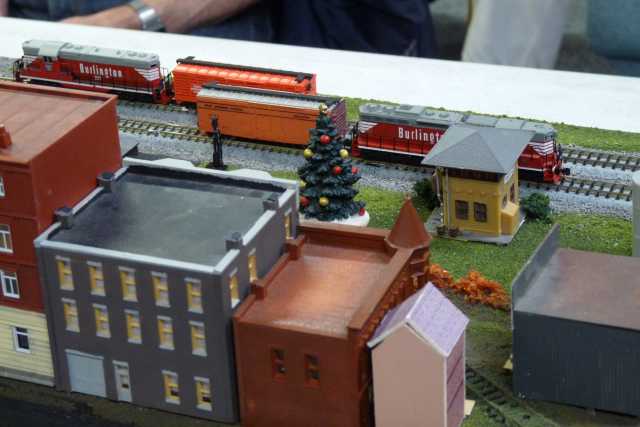
“Show and Tell” had Dennis T showing one of his N scale T-TRAK modules. This was a town scene with many of the buildings named after family members. Dennis explained that most of the buildings and rolling stock had been acquired over time via the Seattle-North “Mart.”

Dennis T T-Trak Module pic 1

Dennis T T-Trak Module pic 1

Dennis T T-Trak Module pic 2

Dennis T T-Trak Module pic 2

Dennis T T-Trak Module pic 3

Dennis T T-Trak Module pic 3


Directions: We meet at the Ronald United Methodist Church, 17839 Aurora Avenue North, Shoreline, WA. That is on the west side of Aurora (State Route 99) between 175th and 185th Streets and more specifically, between the Cadillac dealer on the south and Deseret Industries to the north. Going southbound on Aurora, make a right-hand turn into the church driveway immediately after passing the Deseret location. The parking lot is at the rear of the church. From the parking lot go up the steps to the main entrance.

Meetings are the first Thursday of each month, usually September – June. However in June we often do something different, so there may be no “regular” meeting. Doors open at 7:00 PM and the program starts at 7:30.

Remember the next regular evening meeting is March 5. And the one after that is April 2. Hope to see you there or at least sometime on down the line.

Grab Iron Editor E-mail Back in Service

Cliff Green

(If you receive multiple notifications about this post, please excuse the duplication. I’ve been trying to figure out how to “re-publish” a post, but am running into difficulties.)

If you tried e-mailing me (Grab Iron editor Cliff Green) sometime in the last week and it bounced back to you, my e-mail (cliffg@codewrangler.net) is back up and working. A re-send is appreciated, and I’ll respond as quick as possible.

I learned a lesson: When switching a domain name from one service provider to another, and they say it will take up to seven days to switch, they really mean seven days. In this day of (almost) instantaneous transactions over the Internet, apparently there are some things that move at the speed of … ummm, not-light (as in, slower than snail mail!).

Why does it take so long?

Why does it take so long?

If you’re curious about what a “domain name” is, it is the “abc.com” or “xyz.net” or “whatever.whatever” identifier used for web sites, e-mail, and other Internet functionality. People or organizations can register their own domain names instead of using one provided by their Internet service provider (e.g. Comcast) or e-mail provider (e.g. gmail). My personal domain is “codewrangler.net”, which I use both for my own web site (currently under construction – it will soon include a software development blog and a model railroading blog, among other things) as well as my personal e-mail. The 4th Division’s domain name is 4dpnr (and there are other 4D domain names including 4dho.com and 4dntrak.com). We manage these through a hosting and domain provider named 1and1.com. A couple of additional definitions for domains names are here and here.

What is the advantage of a personal or organizational domain name? It’s unique and will always be your own (as long as you keep it current and paid for), no matter who you use for your actual Internet connection (e.g. Comcast, CenturyLink, Frontier Communications, etc).

Mt Vernon February 24, 2015 NMRA Clinic Report

Roger Johnson

The February 2015 Mount Vernon clinic of the 4th Division, PNR, NMRA was attended by nine fellows. While a small turnout no one was disappointed they were there.

The Mt Vernon Model Railroad Clinic is a NMRA sanctioned event with the 4th Division of NMRA providing a modest sum of seed money to help us get started. While NMRA membership is not required to attend the clinics, it was once again heartily encouraged. Please let Al Carter or Roger Johnson know if you wish to join NMRA.

There were several announcements of upcoming events (editor added a couple):

  • First up is the Monroe Model Railroad show & swap meet to be held at the fairgrounds in Monroe Saturday and Sunday February 28th & March 1st. Info at http://www.unwclub.org/unwshow.html. All proceeds go to 4H.
  • 30th Annual Sn3 Symposium in Bellevue April 16-18, 2015. Info at http://sn3symposium-2015.com
  • The annual Olympia area layout tours will take place May 16th. Per the NMRA Pacific Northwest Region calendar, additional information will be available from Scott Buckley, sbuckley54@comcast.net
  • 4th Division spring meet is scheduled for Saturday June 6th. Contact Russ Segner through the 4th Divvision web site for more information.
  • Portland Daylight Express, the NMRA national convention, will be held August 23 – 28, 2015. Additional information is available at www.nmra2015portland.org

Our Show & Tell (or Bring & Brag) segment featured another of Paul Koren’s fine resin box cars, this one an outside braced “sawtooth” type by Speedwitch. The model is very nicely painted with TruColor paint sprayed on with an airbrush. Unfortunately I could not get any photos this month due to my camera being out of town with my wife.

The presentation this month was “Weathering Buildings with Bragdon Weathering Chalk” by Bob Stafford. He put together a Power Point presentation on weathering buildings using Bragdon Weathering Chalks. The program shows how some buildings were finished using oil stains and dry brushing before applying chalk. We learned what kinds of brushes he uses to apply the chalk and the use of over spray when needed. Also included was making and weathering of roads. He brought several examples of his work and of the brushes he uses. As indicated earlier I was unable to take any photos.

Next up March 24th is “Slim Rails to (Almost) Anywhere” by Rich Thom. As many of you know Rich is not only a very good model railroader, he is also an excellent photographer. Rich offered what he called “shameless promotion” of his presentation:

Was there anything even close to any of Colorado’s magnificent narrow-gauge railroads (insert your favorite here) in Latin America? Yes! To prove it, we’ll see American-style narrow-gauge steam in Central and South America — Baldwin locos and American-style equipment and operations. Also, some inspirational scenes showing there’s a prototype for everything. Attempting to cover all of Latin American steam in one evening is impossible. Included in the program will be five of the very best narrow gauge railroads.

16th Northwest Santa Fe Mini-Meet Saturday, March 21, Auburn

John Thompson

This is your invitation to attend the 16th annual Mini-Meet of Santa Fe Railway fans and modelers in the US Pacific Northwest. It will take place from 10 a.m. to 5 p.m. on Sat., March 21, 2015, at the Messiah Lutheran Church, 410 H Street NE, Auburn, WA, 98002.

Presentations include Bill Messecar on “Traveling the Santa Fe System in 1953” (from Keith Jordan and Wally Abbey), Bill James on “Modeling the Super C (Freight Train)”, John Thompson on “Santa Fe’s E-Units” (from Steve Sandifer), Colin Kikawa on “Upgrading Brass Steam with DCC and LEDs”, and Greg Martin on “Modeling a Santa Fe Bx-40/Fe-25 Boxcar in HO”.

Cost for the event and handouts is now $10 to cover our costs of renting the room and copying the handouts. Sale tables are available for a $10 fee per table.

For additional information contact me at jthomp1945@aol.com.

Day Out With Thomas® tickets available March 2

Peggy Barchi, NRM Marketing/Events Manager

Thomas2015The Northwest Railway Museum in Snoqualmie, WA will host the Thomas the Tank Engine “Day Out With Thomas® Celebration Tour” on July 10-12 and 18-19, 2015. Families across the Northwest are invited aboard!

Little engineers everywhere are invited to join this fun-filled event that offers little engineers and their families the opportunity to ride with Thomas the Tank Engine, star of the popular Thomas & Friends® series. Children will also meet Sir Topham Hatt, Controller of the Railway and enjoy a day of Thomas-themed activities including arts and crafts, storytelling and more. Their local appearance is part of a 42-stop tour across North America and is expected to host a million passengers!

This year, Thomas & Friends celebrates 70 years of friendship as the #1 blue engine celebrates friendship with fans around the world.

Enjoy a 25-minute ride with Thomas the Tank Engine. Hear Thomas greet his fans. Meet Sir Topham Hatt, Controller of the Railway. Enjoy a Thomas & Friends Imagination Station, featuring stamps, temporary tattoos, hands-on arts & crafts, train tables, coloring sheets, storytelling, videos, live music and more!

July 10-12 and 18-19, 2015, from 9:00 am through 5:15 pm at 38625 SE King St, in Snoqualmie, WA. Tickets go on sale March 2 at Ticketweb, 866-468-7630 or at www.TrainMuseum.org. Prices for ages 2 and up are $23 on Friday, July 10 and $25 the other days (plus tax, service charges and fees).

For more information, contact the NorthwestRailwayMuseum, 425-888-3030 or www.Trainmuseum.org. For information on Thomas & Friends, visit www.thomasandfriends.com. Follow Thomas & Friends on Facebook @thomasandfriends and on Twitter @ThomasParent.  #DOWT  #ThomasObsessed

OLY-TOUR Model Train Layout Tour May 16, 2015

Bob Stafford

The 12th annual Olympia Model Railroad Tour, now known as the OLY-TOUR, will be held on Saturday, May 16th. Due to some scheduling conflicts, the tour had to be moved to a later date than originally anticipated.

Chuck Ricketts' SS&S On30 layout during OLY-TOUR 2013.

Chuck Ricketts’ SS&S On30 layout during OLY-TOUR 2013.

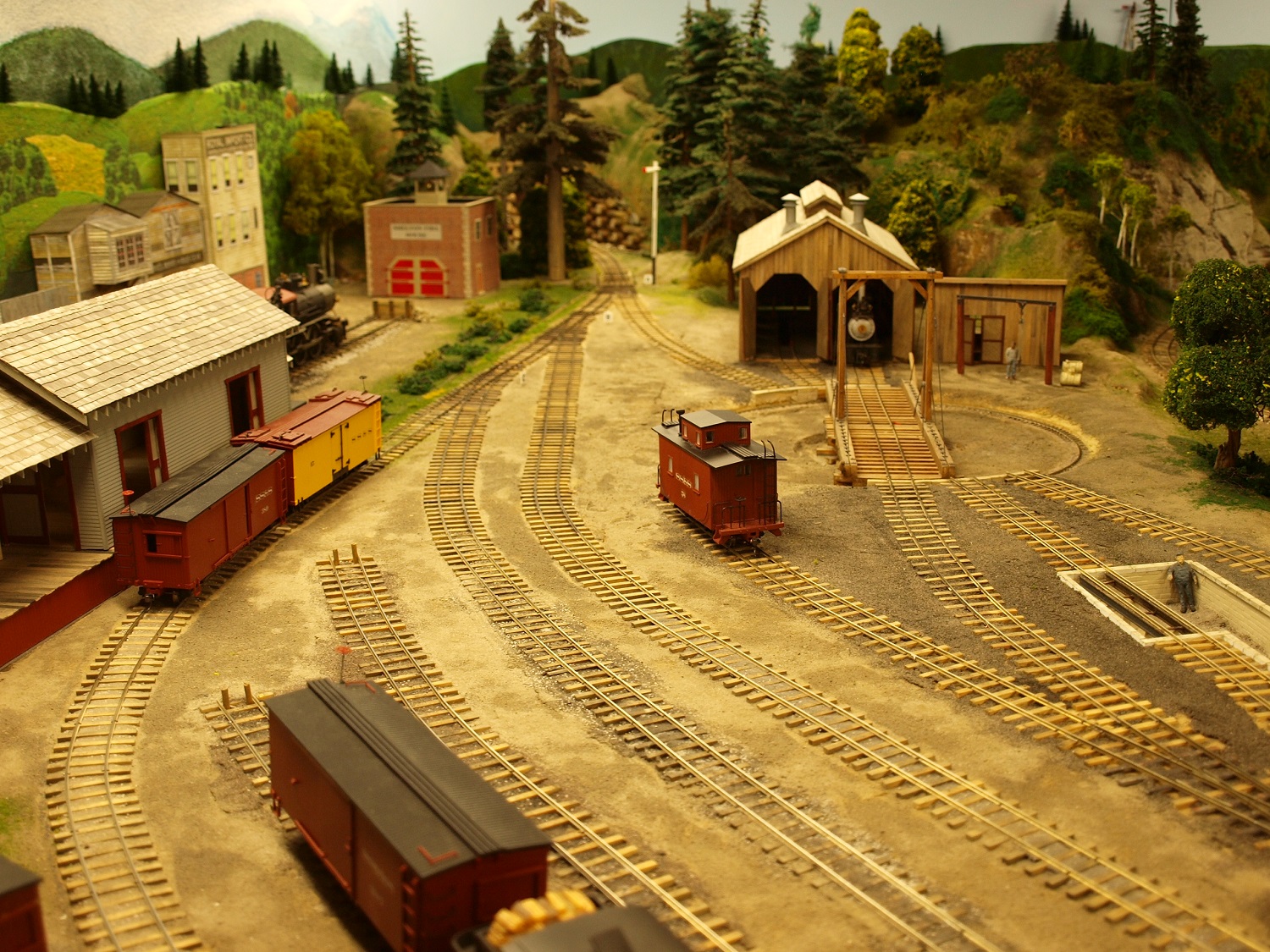
OLY-TOUR is an annual event featuring tours of layouts in the Olympia, WA area. The number of layouts hasn’t yet been confirmed, but it will include layouts in N, HO, On30, and 1:32n20. Many of the layouts have been featured in national publications.

Additional details and updates will be included in press releases sent to the 4D Yahoo Group and PNR Yahoo Group and to those on our electronic mailing list. To be included on the list, please send an email to Scott Buckley at sbuckley54@comcast.net. Please be sure to include your full name and the city in which you live. An electronic document that includes layout addresses, viewing times, and other details will be available about two weeks prior to the event. You must email Scott if you would like to receive this.

Brian Ferris layout, OLY-TOUR 2011

John Qualsand (left), Ted Becker (middle) and Laddrick Stafford (right) viewing Brien Ferris’s (behind John) layout during OLY-TOUR 2011.

Tacoma Clinic, February 2015

Al Babinsky, photos courtesy of Chip Van Gilder

MMR Gene Swanson opened the clinic on time with 45 modelers in attendance including 4 first timers – Molly Faucett, Randy who models European equipment, Budd who graduated from N and HO to G scale, and Larry Sloan who models BN from 1970-95.

Ed Liesse announced that the NMRA national election ballots are in the latest NMRA magazine. Please vote, especially now since one of our division members is running for president. He also mentioned that the 4D elections are coming up for a director and assistant superintendent position. Scott Taylor mentioned that a plastic model show was being held at the Museum of Flight and a future model show in Kent (editors note: The Museum of Flight models are from the Northwest Scale Modelers club).

Bill Sandstrom representing Tacoma Trains & Hobbies presented “What’s new at the Hobby Shop”. His first item was that Tacoma Trains is not closing as has been rumored, but that George Bourcier is planning on retiring and is looking for a buyer. As for the new items, there are books on BN and on DCC, Microtrains has a Z scale NP passenger set and HO boxcars, Foxhall a transfer caboose, Walthers a HO express boxcar, and Lionel a SP flatcar with trailer.

Bud Thompson is looking for volunteers to help with building and installing an NP railroad display in the Foss Maritime Seaport along with building 3 G scale modules for an interactive display.

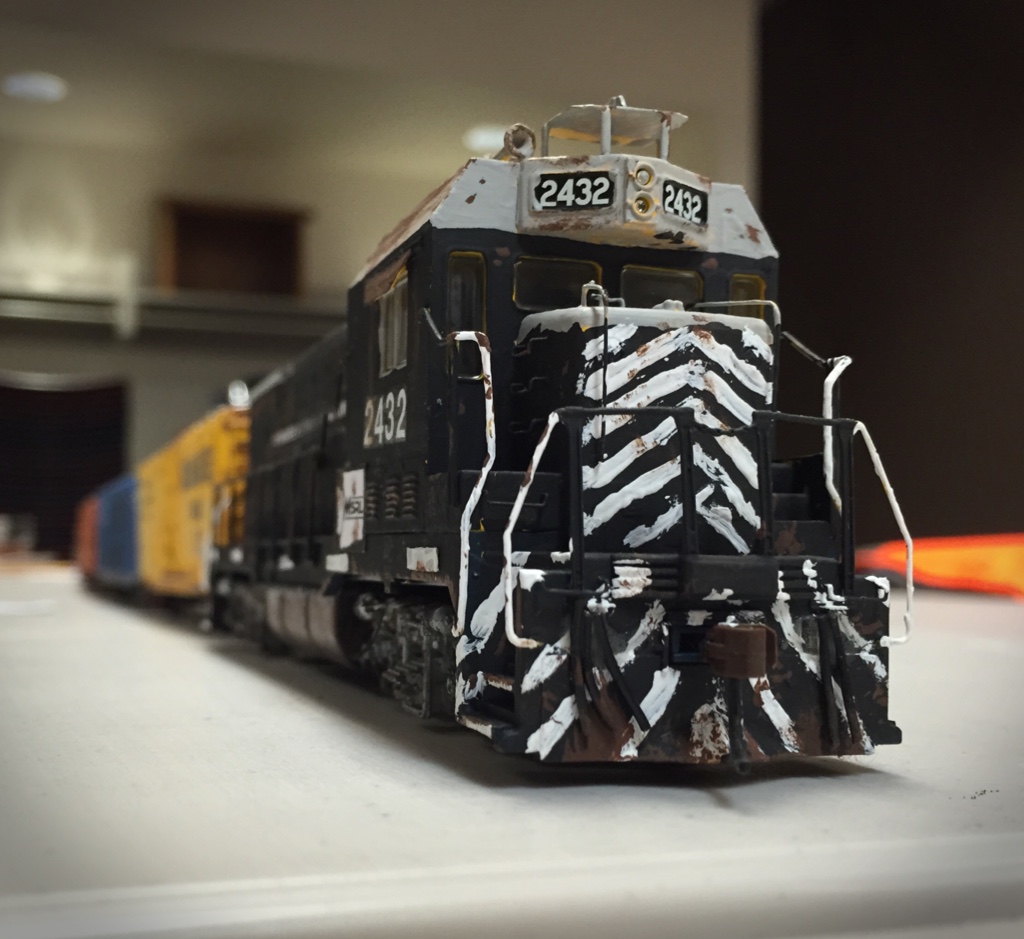
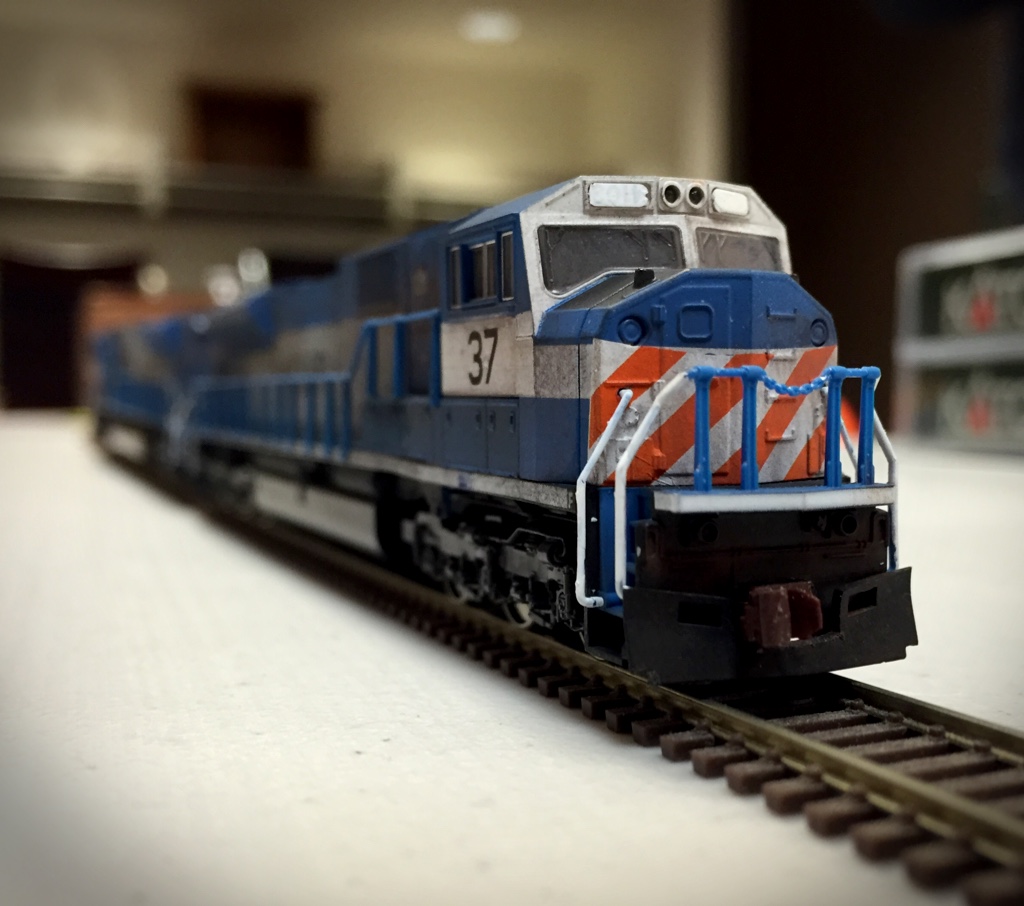
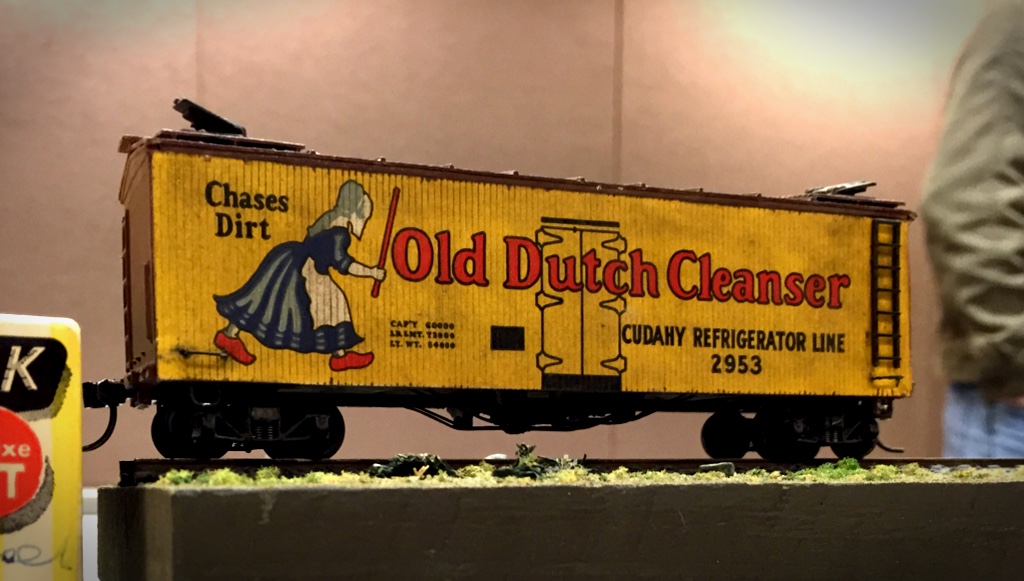
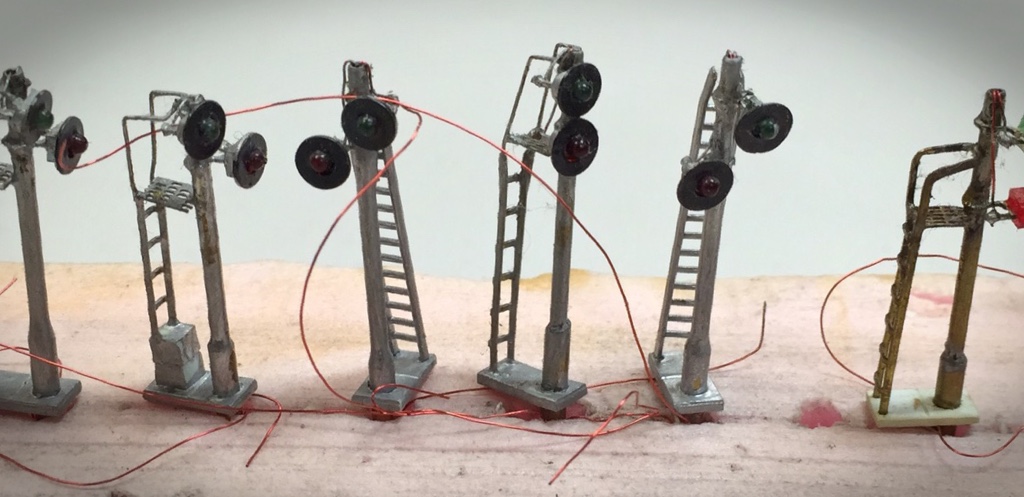
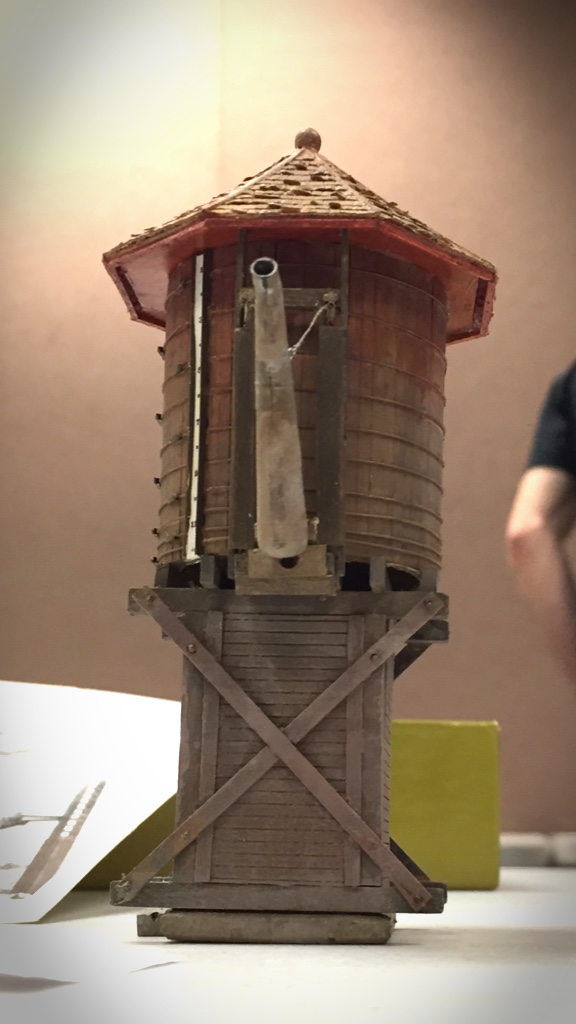
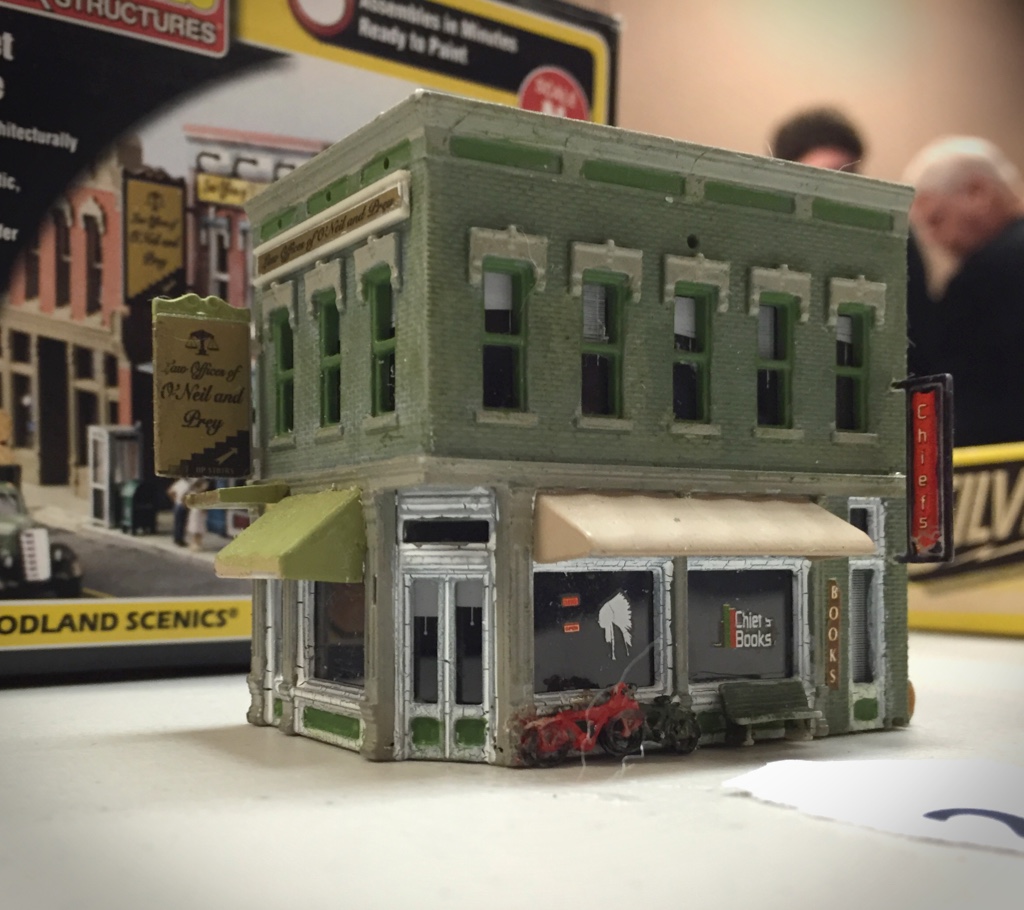
“Model of the Month” items were brought by Chris Clancy, showing a DCC ready EMD CF-7 which he renamed for his railroad. Chris also brought a Bachmann boxcar, a TNW boxcar, RG boxcar and a Milwaukee Road transfer caboose, all of them heavily weathered. Walt Huston brought an SD80Mac renamed and numbered for his railroad. Dennis Reeves showed scratch built N scale signals in various stages of progression and a Woodland Scenics building kit. The building kit came non-painted and was very hard to paint after it was built. Gene Swanson brought a Red Ball billboard refrigerator car with cardboard sides and metal ends. John brought a NW mill gondola with steel load made from windshield wiper arms. Dave Faucett brought a Jacks Cabin water tower. Jim Flowers brought a ballast dump car and fire car with high speed tender trucks. Chip Van Gilder showed a self-designed 3D printed locomotive body and an exploded view of the Monroe station ready for 3D printing.

The winner of “Model of the Month” was Jim Clowers with his ballast dump car and the fire car.
Jim Clower's ballast spreader and fire car

Jim Clower’s ballast spreader and fire car, Model of the Month winner

For the “Tip of the Month” Al Babinsky showed a reel of LED light strip to be used for interior lighting in passenger cars or buildings. The LED strip is 5 meters long / 60 LEDs per meter / 12 volts and is waterproof. Al uses them primarily on cars to light up the underside with different color lighting. It is self-adhesive and can be cut at about 6 inch intervals. There are a number of manufacturers and the best way to order is through E-Bay or Amazon.

The clinic for February was given by Al Babinsky and was about converting an analog layout to DCC. This is achieved by installing a double pole double throw switch and, if loops are present, reversing modules. The installation of the switch allows the layout to be operated in DCC or analog mode.

Next month’s clinic will be given by Jim Sabol on weathering vehicles. The clinic will be on the 12th of March at our usual location in the Pierce County Library Admin. Bldg. on the corner of 112th Street and Waller Road at 7:30 PM. Hope to see you there.
Chris Clancy's CF-7 and cars

Chris Clancy’s CF-7 and cars

Walt Huston's SD80MAC

Walt Huston’s SD80MAC

Gene Swanson's Red Ball billboard refrigerator car

Gene Swanson’s Red Ball billboard refrigerator car
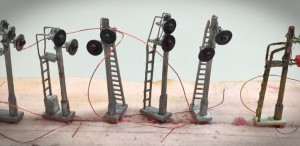
Dennis Reeves's N scale scratch built signals

Dennis Reeves’s N scale scratch built signals
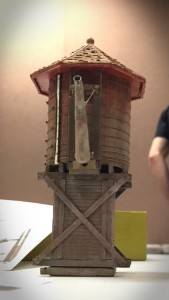
Dave Faucett's Jacks Cabin watertank

Dave Faucett’s Jacks Cabin watertank

Dennis Reeves's Woodland Scenic painted building

Dennis Reeves’s Woodland Scenic painted building
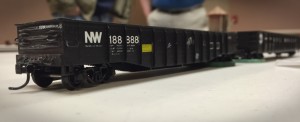
John's NW millgons with steel load

John’s NW millgons with steel load
4D Board of Directors Meeting Sat., Feb 21st, 9 am, Yankee Grill in Renton

Cliff Green

Yes, the 4th Division Board of Directors meeting is tomorrow (Saturday, Feb 21st). The 4D web site main page at 4dpnr.com was incorrect and has now been corrected (you may need to “refresh” the page in your web browser).

The meeting is at 9 am at the Yankee Grill which is at the Red Lion in Renton, WA. As always, all 4D members are invited to attend.

Skagit Valley and Whidbey Clinic Report, Feb 2015, Pacific NW Logging Speeders

Article and Model Photos by Rich Thom, Speeder Photos from Rich Blake Collection

28 modelers filled the meeting room at the Summer Hill facility in Oak Harbor for the SV&W Clinic’s February meeting. Clinic Chair Rich Blake introduced new attendee Nick Kelsey, an Fn3 modeler, who just moved to Coupeville. (Editors note: Fn3 is 45 mm gauge track, same as G, with a specified scale of 1:20.3; G is 45 mm track gauge, but covers multiple scales running on the same track.) Welcome, Nick, and we all look forward to seeing your new outdoor pike under construction very soon. Rich reminded everyone of the upcoming UNW train show in Monroe at the end of this month, and the Sn3 Symposium in Bellevue April 16-18. Rich also called attention to the NMRA election of national officers underway, and urged all members to cast their votes. Susan Gonzales gave advance notice of a potential trip next clinic season to the Northwest Railway Museum in Snoqualmie, to get an inside look at the NP 0-6-0 switcher that is being rebuilt there.

Next up was “Show and Tell,” and three fine models were in the spotlight tonight.

Fig 1 Iver and Curt Johnson's Flat Car with Jennings Log Skidder

Fig 1 Iver and Curt Johnson’s Flat Car with Jennings Log Skidder

Curt Johnson described the HO-scale flat car with load that he and his dad Iver Johnson just completed. The load is a Jennings Log Skidder, a kit manufactured by Scale Structures Ltd, Broomfield, CO. The Jennings Lumber Company bought several skidders from Nevada Iron Works and Foundry, the prototype for the model. The instructions weren’t in the box, and Iver and Curt couldn’t find them on-line, so they had to build the skidder a cappella. The car deck was built board-by-board, the spools of cable and water tank were scratch built, and additional details were added to the skidder.

Fig 2 John Mann's N-scale no. 8 turnout

Fig 2 John Mann’s N-scale no. 8 turnout

John Mann passed around an N-scale, no. 8 turnout that he fabricated with a Fast Tracks jig. (Your photographer failed to remember to place a coin in the photo, so readers will need to trust us: it’s N-scale.) The Code 55 rail required some delicate soldering, one of John’s special skills. John used a no. 8 double-crossover jig with which, he pointed out, one can build double- or single-crossovers as well as left- and right-hand turnouts.

Fig 3 Tom Hawkins' and David Clarke's PFM Ma & Pa 2-8-0 DCC Conversion

Fig 3 Tom Hawkins’ and David Clarke’s PFM Ma & Pa 2-8-0 DCC Conversion

Tom Hawkins displayed his HO-scale, brass PFM Ma & Pa 2-8-0 which has had DCC and sound installed by David Clarke. Tom helped with the project but credited David with most of the work. David also painted and decaled the model. Despite retaining it’s original open-frame motor, the Consolidation runs beautifully.

Rich Blake then gave the evening’s presentation, Evolution of Logging Speeders in the Pacific Northwest. One of the most important vehicles to Northwest logging operations was the speeder. During the era when there were more rails than roads in the woods, the speeders became the versatile vehicle of choice to get people and equipment to remote areas along the lines. Speeders functioned not only as MOW (maintenance-of-way) vehicles, but also as crew transport, ambulance, school bus, fire watch, grocery getter and light locomotive from steam days well into the modern era.

The obvious predecessor to the speeder was the handcar, used by section gangs from 1850 to 1900 for track maintenance and hauling tools. It is estimated about 13,000 were in use. After the turn of the century, gas powered cars began to replace handcars, although on the Class 1 roads they were always primarily for track inspection and maintenance.

Logging railroads had quite different requirements. Not normally utilizing sections and gangs like the mainline railroads, they maintained track as needed using whatever locomotives and men were on hand. One of the biggest burdens of the logging railroad was the large number of people necessary to support logging operations, and getting them in and out of the woods. In the early days, logging locos were used to transport people on whatever rolling stock they had on hand, usually skeleton cars and flat cars, which obviously exposed the crews to the elements and danger. Sometimes closed crew cars or passenger cars were used, built or bought second or third hand. However this didn’t solve another problem: it was slow going. 15 mph for a typical geared loco was really flying along. Moreover, using logging locos to move people was not a good use of what were typically the most expensive assets on the property. The use of camps in the woods closer to the working areas helped, reducing travel time, but the camps were expensive to maintain and equipment-intensive. Hauling supplies to the camps, or switching cars around the camps, still took a logging loco away from its more important work. What was needed were “logging speeders”, faster than the logging locos and more powerful than the small gas speeders on the mainline railroads.

Enter the Skagit Steel and Iron Works, established in Sedro Woolley WA in 1902 as the Sedro Woolley Iron Works. Originally offering heavy repair service to the logging operations, at a site more convenient than Everett or Bellingham, its business expanded until, in 1921, the company decided to develop a line of gas powered speeders optimized for the special needs of the loggers. As a hedge against possibly soiling the company’s reputation in the venture, it spun off the Motor Appliance Corporation (MAC).

Fig 4 Skagit Iron Works MAC 4-40 Speeder

Fig 4 Skagit Iron Works MAC 4-40 Speeder

After first marketing a Fordson Tractor powered donkey engine, MAC moved into larger railroad equipment with the 4-40 rail car (Figure 4). The car had an open deck with a one man “telephone booth” at the front end. The designation 4-40 stood for 4 cylinder and 4000 pounds of tractive effort. The 4-40 was an immediate success. They were powered by a 40 hp to 66hp Model YTU Buda gas engine and weighed about 6 tons; the 8 x 20 deck had a load capacity of 5 tons. With a 5 ton load, they could cope with a 10 percent grade. The beauty of these speeders was they were heavy enough to switch a log car or two, or haul the crew to work. Other models followed, the 6-60 for heavier hauling, and the 4-20 focusing on crew transportation. MAC speeder production continued through 1936.

Fig 5 Rayonier Speeder No 22, June 1960 at Railroad Camp WA, a Gibson

Fig 5 Rayonier Speeder No 22, June 1960 at Railroad Camp WA, a Gibson

In 1933 a competitor emerged, the Gibson Manufacturing Co. founded by Henry Gibson and located on 1st Street in Seattle (the building still exists). Gibson recognized the need for larger vehicles (such as in Figure 5) to haul ever-larger logging crews, and developed three models: 12 ft/30 man, 14 ft/40 man, and 18 ft/55 man versions. The Gibson speeders, like the MACs years earlier, were an instant success. By 1939, wood bodies were replaced by steel. Even a 24 ft/65 man model with a fully enclosed body and full controls at both ends of the speeder for driver visibility was produced. In 1946 Gibson, in partnership with Hayes Mfg., built the “Cadillac” of speeders, CanFor’s No. 121, a monster 40 feet long which seated 90 loggers and could zip along at 40 mph. In its 20 years of production, Gibson built about 300 speeders, with its last models hauling 90- 100 people. Henry Gibson passed away in 1953 and the company closed.

Fig 6 Simpson Lumber No. 117 at Shelton WA, a modified Gibson

Fig 6 Simpson Lumber No. 117 at Shelton WA, a modified Gibson

Just over the border in Canada, the Westminster Iron Works, an old company established in New Westminster BC in 1874, moved into the logging speeder business for BC logging operations, producing many speeders, some similar to MAC products. Many of the British Columbia speeders featured cupolas for driver visibility, a design not common in the US. One exception was Simpson Lumber No. 117 (Figure 6), a modified Gibson speeder.

As rail logging gave way to truck logging, so went the hard working speeder, replaced by the company pickup truck. Their utility can never be forgotten and their contribution to the many logging operations was instrumental to their success.

Rich showed photos of many survivors in Washington, California, and British Columbia.

In the modeling world, speeders currently require kit-bashing or scratch-building. Several power drive units are possibilities, including NWSL Flea Drive, which one might find on eBay. Box-cab types are easiest to construct so that the mechanism, decoder etc. can be hidden. MAC-type open-deck types will require the most ingenuity.

Fig 7 Rich Blake's On30 Speeder Modeling Project

Fig 7 Rich Blake’s On30 Speeder Modeling Project

Figure 7 shows one of Rich’s current projects, modeling a MAC speeder in On30. The flatcar is a Bachmann On30 18-foot car that is being used as a template for a scratch-built chassis. The cab is a resin casting from Boulder Valley Models for an On30 critter. The chassis drive is a Bachmann HO MOW ballast car. We are looking forward to see how it turns out.

Adding a speeder or two to a logging-themed layout will certainly add to realistic and interesting operations.